Canada is home to one of the most significant Ukrainian diaspora communities in the world. With approximately 1.4 million Canadians of Ukrainian ancestry — and a growing number of recent arrivals fleeing the war — the Ukrainian presence in Canada reaches from the wheat fields of Saskatchewan to the fishing villages of Prince Edward Island, from the urban towers of Toronto and Calgary to the remote settlements of the northern boreal forest.
Understanding where Ukrainian Canadians live, and how they got there, is both a social history and a genealogical tool. The settlement patterns of the first three waves of Ukrainian immigration are so well-documented that knowing where your ancestor settled often predicts which archives, churches, and community organizations hold records relevant to your family. This guide maps those patterns and points you toward the resources that matter most for how to start Ukrainian genealogy research.
How Many Ukrainian Canadians Are There?
The 2021 Census of Canada is the most recent comprehensive demographic snapshot. It found approximately 1.36 million Canadians reporting Ukrainian ethnic origin, either exclusively or in combination with other origins. This places Canada third globally in Ukrainian diaspora population, behind only Ukraine itself and Russia.
The number has fluctuated over the decades. At its peak in the mid-20th century, the proportion of Canadians claiming Ukrainian ancestry was higher relative to the total population than it is today, reflecting the effects of assimilation, intermarriage, and the gradual fading of ethnic self-identification across generations. Many Canadians who descend from Ukrainian settlers no longer identify Ukrainian ancestry in a census, having identified primarily with the prairie regional identity rather than with the Ukrainian ethnic heritage.
Since February 2022, the picture has changed dramatically. The Russian full-scale invasion of Ukraine triggered the largest movement of Ukrainian people since World War II. Canada accepted over 200,000 Ukrainian temporary residents under the Canada-Ukraine Authorization for Emergency Travel (CUAET) program launched in 2022. Not all will remain permanently, but a significant portion are expected to stay. This fourth wave is already beginning to reshape Ukrainian-Canadian communities in cities across the country.
The Three Waves of Ukrainian Immigration
Ukrainian settlement in Canada did not happen in a single movement. It unfolded in three distinct waves, each driven by different circumstances in Europe and each producing different settlement patterns and community characteristics in Canada.
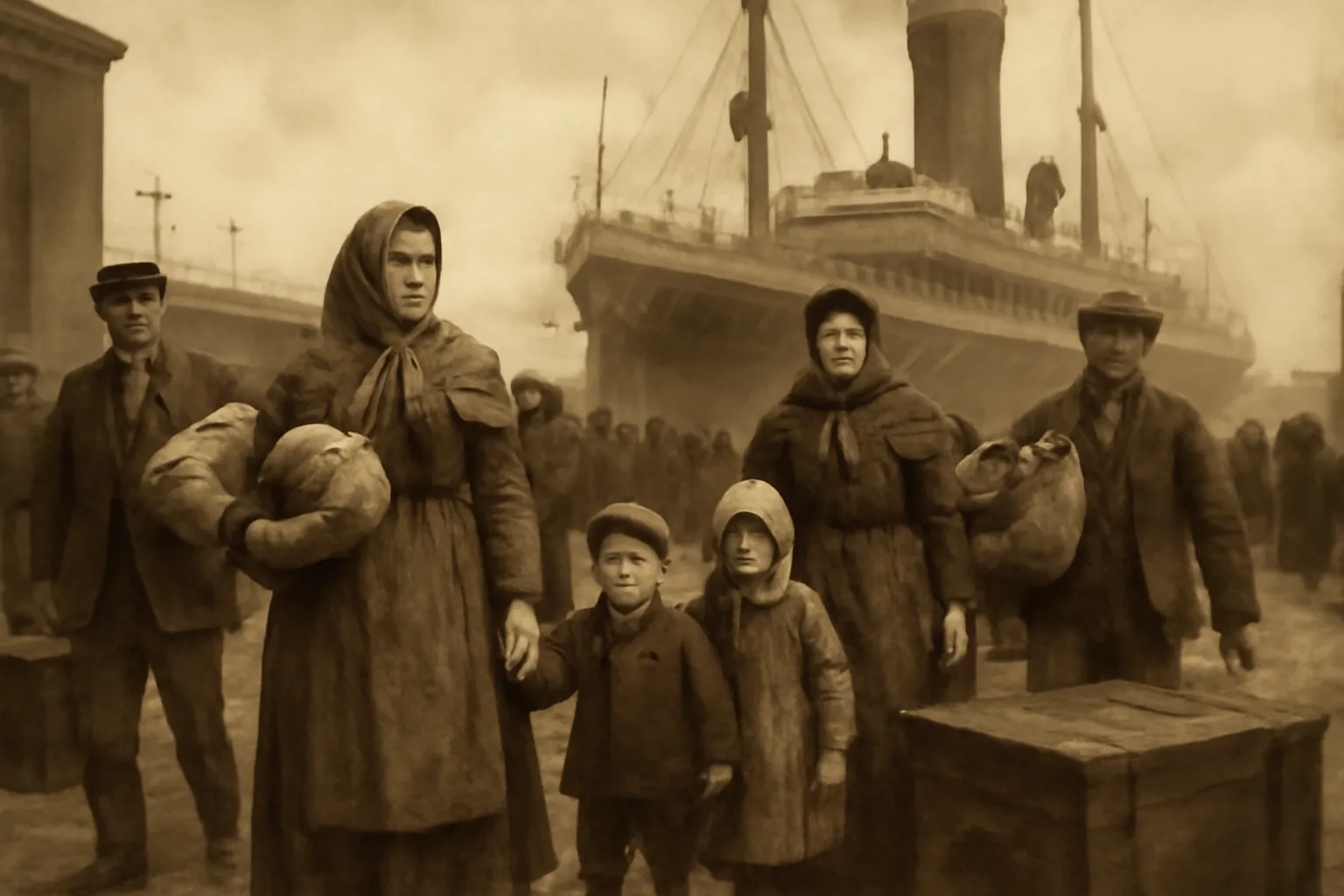
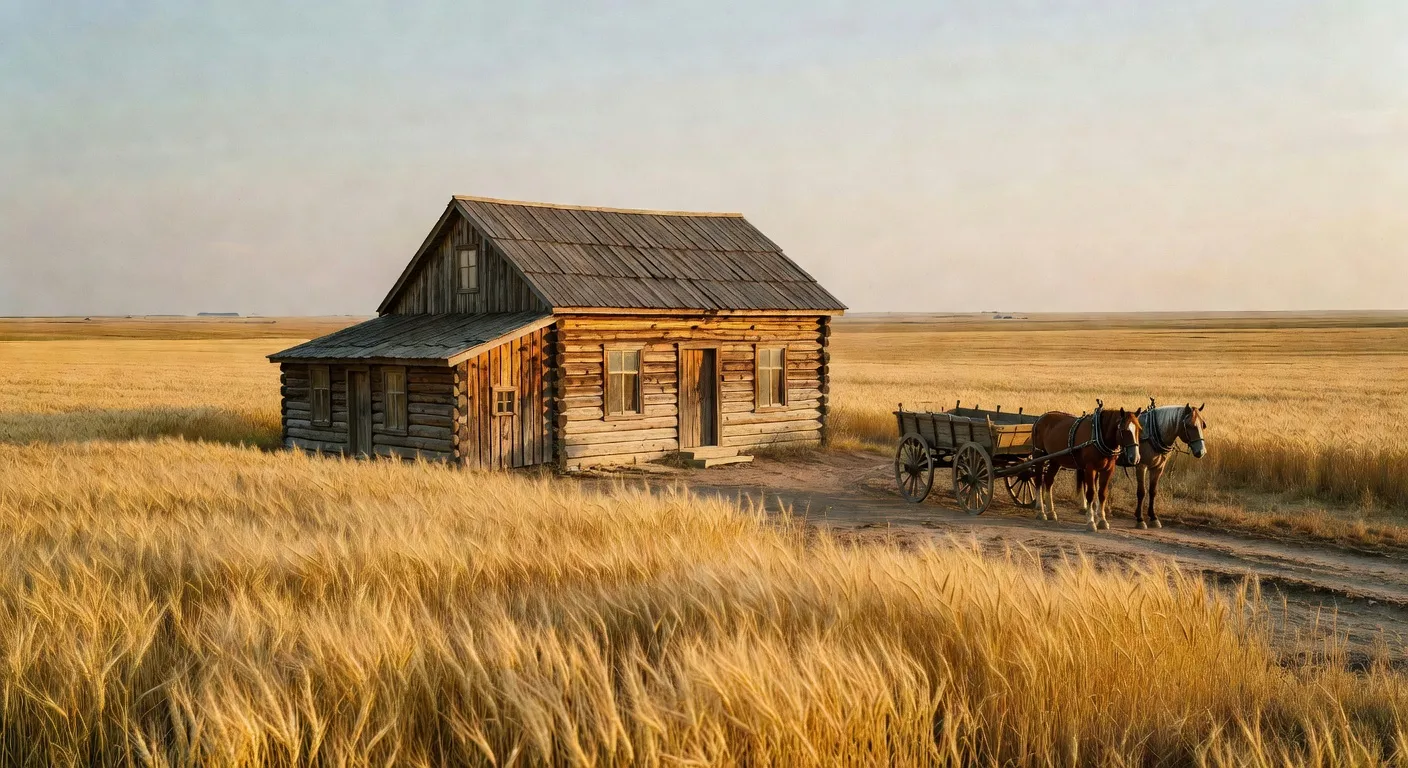
The First Wave (1891–1914) was primarily agricultural. Approximately 170,000 Ukrainians arrived from the Austro-Hungarian provinces of Galicia and Bukovyna, responding to active Canadian government recruitment that offered 160 acres of free homestead land on the prairies. These were peasant farmers escaping extreme poverty, land shortage, and political marginalization. They settled in bloc communities — concentrations of families from the same Galician district who built churches, established Ukrainian-language schools, and recreated as much of their village culture as the Canadian environment allowed.
The story of Galicia to Canada’s migration patterns is documented in extraordinary detail because these settlers interacted with multiple Canadian institutions — land offices, census enumerators, church registrars, immigration officials — all of whom created records that survive in provincial and federal archives today.
The Second Wave (1947–1954) brought approximately 34,000 displaced persons — Ukrainians who had been driven from their homeland by the combined catastrophes of World War II and the Soviet occupation. Unlike the first-wave peasant farmers, many of these were educated professionals: teachers, clergy, lawyers, writers, and political activists. They came specifically because they refused to return to Soviet-occupied Ukraine. They settled primarily in urban centres — Winnipeg, Edmonton, Toronto, Montreal — rather than on farms, and they brought with them a strongly nationalist, politically engaged conception of Ukrainian identity that shaped Ukrainian-Canadian institutions for decades.
The Third Wave (1991–2000s) followed Ukrainian independence and the collapse of the Soviet Union. These were economic migrants in the more conventional sense: skilled workers, entrepreneurs, and professionals seeking opportunities in a stable, prosperous country. Their settlement patterns were diffuse — they went where the work was, primarily to major urban centres in Ontario, Alberta, and British Columbia. Their connection to Ukrainian-Canadian community institutions was variable; some were deeply involved, others were not.
Where Ukrainian Canadians Live Today
The province-by-province distribution of Ukrainian Canadians in 2026 reflects the layering of these three waves on top of each other:
| Province | Ukrainian-origin population (approx.) | % of provincial population |
|---|---|---|
| Alberta | 360,000 | 8% |
| Ontario | 310,000 | 2% |
| Saskatchewan | 140,000 | 12% |
| Manitoba | 130,000 | 9% |
| British Columbia | 120,000 | 2% |
| Quebec | 35,000 | <1% |
| Atlantic provinces | 20,000 | <2% |
These numbers reflect 2021 Census data and do not yet fully capture the 2022+ arrivals. Ontario, British Columbia, and Quebec have received disproportionate shares of the most recent wave.
Alberta and Saskatchewan: The Prairie Heartland
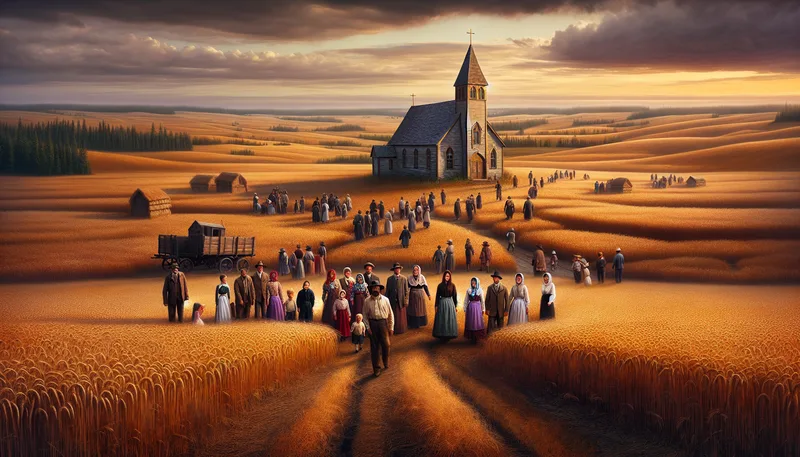
If there is a heartland of Ukrainian Canada, it lies in the arc of territory stretching from Dauphin, Manitoba westward through the Yorkton-Canora-Saskatoon corridor in Saskatchewan and north into the Vegreville-Mundare-Two Hills district of Alberta. These are the bloc settlements established by first-wave immigrants between 1896 and 1914, and they remain the most distinctively Ukrainian communities in Canada.
The Vegreville area of Alberta, for example, is home to one of the world’s largest Easter eggs — a pysanka — installed in 1975 to mark the centennial of the Royal Canadian Mounted Police and to celebrate the Ukrainian heritage of the region. The egg is not a historical artifact but a statement about contemporary identity: this community knows who it is and is not shy about it.
In Saskatchewan, the Parkland region around Yorkton was one of the earliest and densest Ukrainian settlement zones. Church communities here — both Ukrainian Catholic and Ukrainian Orthodox — maintained Ukrainian-language services, Ukrainian schools, and Ukrainian cultural programming continuously from the early 1900s to the present day. Genealogists researching families from this region find a wealth of community records, church registers, and published local histories that are unmatched elsewhere in Canada.
Ontario and British Columbia: Urban Communities
The second and third waves transformed Toronto and Edmonton into major centres of Ukrainian-Canadian urban culture. In Toronto, the neighbourhood around Bloor and Spadina — historically known as the Ukrainian Village — was home to Ukrainian cultural institutions, churches, and businesses from the 1950s onward. The Ukrainian Canadian Research and Documentation Centre, the Ukrainian Orthodox church at Bathurst Street, and the Ukrainian Cultural Centre are all within a few kilometres of each other.
Edmonton has the largest Ukrainian-Canadian community in absolute numbers after Toronto, sustained by both its geographic proximity to the Alberta bloc settlements and its role as the major urban centre for first-wave descendants who moved to the city for education and employment. The Ukrainian Cultural Heritage Village east of Edmonton is a living history museum that recreates a bloc settlement community circa 1910, staffed by interpreters who can discuss the day-to-day life of first-wave settlers in considerable historical detail.
British Columbia’s Ukrainian-Canadian community is concentrated in Vancouver and the Lower Mainland, and is predominantly composed of second-wave and third-wave immigrants. It is less visibly “Ukrainian” in the sense of heritage institutions than Alberta or Manitoba, but it is numerically significant and growing with recent arrivals.
The Atlantic Provinces and Prince Edward Island
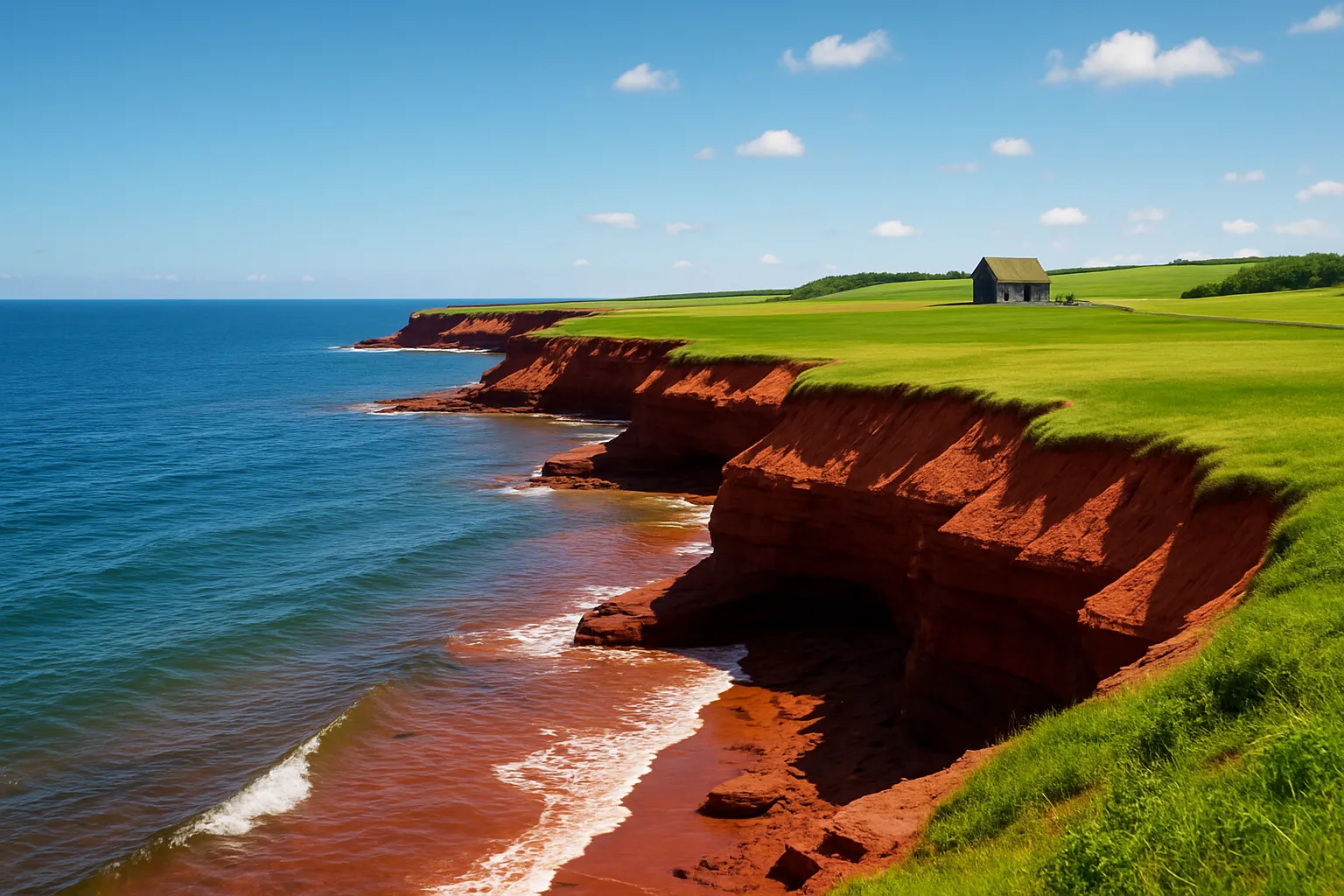
Ukrainian settlement in the Atlantic provinces was always smaller and less concentrated than in the prairies. Ukrainian settlers in Prince Edward Island arrived primarily as agricultural labourers and small farmers, often via Manitoba and Ontario rather than directly from Galicia. The result is a community characterized by deep roots and small numbers.
Despite their size, Atlantic Ukrainian communities produced remarkable cultural continuity. The Ukrainian community in Charlottetown maintained a cultural organization, Saturday language school, and regular community events throughout the late 20th century. Published community histories from PEI Ukrainian church groups in the 1970s documented founding families with extraordinary care, creating genealogical resources that repay careful reading.
The Atlantic provinces are also relevant to genealogists because some first-wave Ukrainian immigrants who arrived at the ports of Halifax, Saint John, or Quebec City passed through — and occasionally stayed — in the Maritimes before moving west. Immigration records from these port cities can yield unexpected information about families whose descendants are traced on the prairies.
Cultural Organizations and Heritage Preservation
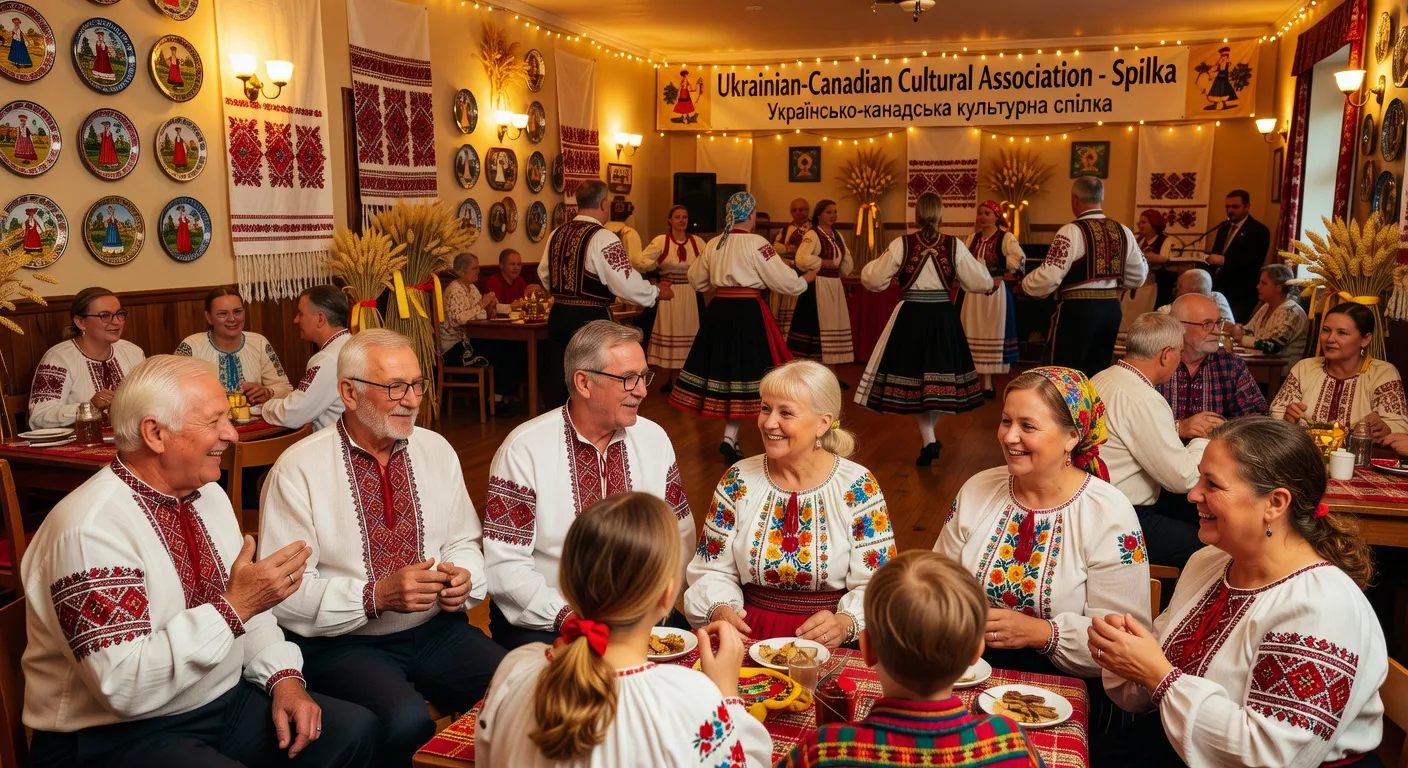
The infrastructure of Ukrainian-Canadian cultural life is extensive and well-organized. Key national organizations include:
- Ukrainian Canadian Congress — the national umbrella organization representing Ukrainian-Canadian community interests since 1940
- Ukrainian Canadian Research and Documentation Centre (Toronto) — archival and library collections related to Ukrainian immigration history
- East European and Genealogical Society — specializes in genealogical research for Ukrainian and other Eastern European families in Canada
- Ukrainian Cultural Heritage Village (Alberta) — living history museum of first-wave settler life
- Dozens of provincial and regional cultural organizations, many of which maintain their own archives and publications
Community history books published by these organizations are among the most underused genealogical resources for Ukrainian-Canadian research. They contain family histories, settlement maps, and photographs that appear nowhere in official government records. A comprehensive directory of these publications exists at the provincial level and is searchable through the Ukrainian family history books directory.
The Fourth Wave: Post-2022 Ukrainian Refugees
Since February 2022, Canada has become one of the primary destinations for Ukrainians fleeing the Russian invasion. The Canada-Ukraine Authorization for Emergency Travel (CUAET) program — which allowed Ukrainian citizens and their immediate family members to come to Canada on temporary resident permits — was activated within weeks of the invasion and processed hundreds of thousands of applications.
This fourth wave is demographically different from all previous waves. It is disproportionately composed of women and children (Ukrainian men aged 18-60 are legally required to remain available for military service), highly educated urban professionals, and people who speak Ukrainian as their primary language. They are settling in cities and suburbs across Canada, in some cases joining existing Ukrainian communities and in other cases creating new concentrations in areas with no prior Ukrainian presence.
The long-term genealogical implications are significant. Fourth-wave arrivals bring with them Ukrainian-language documents — passports, internal passports, birth certificates, university diplomas — that can directly link Canadian-born descendants to specific villages and regions in Ukraine. These documents, preserved now while the bearers are alive and their memories are sharp, will become primary genealogical sources for researchers a generation from now.
Tracing Your Diaspora Ancestors: Resources
The settlement geography described in this article is directly useful for genealogical research. Knowing that your ancestor was from Galicia and settled in the Vegreville area in 1905 means that records from the Ukrainian Catholic Diocese of Edmonton, the Alberta Provincial Archives, the homestead files at Library and Archives Canada, and the community history publications of the Two Hills and Vegreville areas are all primary targets for your research.
Key resources for diaspora genealogy:
- Library and Archives Canada — census records 1871-1926, immigration arrivals 1865-1935, homestead files, naturalization records. Free online access to all major collections.
- FamilySearch.org — indexes many of the same Canadian records with more flexible name-matching; also holds Ukrainian church record collections from Galicia.
- Provincial archives — each province holds vital statistics, land records, and municipal records that supplement federal holdings
- Ukrainian church archives — diocesan archives for both Ukrainian Catholic and Ukrainian Orthodox communities hold parish registers going back to the earliest congregations
- Community history publications — findable through provincial libraries, the PEI Public Archives, and Ukrainian cultural organizations
The diaspora community created a paper trail that is now one of the richest genealogical archives available for any immigrant group in Canadian history. The work is to connect the Canadian records — which document the journey after arrival — with the Ukrainian records that document the life before departure.
Did you know? The province where your ancestor settled is not random — it is one of the strongest predictors of which archive holds their records. A family that settled in the Vegreville-Mundare corridor of Alberta points toward the Ukrainian Catholic Diocese of Edmonton and the Alberta Provincial Archives, while a family in the Yorkton-Canora district of Saskatchewan points toward an entirely different set of church and provincial holdings.
Ukrainian-Canadian Population by Province: 2021 Census
The 2021 Canadian Census provides the most recent comprehensive count of Canadians with Ukrainian heritage. The data shows that the Ukrainian community remains concentrated in the prairie provinces where the first wave of settlers homesteaded over a century ago, while significant urban communities have developed in Ontario and British Columbia.
| Province | Ukrainian Heritage (2021) | % of Provincial Population | Largest Community |
|---|---|---|---|
| Alberta | ~330,000 | ~7.5% | Edmonton |
| Ontario | ~305,000 | ~2.1% | Toronto |
| British Columbia | ~145,000 | ~2.8% | Vancouver |
| Saskatchewan | ~135,000 | ~11.5% | Saskatoon |
| Manitoba | ~125,000 | ~8.8% | Winnipeg |
| Quebec | ~35,000 | ~0.4% | Montreal |
| Other provinces | ~30,000 | varies | Ottawa |
For those tracing Ukrainian roots in Atlantic Canada, including Prince Edward Island, see our focused history of Ukrainian settlers in Prince Edward Island.
Frequently Asked Questions
According to Statistics Canada's 2021 Census (the most recent full enumeration available), approximately 1.36 million Canadians reported Ukrainian ancestry, either as their sole ethnic origin or as one of several origins. This represents roughly 3.8% of the Canadian population. Combined with the significant new arrivals since Russia's full-scale invasion of Ukraine in February 2022 — estimated at over 200,000 Ukrainian temporary residents and refugees — the Ukrainian-origin population in Canada in 2026 likely exceeds 1.5 million people.
Alberta has the largest Ukrainian-Canadian population in absolute numbers, followed by Ontario and Saskatchewan. However, Saskatchewan has the highest proportion of residents with Ukrainian ancestry relative to its total population. The Prairie provinces collectively account for approximately two-thirds of all Ukrainian Canadians.
The first wave (1891–1914) brought approximately 170,000 Ukrainians, mainly from the Austro-Hungarian province of Galicia and Bukovyna, who settled as agricultural homesteaders on the Prairie provinces. The second wave (1947–1954) brought roughly 34,000 displaced persons who fled the Soviet occupation of Ukraine after World War II, settling primarily in urban centres. The third wave (1991–2000s) brought economic migrants following Ukrainian independence in 1991. A fourth wave, beginning in 2022, is bringing Ukrainian war refugees.
The 'Ukrainian bloc settlements' of Alberta and Saskatchewan — including the Vegreville-Mundare corridor in Alberta and the Yorkton-Canora district in Saskatchewan — remain the heartland of Ukrainian-Canadian culture. These areas retain Ukrainian-language school systems, active Orthodox and Greek Catholic churches, cultural festivals, and the highest density of Ukrainian surnames in North America outside of Ukraine itself.
Start with Library and Archives Canada (bac-lac.gc.ca), which holds census records from 1871 to 1926, immigration arrival records from 1865 to 1935, and homestead files for Prairie settlers — all searchable online for free. Then use community settlement patterns as a geographic guide: if your ancestor was from a particular region of Galicia, they were statistically likely to have settled in a specific bloc settlement on the prairies. FamilySearch.org also holds significant Canadian genealogical record collections.