When the first star appears in the January sky, Ukrainian families across Canada set down their spoons in silence, bow their heads, and begin the ritual that connects them to generations of ancestors who kept the same supper in Galician villages, on Manitoba homesteads, and in Charlottetown kitchens. Svyata Vechera — the Holy Supper — is the centrepiece of Ukrainian Christmas, and its defining feature is the twelve meatless dishes prepared and consumed in careful sequence.
This guide explains what those twelve dishes are, why each one matters, and how Ukrainian-Canadian families — including those in the Atlantic provinces — have adapted these ancient rituals to the Canadian context. If you are researching your Ukrainian family history, understanding Svyata Vechera is also a window into the folk traditions your ancestors brought from Ukraine to Canada and carefully preserved across generations.
Why 12 Dishes? The Sacred Number Behind Svyata Vechera
The number twelve is not arbitrary. In Ukrainian Christian tradition — both Greek Catholic and Orthodox — it represents the twelve apostles who sat at the Last Supper with Jesus Christ. By preparing exactly twelve dishes, Ukrainian families ritually re-enact the New Testament gathering at the heart of the Nativity story.
The twelve also carries agricultural resonance. Ukrainian peasant culture was profoundly cyclical, organised around the rhythms of planting and harvest. Twelve dishes at Christmas were a prayer directed at the twelve months of the coming year, asking that each month bring enough rain, enough sun, and enough food. This dual meaning — sacred and agricultural — gave the custom its extraordinary durability. Even during the decades when Ukrainian immigrants struggled on the Canadian prairies, finding twelve meatless dishes was a point of honour.
All twelve dishes must be meatless and dairy-free. Svyata Vechera falls at the end of the Nativity Fast (also called the Philip’s Fast or Pylypivka), a period of abstinence from meat and dairy that begins on November 28 and ends on Christmas Day. The Holy Supper is the last fasting meal before the fast is broken on Christmas morning.
The meal begins only when the first evening star appears — a reference to the Star of Bethlehem. Before sitting down, many families light a candle and the head of the household scoops the first spoonful of kutia, sprinkling it toward the ceiling with a wish: “Dai Bozhe, shchob tak urodyla pshenytsya” — “May God grant such a harvest of wheat.” The dishes then flow in a specific order, though the precise sequence varies by regional tradition.
The Didukh Wheat Sheaf: The Ancestor at the Table
Before the meal itself, there is a ritual object that may be unfamiliar to those outside the tradition: the didukh (дідух). The word comes from the Ukrainian words for grandfather (did) and spirit (dukh) — “grandfather spirit,” or more loosely, the spirit of the ancestors.
The didukh is a bound sheaf of wheat stalks, often braided or decorated, placed in the corner of the room or at the head of the table at the start of the Christmas season. Its presence symbolizes the souls of deceased family members who are believed to return home for the Christmas celebrations. An empty place is sometimes set at the table — covered with embroidered cloth — to welcome these ancestral guests.
For Ukrainian-Canadian genealogists, the didukh tradition has a poignant dimension. When families fled Galicia for Canada between 1891 and 1914, they arrived in a country where wheat was the dominant prairie crop. The didukh — which had been made from the grain their ancestors grew in western Ukraine — could now be made from the grain grown on their own Canadian homesteads. The symbol remained continuous even as the geography changed completely. Families who settled in Prince Edward Island often adapted the tradition using locally grown barley or rye when wheat was unavailable, a quiet example of cultural resilience.
After Christmas, the didukh is not discarded casually. In the traditional practice, it was burned on Epiphany (January 19 in the Julian calendar), releasing the ancestral spirits back to the other world as the Christmas season ended. The ash was then sometimes spread over the garden, completing the cycle from spirit to soil to harvest.
Point to remember: the didukh — literally "grandfather spirit" — is one of the few Ukrainian Christmas customs that survived the transatlantic crossing unchanged in meaning even as its raw material changed: Galician wheat became Canadian prairie wheat, and some PEI families adapted it further using locally grown barley or rye.
The 12 Dishes Explained: What Goes on the Svyata Vechera Table
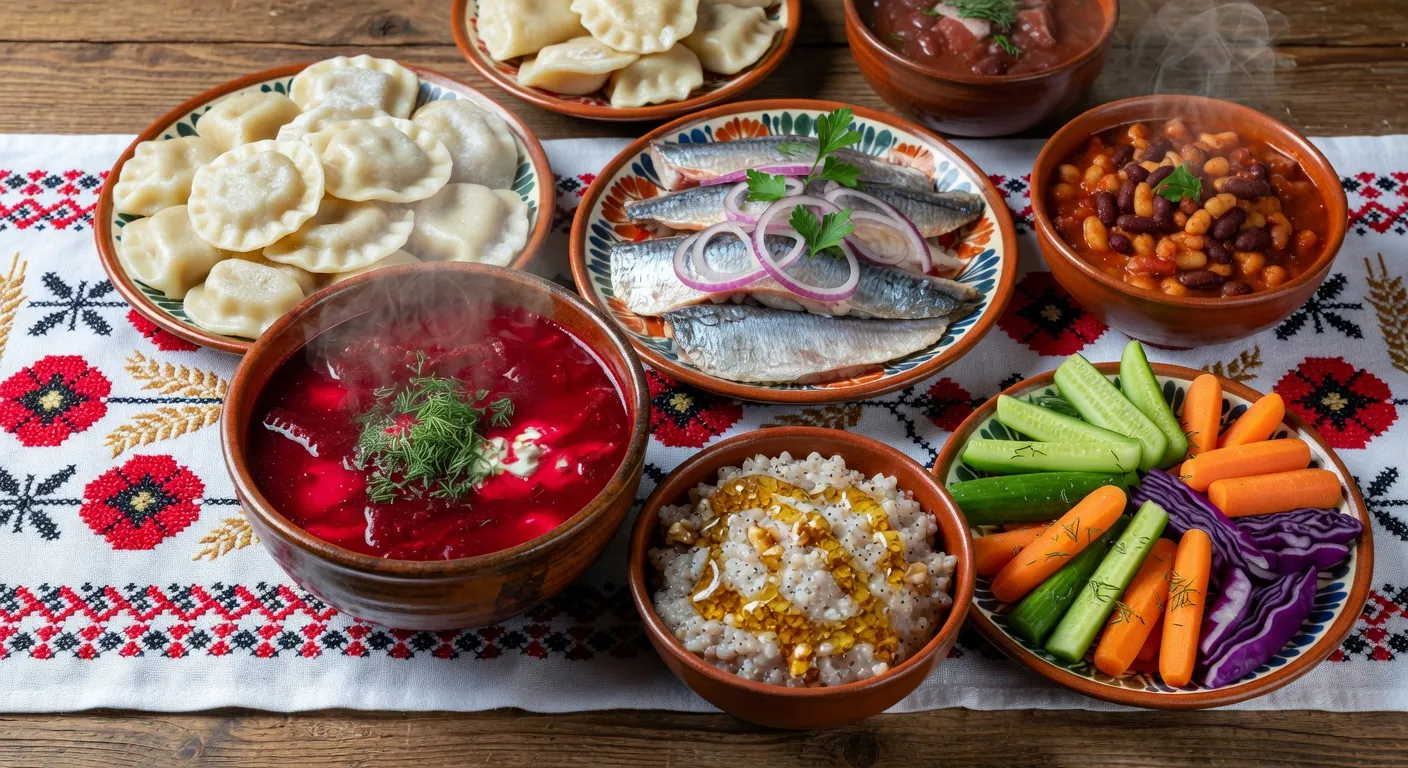
While the precise composition varies by family and regional origin, these are the twelve dishes most commonly found at Ukrainian Christmas tables in Canada:
- Kutia (wheat porridge with honey, poppy seeds, and walnuts) — always first
- Borscht (beet soup, served without meat; mushroom or bean-based in the fasting version)
- Varenyky (dumplings filled with potato, sauerkraut, or mushrooms — no meat or cheese filling)
- Holubtsi (cabbage rolls filled with rice and mushrooms or buckwheat)
- Ryba (fish — baked, fried, or in jelly; herring is common)
- Vushka (small mushroom-filled dumplings served in the borscht broth)
- Kasha (buckwheat or millet porridge)
- Pampushky (small baked buns or doughnuts, sometimes filled with prune or poppy seed jam)
- Sochevytsya or Bobalnyk (lentil or bean stew)
- Salad or pickled vegetables (pickled cabbage, beets, or cucumbers)
- Uzvar (dried fruit compote — prunes, pears, apples — served as a drink)
- Kolach (the braided Christmas bread) — sometimes classified as the twelfth dish
The order matters. Kutia is always first and uzvar often closes the meal. The middle dishes can shift, and regional variations are significant. Families from Galicia (western Ukraine, under Austro-Hungarian rule) often favour a more dairy-forward approach in other contexts, but keep this supper strictly meatless. Families from Bukovyna may include slightly different spice profiles. Families who settled in Manitoba or Saskatchewan often incorporated local wild mushrooms, which were gathered and dried in autumn specifically for the Christmas preparations.
| # | Dish | Symbolism / role |
|---|---|---|
| 1 | Kutia | Wheat, honey, poppy seeds — always the opening dish |
| 2 | Borscht | Meatless beet soup, mushroom or bean-based |
| 3 | Varenyky | Potato, sauerkraut, or mushroom filling — no meat or cheese |
| 4 | Holubtsi | Rice or buckwheat cabbage rolls |
| 5 | Ryba (fish) | The one animal protein allowed |
| 6 | Vushka | Small mushroom dumplings served in the borscht |
| 7 | Kasha | Buckwheat or millet porridge |
| 8 | Pampushky | Small buns, sometimes filled with prune or poppy seed jam |
| 9 | Sochevytsya / Bobalnyk | Lentil or bean stew |
| 10 | Pickled vegetables | Cabbage, beets, or cucumbers |
| 11 | Uzvar | Dried fruit compote, often closes the meal |
| 12 | Kolach | Braided Christmas bread, sometimes counted as the twelfth dish |
Did you know? Only kutia's position at the start and uzvar's position at the close are fixed by tradition. Every dish in between can and does vary by region and family — which means the exact composition of a family's twelve dishes is itself a small clue about where in Ukraine that family's Christmas table tradition originated.
Kutia: The Sacred First Dish
No element of Svyata Vechera carries more symbolic weight than kutia (кутя). This sweet wheat porridge is arguably the oldest survival of pre-Christian Slavic ritual food, adapted and given new meaning within the Christian tradition.
To make kutia, whole wheat berries are cooked until soft, then combined with honey (representing sweetness and prosperity), poppy seeds (symbolizing peaceful sleep and the spirits of the dead), and walnuts (symbolizing strength and fertility). Some families add raisins, dried cranberries, or a splash of poppy seed milk.
What each kutia ingredient symbolizes:
| Ingredient | Symbolic meaning |
|---|---|
| Whole wheat berries | Base of the dish; the harvest and the cycle of the seasons |
| Honey | Sweetness and prosperity for the year ahead |
| Poppy seeds | Peaceful sleep and the spirits of the dead |
| Walnuts | Strength and fertility |
The dish is eaten communally, from a single large bowl passed around the table or served to each guest by the head of the household. In Galician tradition, the first spoonful was sometimes thrown toward the ceiling — the number of seeds that stuck was said to predict the number of bees the family would keep the following year, a measure of agricultural prosperity. In other regional variants, some kutia was set aside in a bowl on the windowsill overnight for the ancestral spirits visiting the home.
For genealogists researching Ukrainian-Canadian families, kutia appears in nearly every oral history account of the Christmas experience. Community histories published by Ukrainian settler families — which are documented in directories like the province-by-province family history books index — routinely describe the kutia preparation as the moment when the whole family gathered, the dish that most reliably transported grandparents back to the Galician village they had left decades before.
Borscht and the Meatless Menu
On ordinary days, Ukrainian borscht is a rich meat-based soup with pork or beef ribs and a generous spoonful of sour cream (smetana). On Svyata Vechera, all of that changes. Christmas Eve borscht (pist’nyi borscht, or fasting borscht) is built on a base of dried mushrooms and beet kvass or roasted beets, with no meat or dairy of any kind.
The result is a surprisingly complex dish. The mushrooms — ideally dried porcini or forest mushrooms gathered the previous autumn — contribute a deep umami richness that compensates for the absence of meat. The beets bring colour and earthiness. Some families add beans; others include a small dumpling called vushka (little ear) that floats in the bowl, filled with finely chopped mushroom and onion.
The mushroom question is interesting from a genealogical perspective. Ukrainian settlers in Manitoba and Saskatchewan found the boreal forests of the Canadian prairies supplied different mushrooms than the forests of Galicia. Over generations, recipes shifted. Ukrainian folk traditions in Canada include this culinary adaptation as one of the markers of the immigrant experience — holding the cultural form (meatless borscht with mushrooms) while gradually changing the specific ingredients to whatever the new country provided.
The rest of the meatless menu follows similar logic. Holubtsi (cabbage rolls) use rice or buckwheat instead of meat. Varenyky are filled with potato and cheddar — not possible in Ukraine, where cheddar was unavailable, but common in Canadian versions since the 1920s. Fish, especially pickled herring or baked carp, is the one animal protein allowed.
Ukrainian Christmas Bread (Kolach)
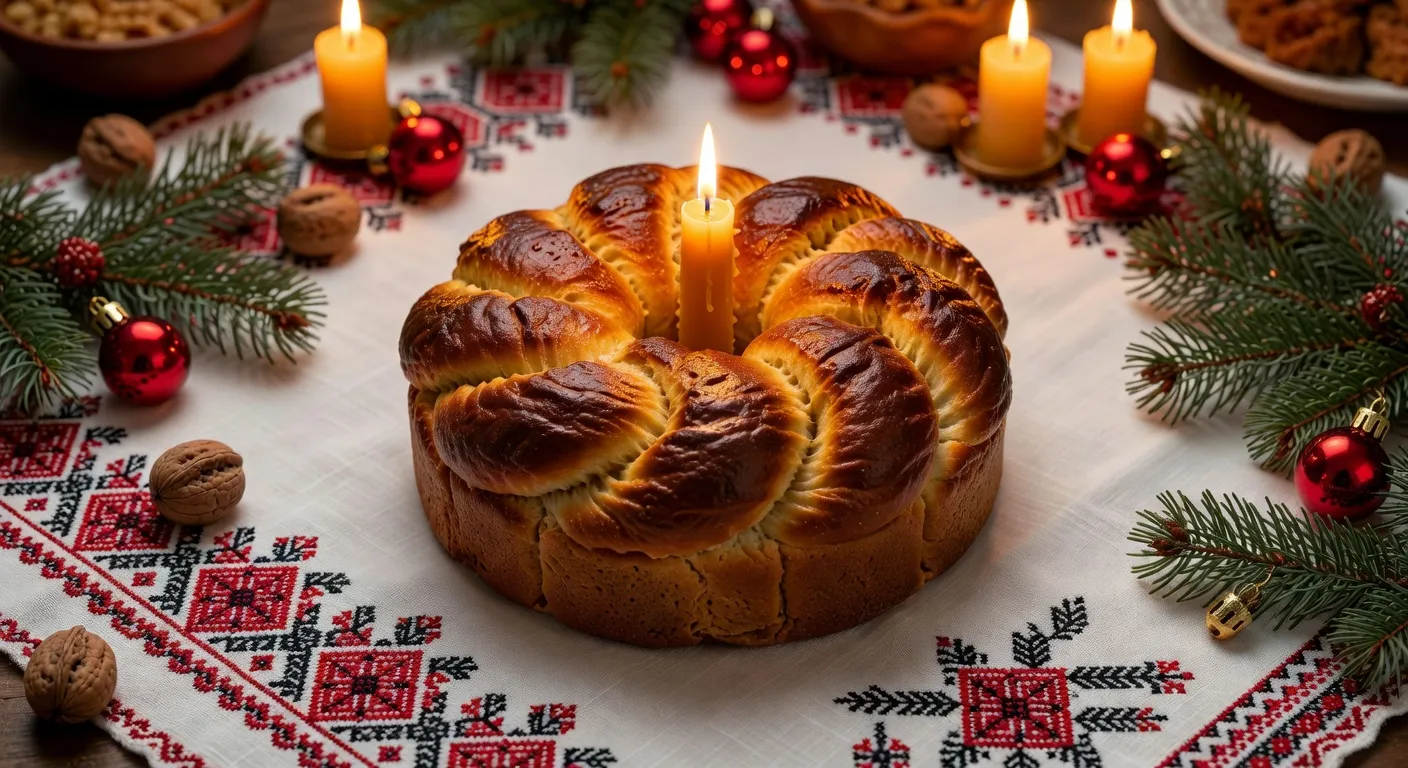
The kolach (коляч) is the braided bread that stands at the centre of the Christmas table, often presented in threes — three braided rings stacked on top of each other — representing the Trinity. A candle is placed in the top ring, lit before the meal begins and left to burn through the supper.
The word kolach comes from the Ukrainian word for circle (kolo), and the circular braided form represents eternity — a cycle with no beginning and no end. Some families believe that the more beautifully the kolach is braided, the more fortunate the coming year will be, so considerable skill and pride goes into its preparation.
Unlike the rest of the meal, kolach is not eaten during Svyata Vechera. It stands as a sacred object, a centrepiece rather than a dish. After Christmas, the kolach is shared with family and guests, or given to neighbours. In some traditions, a portion was kept until spring planting and crumbled into the first furrow as a prayer for the harvest.
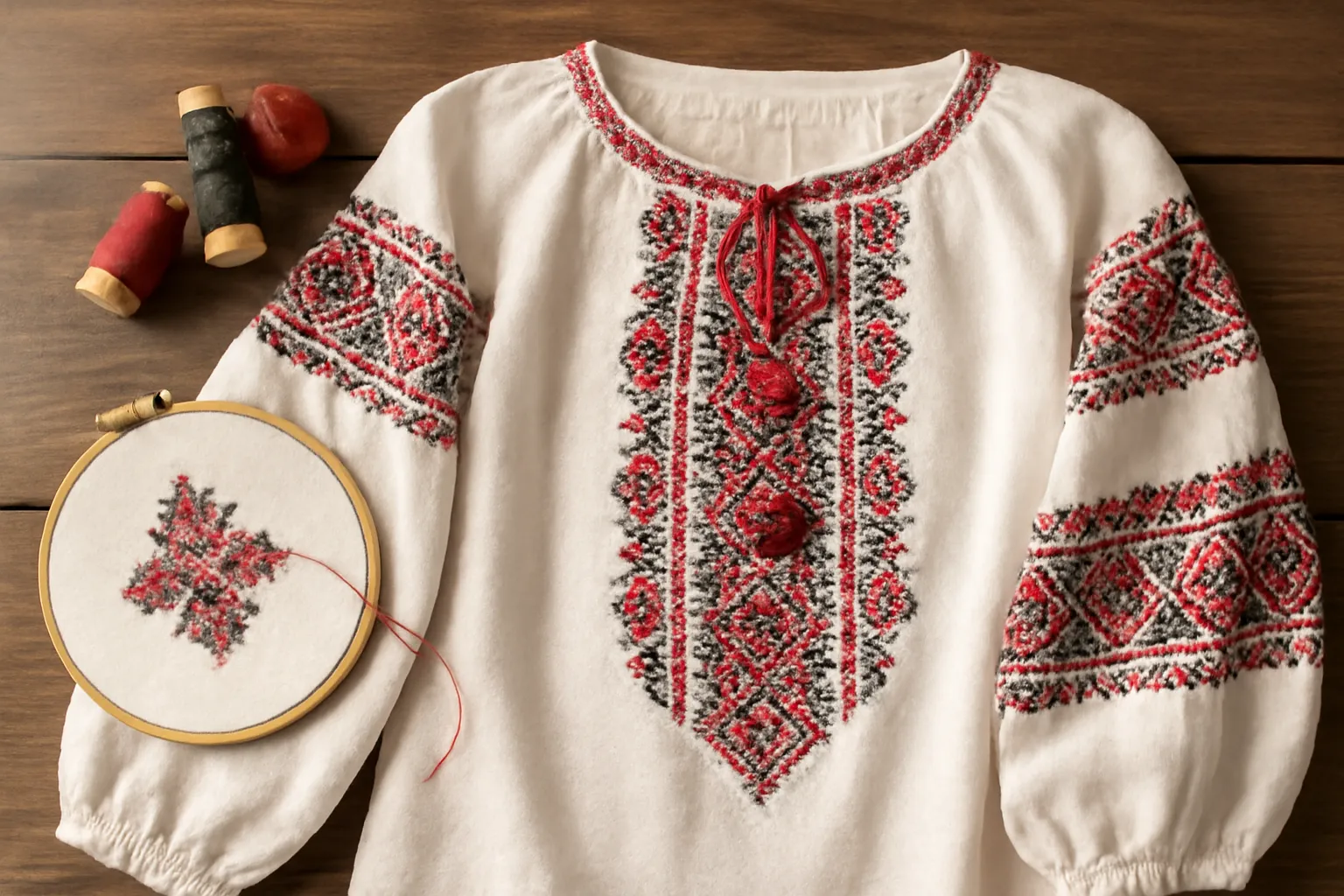
Kolach recipes appear frequently in Ukrainian-Canadian embroidery and folk art communities, where the bread’s visual patterns — the braid, the twist, the circular crown — echo the geometric motifs of traditional needlework. Both traditions encode the same values: beauty, continuity, the honouring of ancestors.
Christmas Eve Prayers and Customs
Svyata Vechera is framed by prayer. Before the meal, many families sing “Boh Predvichny” (God Eternal), a traditional Ukrainian Christmas carol that marks the formal beginning of the celebration. In more religious households, the family attends the Vespers service at the local Ukrainian church before returning home for the supper.
Across the table, a handful of hay or straw is often placed under the white tablecloth, recalling the manger in Bethlehem and the agricultural roots of the celebration. The candle in the kolach burns throughout the meal. Conversation is kept quiet and reverent, at least through the early courses.
After the supper, many families participate in Koliada — the Ukrainian tradition of carolling. Groups of young people (and increasingly, adults) move from house to house singing traditional koliadky (Christmas carols), many of them pre-Christian in origin, celebrating the winter solstice alongside the Nativity story. In Canadian Ukrainian communities, Koliada was often organised by local church groups, and the practice survived in many communities well into the 21st century.
To explore ancestral records related to your family’s participation in these traditions, consulting how to start Ukrainian genealogy research can help you locate church records, community histories, and oral history collections from Ukrainian-Canadian settlements.
How PEI Ukrainian Families Celebrate Today
Prince Edward Island’s Ukrainian community is small compared to the prairie provinces, but its traditions are no less carefully preserved. Families who trace their roots to Galician settlers who arrived via Manitoba or who came directly as farm labourers in the early 20th century have maintained Svyata Vechera as an annual anchor.
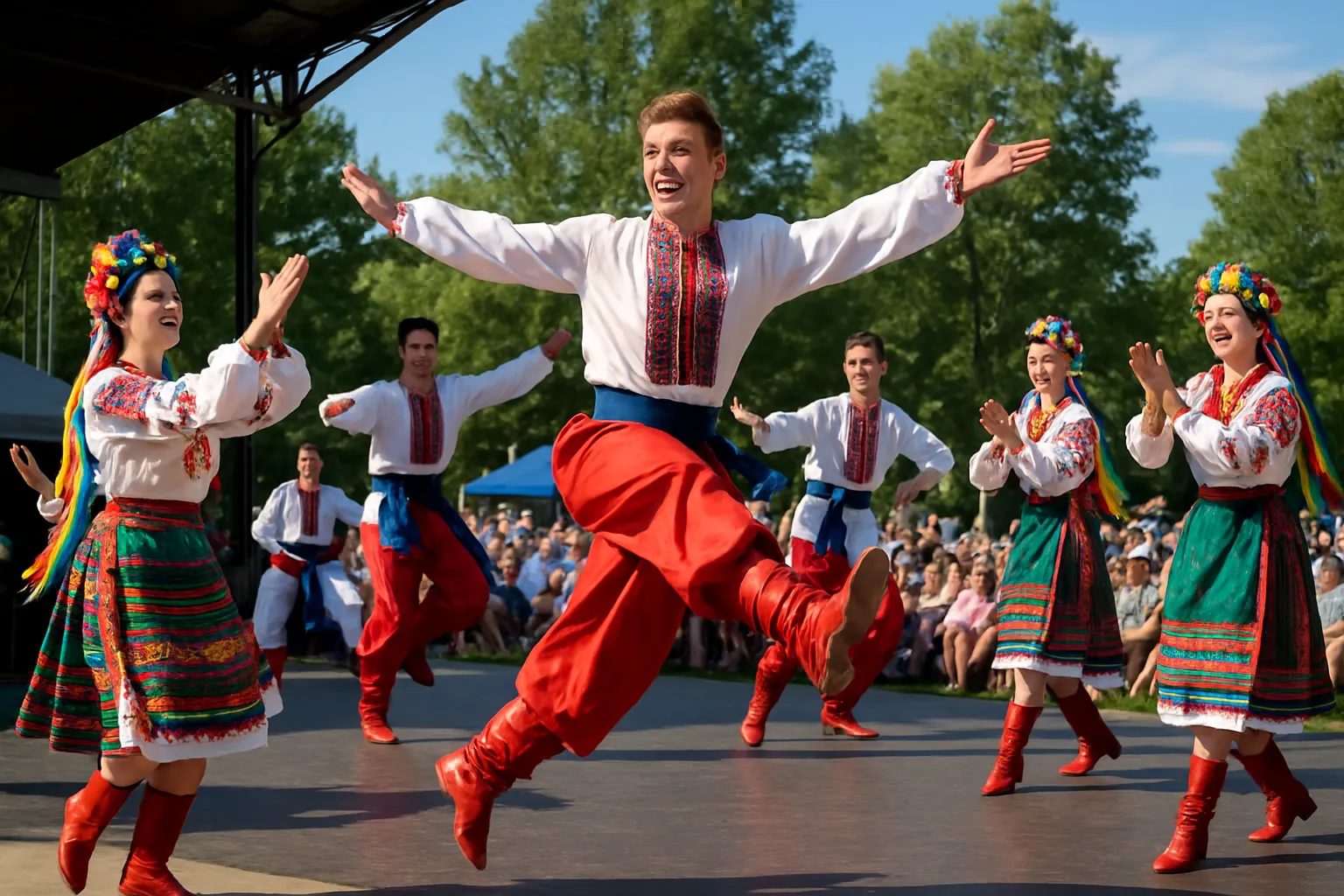
In Charlottetown and the surrounding area, Ukrainian community gatherings around January 6 combine the domestic tradition with communal celebration. The local Ukrainian community centre — where generations have attended language classes, folk dance rehearsals, and cultural events — often organizes a shared Svyata Vechera, inviting members of the broader community to experience the tradition. These gatherings serve double duty: they preserve the ritual for families who can no longer prepare all twelve dishes themselves, and they introduce younger generations (and non-Ukrainian neighbours) to a tradition they might otherwise only know abstractly.
For genealogists, these community events are also an informal archive. Elders who attend have often carried oral histories that appear nowhere in written records. A conversation at a Svyata Vechera table in Charlottetown might be the only surviving record of which Galician village a great-grandmother came from, or what the first PEI Ukrainian Christmas in 1912 looked like.
For those who want to understand Ukraine’s living traditions firsthand, ukrainetrips.com offers context on the regions where many of these customs originated — the Galician villages whose descendants now sit at Christmas tables across Prince Edward Island.
Preserving the Tradition for the Next Generation
The challenge facing Ukrainian-Canadian families in 2026 is familiar to all diaspora communities: how to pass on a living tradition when the original cultural context no longer surrounds daily life. Kutia requires whole wheat berries, a product now found only in specialty stores. Dried mushrooms require autumn foraging or careful sourcing. The prayers and carols are in Ukrainian, a language that many third- and fourth-generation Canadians do not speak.
Several strategies have emerged across Canadian Ukrainian communities:
- Recipe documentation — organizations like the East European and Genealogical Society (eigs.ca) have compiled traditional recipe collections that accompany genealogical research, recognizing that food knowledge is as much a part of the family archive as a ship manifest or a census record
- Intergenerational cooking days — families increasingly organize dedicated cooking sessions in November and December where grandparents and great-grandparents teach the preparation of each dish, not just the recipe but the stories attached to it; these sessions are sometimes recorded
- Community cookbooks — Ukrainian-Canadian church groups and cultural organizations have published community cookbooks for over a century, documenting not just recipes but also the names of the families who contributed them, a genealogical source hiding in plain sight
- School and community programs — some Ukrainian Saturday schools and cultural organizations have introduced Svyata Vechera workshops into their curricula, ensuring that even children who do not speak Ukrainian can participate in the preparation and understand its meaning
To remember: Community cookbooks published by Ukrainian-Canadian churches often list the names of the families who contributed each recipe — making a decades-old parish cookbook a genealogical source as valid as a ship manifest, and one far easier to find in a local library or church archive.
The twelve dishes of Svyata Vechera will likely look somewhat different in 2050 than they do today. The cheddar varenyky that shocked traditionalist immigrants in 1930 are now themselves traditional. The canola oil that replaced lard in the borscht is now standard. Each adaptation is also a record of the immigration experience — a documentation, dish by dish, of how Ukrainian culture met the Canadian environment and found a new equilibrium.
For researchers tracing Ukrainian-Canadian family history, the Svyata Vechera tradition is not just a cultural curiosity. It is one of the most densely encoded archives available: every dish a memory, every custom a clue, every family’s twelve-course deviation from the standard a record of where they came from and what they chose to keep.
Frequently Asked Questions
The number 12 represents the 12 apostles of Jesus Christ in the Ukrainian Christian tradition. Each dish is prepared without meat or dairy, reflecting the Nativity Fast observed by Ukrainian Greek Catholic and Orthodox Christians. The number is also linked to the 12 months of the year, symbolizing a prayer for abundance throughout the coming harvest cycle.
Svyata Vechera (Свята Вечеря) means 'Holy Supper' in Ukrainian. It is the ceremonial Christmas Eve meal eaten after the first star appears in the evening sky — symbolizing the Star of Bethlehem. It is the most sacred family event in the Ukrainian Christmas calendar, held on January 6 for Ukrainian Greek Catholic and Orthodox families following the Julian calendar.
Kutia (wheat porridge with honey, poppy seeds, and nuts) is always the first dish served at Svyata Vechera. It symbolizes the connection between the living and the departed ancestors. The head of the household traditionally takes the first spoonful and offers a toast to absent family members, including those who have died.
Most Ukrainian Greek Catholic and Orthodox families in Canada celebrate Svyata Vechera on January 6, because their churches follow the Julian calendar, which places Christmas 13 days after the Western December 25 date. Some Ukrainian families have adopted December 24 as their primary celebration, especially in mixed households, but January 6 remains the traditional date for the ritual 12-dish supper.
Yes. While the core dishes — kutia, borscht, varenyky, and kolach — appear on nearly every table, the remaining dishes vary by regional origin (Galicia, Polesia, Bukovyna), by what was available locally in Canada, and by family tradition. Some families include pickled herring; others prepare mushroom dishes; still others add a bean stew called vushka. The number 12 is fixed; the specific composition is flexible.