1. Vyshyvka — The Art of Ukrainian Embroidery
Vyshyvka (Ukrainian embroidery) is one of the most recognizable expressions of Ukrainian identity. For centuries, Ukrainian women — and sometimes men — have adorned clothing, household linens, and ceremonial items with intricate hand-stitched patterns that tell stories of faith, nature, and community.
More than decorative art, Ukrainian embroidery served as a visual language. Before widespread literacy, embroidered patterns communicated a person’s region of origin, social status, marital state, and even family lineage.
2. History of Ukrainian Embroidery
Ukrainian embroidery has roots stretching back to ancient Kyivan Rus’ and even earlier. Archaeological finds from the Trypillian culture (5500-2750 BCE) show evidence of decorated textiles, suggesting that the tradition of adorning fabric is thousands of years old.
Key Historical Periods
- Pre-Christian era — embroidery served as protective talismans, with symbols believed to ward off evil spirits
- Kyivan Rus’ (9th-13th century) — Byzantine influences mixed with local Slavic motifs, especially in church vestments. The broader Slavic tradition of decorative textiles from this era is explored on sites like Heritage Russe
- Cossack era (15th-18th century) — elaborate embroidery on military and ceremonial garments, reflecting wealth and status
- 19th century — the golden age of folk embroidery, with regional styles reaching their highest artistic expression
- Soviet era — traditional patterns were suppressed but survived in rural communities and in the diaspora
- Modern era — a renaissance of interest in traditional embroidery, both in Ukraine and among the diaspora worldwide
3. Regional Styles — A Map in Thread
One of the most fascinating aspects of Ukrainian embroidery is that each region has a distinctive style. An experienced eye can identify the exact area of Ukraine a garment comes from simply by examining its patterns, colors, and stitching technique.
Western Ukraine
Galicia (Halychyna):
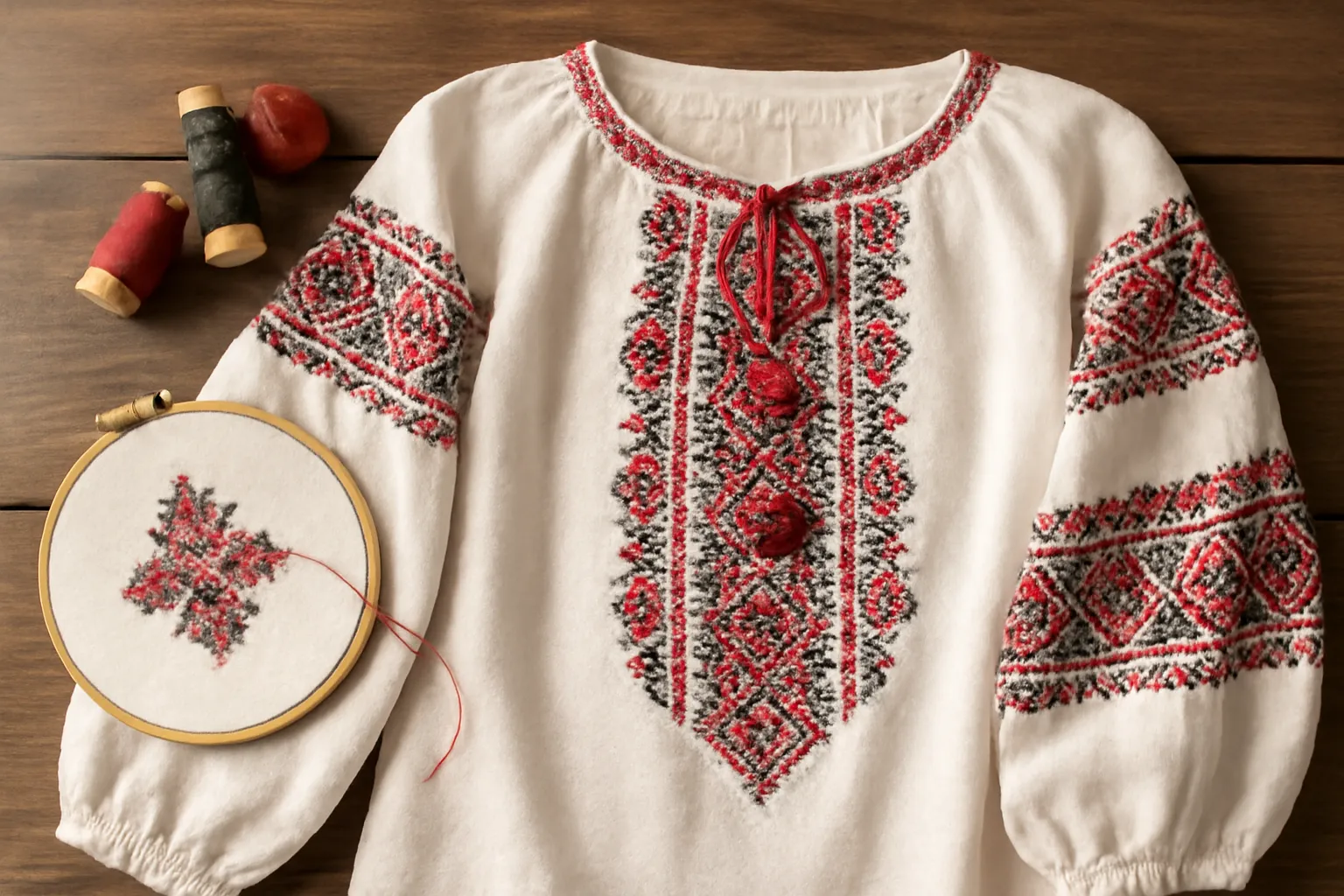
- Predominantly red and black color schemes
- Geometric patterns with cross-stitch technique
- Common motifs: eight-pointed stars, diamonds, and stylized trees
Hutsul Region (Carpathian Mountains):
- Vibrant multicolored designs with red, yellow, green, and orange
- Complex geometric patterns with metallic thread accents
- Distinctive use of beading alongside embroidery
- Bold, eye-catching designs reflecting the mountain culture
Bukovina:
- Rich polychrome palette with many colors used together
- Floral and geometric motifs combined
- Distinctive cross-stitch and satin-stitch techniques
Central Ukraine
Poltava:
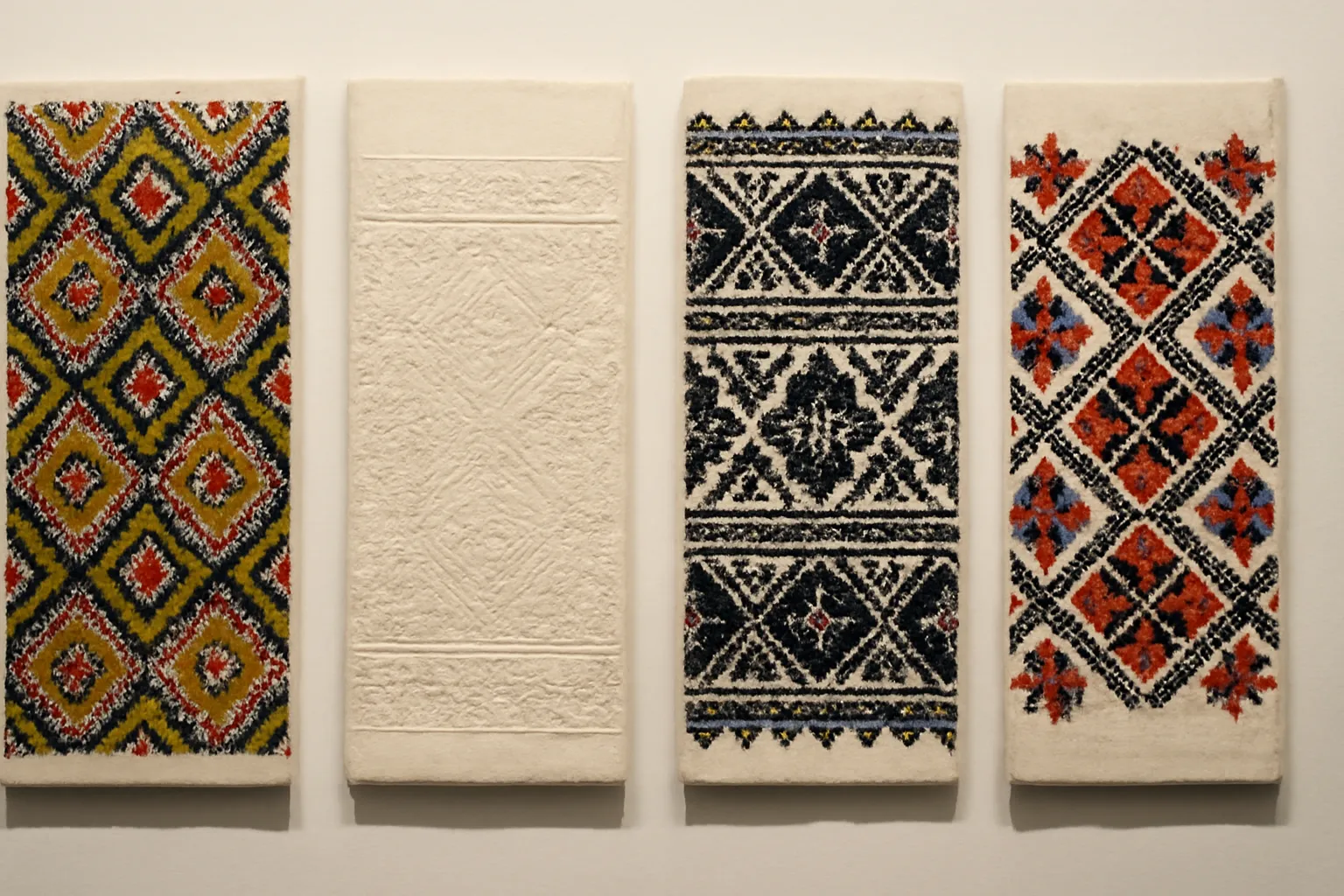
- Delicate white-on-white embroidery (bilyi po bilomu)
- Drawn-thread work creating lace-like effects
- Subtle, elegant geometric and floral patterns
- Considered the most refined regional style
Kyiv Region:
- Plant and floral motifs dominating
- Red and blue color combinations
- Satin stitch and counted thread techniques
Southern and Eastern Ukraine
Podillia:
- Predominantly black embroidery with red and yellow accents
- Dense, bold geometric patterns
- Strong contrast creating dramatic visual effects
Volhynia:
- Red as the dominant color
- Geometric patterns with floral elements
- Clean, symmetrical designs
4. Symbolism in Embroidery
Every motif in Ukrainian embroidery carries traditional meaning:
Plant Motifs
- Roses — love, beauty, and compassion
- Oak leaves and acorns — strength, courage, and endurance
- Grapevines — joy, family, and God’s blessing
- Wheat — prosperity, fertility, and the harvest
- Periwinkle (barvinok) — everlasting love and memory
- Kalyna (viburnum berries) — beauty, the motherland, and immortality
Geometric Motifs
- Eight-pointed star — the sun, life energy, and God’s eye
- Diamonds (rhombus) — knowledge, the earth, and fertility
- Endless meander — eternity and the cycle of life
- Triangles — the Holy Trinity or elements of nature
- Crosses — faith, protection, and the four cardinal directions
Color Meanings
- Red — love, joy, passion, and the sun
- Black — the earth, sorrow, and eternity
- Blue — the sky, water, and health
- Yellow/Gold — the harvest, wisdom, and the moon
- Green — spring, renewal, and nature
- White — purity, innocence, and light
5. The Vyshyvanka in Daily Life
Traditional Uses
Embroidery adorned virtually every textile in a traditional Ukrainian household:
- Sorochka (everyday shirt) — worn daily by both men and women
- Rushnyky (ritual towels) — used in weddings, funerals, and religious ceremonies
- Bed linens and tablecloths — embroidered for beauty and protection
- Wedding garments — the most elaborate embroidery, often taking months to complete
- Children’s clothing — believed to provide spiritual protection
The Wedding Rushnyk
The rushnyk played a central role in Ukrainian weddings. The couple stood on a rushnyk during the ceremony, and embroidered towels were exchanged between families. A bride’s embroidery skill was considered a measure of her worth, and she would prepare an entire trousseau of embroidered items before marriage.
These same rushnyky sometimes survive as family heirlooms and can provide valuable clues for genealogists. The style of embroidery can help identify the family’s region of origin, as discussed in our guide on how to start Ukrainian genealogy research.
6. Vyshyvanka in Fashion
In the 21st century, the vyshyvanka has moved from folk tradition to the international fashion stage. What was once worn exclusively in Ukrainian villages is now seen on runways, red carpets, and city streets around the world.
Designers Leading the Way
Several Ukrainian designers have brought vyshyvanka-inspired fashion to a global audience:
- Vita Kin — the Kyiv-based designer whose “Vyshyvanka” dress collection became an international sensation after being spotted on celebrities and featured in Vogue, Elle, and other major fashion publications. Her flowing linen dresses, embroidered with traditional Ukrainian motifs, popularized what the fashion press dubbed the “vyshyvanka trend” starting around 2015.
- ETNODIM — a Ukrainian brand that produces authentic embroidered garments for everyday wear, making traditional vyshyvanky accessible to a modern audience. Their pieces range from faithful reproductions of regional patterns to contemporary interpretations that appeal to younger buyers.
- Other designers including Yuliya Magdych, Ksenia Schnaider, and Varenyky Fashion have incorporated Ukrainian embroidery elements into their collections, bringing traditional motifs into conversation with contemporary fashion.
International Recognition
Ukrainian embroidery motifs have appeared in collections by international fashion houses as well, though this has sometimes sparked debate about cultural appropriation versus appreciation. The growing visibility of Ukrainian fashion design has helped ensure that the source culture receives proper credit and recognition.
The vyshyvanka’s transition from folk garment to fashion statement has been accelerated by global events since 2022, as people around the world have worn embroidered Ukrainian shirts as a visible expression of solidarity.
7. Embroidery as Resistance
Throughout Ukraine’s history, the act of wearing a vyshyvanka has carried meaning far beyond fashion or tradition. At key moments, embroidery has served as a powerful form of cultural resistance.
Soviet Suppression
During the Soviet period, Ukrainian cultural expression was systematically suppressed. The Soviet authorities viewed outward displays of Ukrainian identity — including traditional dress — with suspicion. Wearing a vyshyvanka could mark a person as a “bourgeois nationalist,” a dangerous label that could lead to persecution.
Despite these risks, many Ukrainians continued to embroider and wear traditional garments, particularly in rural areas and within the privacy of family celebrations. In the diaspora communities of Canada, the United States, and elsewhere, wearing vyshyvanky became an act of defiance against Soviet attempts to erase Ukrainian identity. Ukrainian-Canadian families kept the tradition alive through church gatherings, cultural festivals, and community events — a form of Ukrainian folk tradition preservation that sustained the culture across generations.
Since 2014
The annexation of Crimea and the conflict in eastern Ukraine beginning in 2014 transformed the vyshyvanka into one of the most visible symbols of Ukrainian sovereignty and national unity. Vyshyvanka Day celebrations grew dramatically as Ukrainians at home and in the diaspora embraced embroidered shirts as a statement of identity.
Since 2022
Following the full-scale invasion in February 2022, the vyshyvanka took on even deeper significance. People across the world — many with no Ukrainian heritage — wore embroidered shirts to show solidarity. The garment became a symbol recognized internationally as representing Ukrainian resilience and the fight for independence. Social media images of soldiers wearing vyshyvanky under their body armour became iconic, linking the centuries-old tradition of protective embroidery to the modern struggle for survival.
8. Vyshyvanka Day — A Modern Tradition
Vyshyvanka Day (Den Vyshyvanky) is celebrated on the third Thursday of May each year. On this day, Ukrainians and friends of Ukraine around the world wear embroidered shirts to celebrate Ukrainian identity and cultural heritage.
History of Vyshyvanka Day
The tradition began in 2006 at Chernivtsi National University in Western Ukraine, when a student named Lesia Voroniuk invited her classmates to wear vyshyvanky to class. The idea quickly spread:
- 2006-2010 — the celebration spread to other Ukrainian universities
- 2011-2015 — adopted by cities across Ukraine and diaspora communities
- 2016-present — recognized internationally, with participants on every continent
Today, Vyshyvanka Day is celebrated in Canadian cities from coast to coast, including in communities on Prince Edward Island. It has become one of the most visible expressions of Ukrainian pride and solidarity.
9. Embroidery and Genealogy
For genealogists, Ukrainian embroidery can be an unexpected but valuable research tool.
How Embroidery Helps Research
- Regional identification — comparing family heirloom embroidery patterns to regional databases can narrow down the area of Ukraine your ancestors came from
- Time period dating — embroidery styles evolved over time, and experts can often date a piece to within a few decades
- Family traditions — certain patterns were passed down within families, and finding the same motifs in museum collections can connect you to specific communities
- Social context — the quality and complexity of embroidery indicates the family’s social and economic position
Preserving Embroidered Heirlooms
If you have family embroidery, take steps to preserve it:
- Photograph everything in detail, including close-ups of stitch patterns
- Store in acid-free tissue in a cool, dry place
- Never display in direct sunlight — UV light fades natural dyes
- Consult a textile conservator for valuable or fragile pieces
The cultural resources available through PEI’s Ukrainian community can help connect you with experts who can identify your family’s embroidery traditions.
10. Learning Ukrainian Embroidery Today
Ukrainian embroidery is experiencing a revival both in Ukraine and in the diaspora. Workshops, online courses, and community groups make it possible for anyone to learn this ancient art.
Getting Started
- Begin with cross-stitch — the most common Ukrainian embroidery technique and the easiest to learn
- Use traditional materials — linen fabric, cotton or silk thread, and a blunt tapestry needle
- Start with simple geometric patterns — master basic motifs before attempting complex designs
- Join a community group — learning alongside others keeps you motivated and connected to tradition
Whether you wear a vyshyvanka on Vyshyvanka Day, embroider your own rushnyk, or simply appreciate the artistry of Ukrainian textiles, engaging with this tradition connects you to centuries of Ukrainian creativity and cultural expression.
Frequently Asked Questions
A vyshyvanka is a traditional Ukrainian embroidered shirt or blouse. The word comes from 'vyshyvaty' meaning 'to embroider.' Vyshyvanky feature hand-stitched geometric, floral, or zoomorphic patterns that vary by region, with each area of Ukraine having distinctive colors, motifs, and stitching techniques.
Ukrainian embroidery patterns carry symbolic meanings: roses represent love and beauty, oak leaves symbolize strength and courage, grapevines represent joy and family, geometric diamonds symbolize knowledge, and the eight-pointed star represents the sun and life energy. Red-and-black patterns are associated with Western Ukraine (Galicia and Volhynia), while blue and white designs are more common in Central Ukraine.
Vyshyvanka Day (Den Vyshyvanky) is celebrated on the third Thursday of May each year. People around the world wear traditional embroidered shirts to celebrate Ukrainian identity and cultural heritage. The tradition started in 2006 at Chernivtsi National University and has grown into an international celebration.
Yes, embroidery patterns can provide genealogical clues. Different regions of Ukraine have distinctive styles — Hutsul patterns from the Carpathians differ markedly from Poltava or Podillia designs. If you have family heirlooms with embroidery, comparing the patterns to regional databases can help narrow down your ancestors' place of origin.
Authentic vyshyvanky can be purchased from Ukrainian artisans and cooperatives both in Ukraine and in the diaspora. Online shops such as ETNODIM (etnodim.com) and UkrGlamour offer hand-embroidered and machine-embroidered options at various price points. In Canada, Ukrainian church bazaars, cultural festivals, and community shops often sell authentic pieces. For a truly traditional garment, seek out artisans who use hand embroidery on linen — expect to pay more, but you will receive a genuine piece of Ukrainian heritage.