1. Introduction — The Paper Trail of Immigration
Every Ukrainian ancestor who came to Canada left a trail of records. From the moment they boarded a ship in Hamburg, Bremen, or Liverpool to the day they received their Canadian naturalization certificate, government officials documented their journey. These records — ship manifests, immigration forms, census entries, homestead files, and naturalization papers — are the keys to unlocking your family’s immigration story.
For genealogists researching Ukrainian ancestry, Canadian records serve a dual purpose. They provide essential details about your ancestors’ lives in Canada, and they often contain the one piece of information you need most: the name of the village in Ukraine where your family originated. With that village name, you can trace the family back through Ukrainian church records for generations.
This guide covers every major type of Canadian record that is useful for Ukrainian genealogy research, where to find each one, and how to overcome the common challenges — especially the maddening problem of misspelled names.
If you are just beginning your research journey, start with our comprehensive guide on how to start Ukrainian genealogy research.
2. Overview of Canadian Record Types
Before diving into each record type, here is an overview of the major Canadian records available for Ukrainian genealogy research:
| Record Type | Date Range | What It Contains | Where to Access |
|---|---|---|---|
| Ship Manifests / Passenger Lists | 1865-1935 | Passenger name, age, nationality, occupation, last residence, destination, contact in Canada | Library and Archives Canada (lac-bac.gc.ca), Ancestry.com, FamilySearch.org |
| Immigration Records | 1865-1935 | Arrival details, port of entry, accompanying family members, intended destination | Library and Archives Canada |
| 1901 Census | 1901 | Name, age, sex, birthplace, religion, origin, occupation, immigration year | Library and Archives Canada, Ancestry.com |
| 1906 Census | 1906 | Name, age, birthplace, religion, occupation (prairie provinces only) | Library and Archives Canada, Ancestry.com |
| 1911 Census | 1911 | Name, age, birthplace, religion, year of immigration, naturalization status, occupation, earnings | Library and Archives Canada, Ancestry.com |
| 1916 Census | 1916 | Name, age, birthplace, religion, occupation (Manitoba, Saskatchewan, Alberta only) | Library and Archives Canada |
| 1921 Census | 1921 | Name, age, birthplace, religion, year of immigration, language, education, occupation | Library and Archives Canada, Ancestry.com |
| Homestead Files | 1872-1930 | Application, proof of residency, land improvements, origin, family details | Library and Archives Canada |
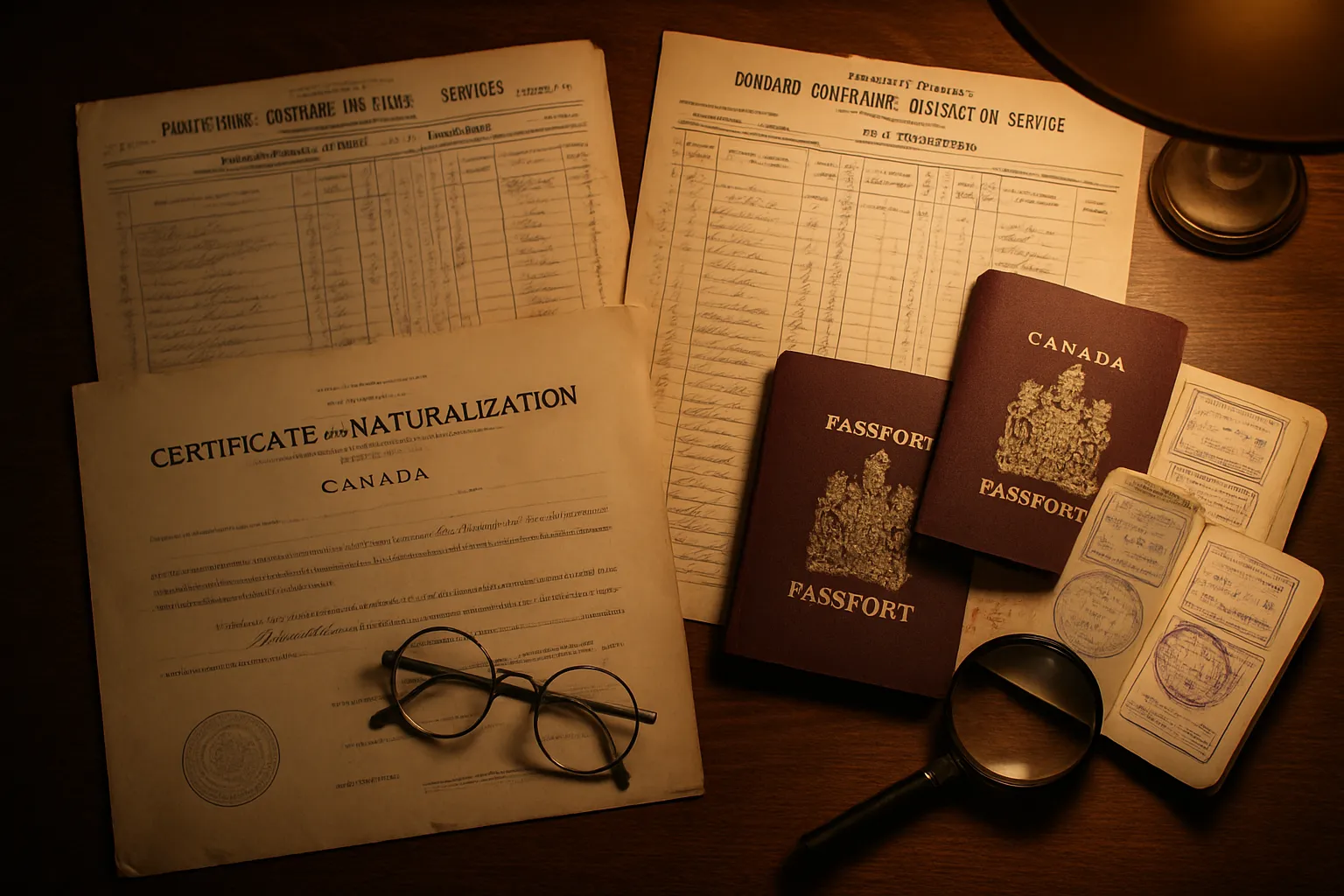
| Naturalization Records | 1828-1951 | Original name, birthplace, date of arrival, occupation, physical description, oath of allegiance | Library and Archives Canada, provincial archives |
| Border Entry Records | 1908-1935 | Name, age, nationality, occupation, destination (for arrivals from the United States) | Library and Archives Canada |
3. Ship Manifests and Passenger Lists
Ship manifests are often the most exciting records to find, because they capture the exact moment your ancestor arrived in the New World. These documents were created by shipping companies and submitted to Canadian immigration authorities at the port of arrival.
What They Contain
The amount of detail varies by era. Early manifests (1860s-1890s) may contain only a name, age, and nationality. Later manifests (1900s-1930s) are far more detailed and may include:
- Full name of the passenger
- Age and sex
- Marital status
- Nationality and ethnicity (often listed as “Austrian,” “Galician,” “Ruthenian,” or “Ukrainian”)
- Last place of residence — this may include the village name
- Occupation
- Final destination in Canada
- Name and address of a relative or contact already in Canada
- Amount of money carried
- Whether the passenger had been to Canada before
- Physical description (height, eye color, distinguishing marks)
Ports of Arrival
Ukrainian immigrants entered Canada primarily through:
- Quebec City — the main port for arrivals before 1900 and a major entry point throughout the first wave of immigration
- Halifax, Nova Scotia — increasingly important in the early 1900s; Pier 21 became Canada’s primary immigration facility from 1928 onward
- Saint John, New Brunswick — a winter port when the St. Lawrence was frozen
- Montreal — some immigrants arrived here, though it was more commonly a transit point

How to Search
Library and Archives Canada has digitized passenger lists from 1865 to 1935 and made them searchable online at lac-bac.gc.ca. You can search by name, year of arrival, port of arrival, and ship name.
Ancestry.com has indexed many of these same records with enhanced search capabilities, including the ability to search by birthplace and destination.
FamilySearch.org also provides access to Canadian passenger lists, often with community-contributed indexes that can help you find records that automated indexes missed.
Tips for Ship Manifest Research
- If you know your ancestor arrived at Halifax, check the Canadian Museum of Immigration at Pier 21 (pier21.ca), which maintains its own database and interpretive resources.
- The shipping route typically went from a European port (Hamburg, Bremen, Liverpool, Antwerp) to a Canadian port. Check the Hamburg passenger lists (available through Ancestry.com) for the European departure record, which may contain different or additional information.
- Families sometimes traveled in groups from the same village. If you find one family from your ancestral village on a manifest, check the surrounding entries — relatives and neighbors may be listed nearby.
4. Immigration Records (1891-1935)
Beyond ship manifests, the Canadian government maintained additional immigration records that can provide valuable information.
Immigration Branch Correspondence
Library and Archives Canada holds the records of the Immigration Branch (RG 76), which include correspondence about individual immigrants, deportation cases, and policy files. While these records are not fully indexed, they can be extremely detailed when they exist for a specific individual.
Border Entry Records
From 1908 onward, Canada maintained records of people entering from the United States. Some Ukrainian immigrants first went to the US and later crossed into Canada, or they crossed back and forth for seasonal work. These records are searchable through Library and Archives Canada.
Immigration Identification Cards
After World War I, immigrants were issued identification cards that included a photograph, personal details, and information about their country of origin. These cards are held by Library and Archives Canada and can be a remarkable find — sometimes providing the only known photograph of an ancestor.
5. Census Records — Snapshots in Time
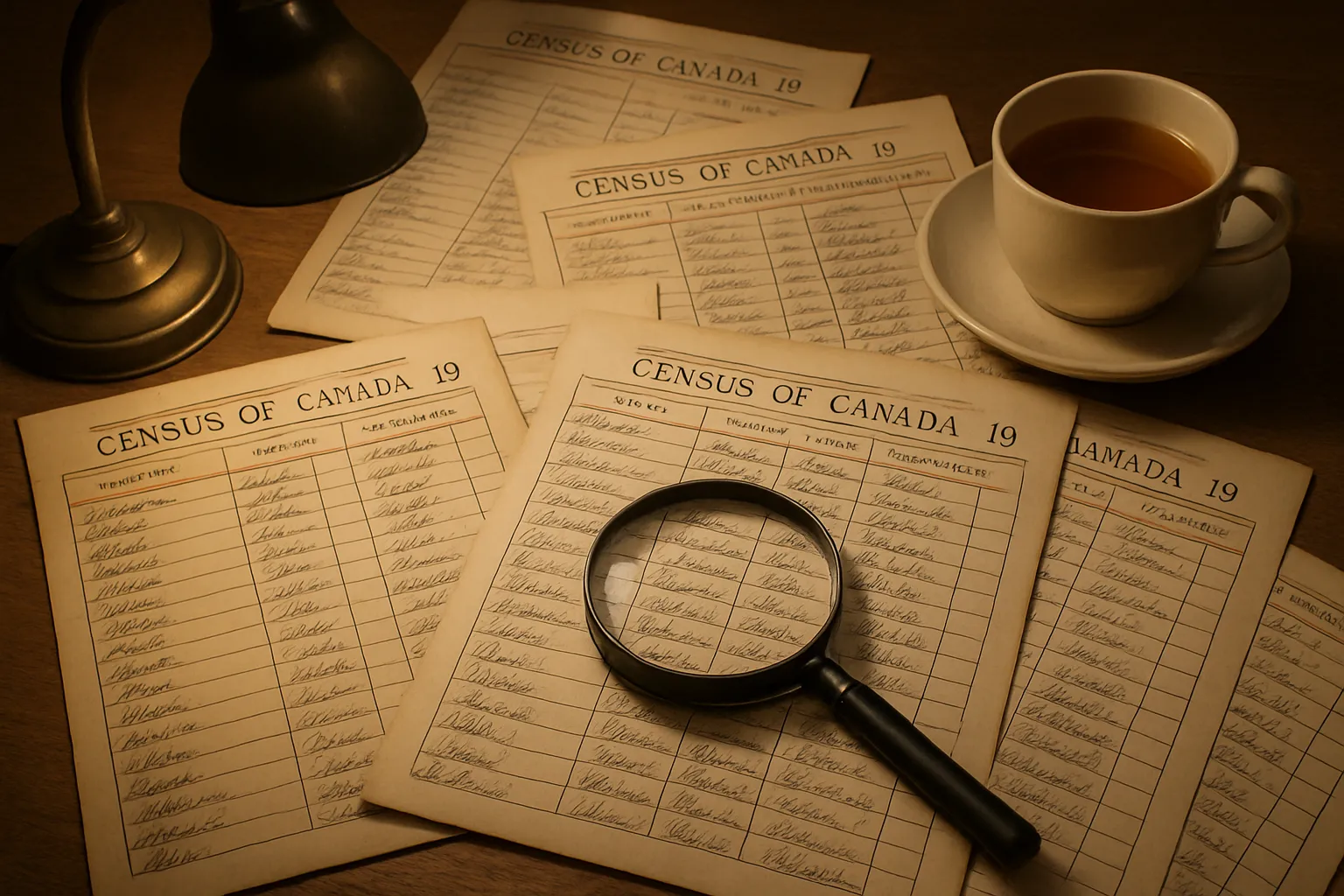
Canadian census records provide periodic snapshots of where your ancestors lived, who lived with them, and key demographic details. For Ukrainian genealogy, the following censuses are most important:
1901 Census
The 1901 census captures the earliest Ukrainian settlers in Canada. By this date, the first wave of immigration was well underway, and many Ukrainian families had been in Canada for five to ten years. The census records:
- Name, age, and sex
- Relationship to the head of household
- Country or place of birth
- Year of immigration
- Religious denomination
- Racial or ethnic origin (often listed as “Galician,” “Ruthenian,” “Austrian,” or “Bukowinian”)
- Occupation
- Whether the person could read and write
1906 Census
The 1906 census was a special enumeration conducted only in the prairie provinces of Manitoba, Saskatchewan, and Alberta. This is significant because the prairies were where the vast majority of Ukrainian settlers lived. The 1906 census is particularly valuable because it captures many Ukrainian families during their crucial early settlement years, when they were establishing homesteads and building communities.
1911 Census
The 1911 census is one of the most detailed early censuses and includes:
- Year of immigration to Canada
- Year of naturalization
- Whether the person could speak English or French
- Earnings from occupation
- Infirmities (deafness, blindness, etc.)
- Information about the dwelling (type of construction, number of rooms)
For Ukrainian genealogy, the 1911 census is particularly useful because it often lists the specific country or province of birth, which can help distinguish between immigrants from Galicia, Bukovyna, and other regions.
1916 Census
Another prairie-only census, the 1916 enumeration covers Manitoba, Saskatchewan, and Alberta. It provides a mid-war snapshot of Ukrainian communities and can reveal changes in family composition, occupation, and residence since the 1911 census.
1921 Census
The 1921 census is the most recent census available to the public (Canadian census records are released after a 92-year privacy restriction). It is also one of the most detailed, recording:
- Language spoken (mother tongue and languages known)
- Literacy in specific languages
- Education level
- Year of immigration
- Naturalization status
- Employment status and occupation
- War service
How to Search Census Records
All available Canadian census records can be searched through:
- Library and Archives Canada (lac-bac.gc.ca) — free access to digitized census images and indexes
- Ancestry.com — provides enhanced name indexes and search tools (subscription required)
- FamilySearch.org — free access to many Canadian census collections
- Automated Genealogy (automatedgenealogy.com) — community-built indexes for 1901, 1906, and 1911 censuses
6. Homestead Files — The Promise of Free Land
The Dominion Lands Act of 1872 offered settlers free 160-acre homesteads on the Canadian prairies. To claim a homestead, a settler had to:
- File an application at a Dominion Lands office
- Pay a small registration fee (typically $10)
- Live on the land for at least three years
- Build a habitable dwelling
- Cultivate a specified amount of land
- Apply for a “patent” (title deed) proving they had met the requirements
What Homestead Files Contain
Homestead files can be genealogical goldmines. A complete file may include:
- The original application — with the settler’s name, nationality, and sometimes the village of origin
- Proof of residency — sworn statements describing the settler’s improvements to the land, the size and construction of their house, the acres under cultivation, and the number of livestock
- Witness statements — neighbors who testified on the settler’s behalf, often fellow Ukrainian immigrants from the same village
- Correspondence — letters between the settler and the Dominion Lands office, sometimes revealing personal circumstances (illness, crop failure, family difficulties)
- The patent (land grant) — the final document confirming ownership
Where to Search
Library and Archives Canada holds homestead records for Manitoba, Saskatchewan, Alberta, and British Columbia. Their online database allows searching by name, land description (township, range, and section), and province.
For ancestors who settled on PEI or other eastern provinces, land records are held by provincial archives rather than the federal government.
7. Naturalization Records
Naturalization (citizenship) records document the process by which your immigrant ancestors became Canadian citizens. These records can be especially valuable because they often contain information not found in other sources.
What Naturalization Records Contain
- Full name (and sometimes the original name before anglicization)
- Country and place of birth — sometimes including the specific village
- Date of arrival in Canada
- Port of arrival
- Occupation
- Place of residence in Canada
- Physical description (height, weight, eye and hair color, distinguishing marks)
- Names and ages of family members (in some cases)
- A declaration renouncing allegiance to the former country
Where to Find Them
- Library and Archives Canada — holds naturalization records from 1915-1951, searchable online
- Provincial archives — hold earlier naturalization records (pre-1915) and some duplicate records
- Court records — naturalization was processed through local courts, and records may be held by provincial court archives
An Important Note on Timing
Many Ukrainian immigrants did not naturalize immediately upon arrival. It was common to wait years or even decades before applying for Canadian citizenship. Some immigrants, particularly women, never naturalized at all, as married women were automatically granted citizenship through their husband’s naturalization until changes in the law.
The push for naturalization often came during or after World War I, when non-naturalized immigrants from Austro-Hungarian territories (including many Ukrainians) were classified as “enemy aliens” and faced restrictions on their movements and activities. For a deeper understanding of this difficult period, see our Ukrainian immigration to Canada timeline.
8. Overcoming the Name Spelling Challenge
The single biggest challenge in searching Canadian records for Ukrainian ancestors is name spelling. Ukrainian names were systematically mangled by English-speaking immigration officials who recorded names phonetically based on what they heard.
Common Spelling Variations
A single Ukrainian surname might appear in records under a dozen different spellings:
| Original Ukrainian | Common Canadian Variants |
|---|---|
| Кравченко (Kravchenko) | Krawchenko, Kravtchenko, Crawchenko, Krafchenko |
| Шевченко (Shevchenko) | Shewchenko, Szewczenko, Chevchenko, Sewczenko |
| Ковальчук (Kovalchuk) | Kowalchuk, Kowalczuk, Cowalchuck, Kovalchuck |
| Гнатюк (Hnatiuk) | Gnatiuk, Natiuk, Hnatyuk, Natuk, Gnatyak |
| Бойко (Boyko) | Boiko, Bojko, Boyco, Boico |
Strategies for Searching
- Try multiple spellings: Write out every possible variation you can think of and search for each one.
- Use wildcard searches: When available, use wildcard characters (usually * or ?) to match partial names. For example, “Krav*” would match Kravchenko, Krawchuk, and Kravchyk.
- Search by given name and location: If surname searches are unproductive, try searching by the first name combined with a known location or year of arrival.
- Check for translated names: Some immigration officials translated Ukrainian names into English. Kovalchuk (from koval, meaning “smith”) might become Smith. Melnyk (meaning “miller”) might become Miller.
- Look for phonetic patterns: Think about how your ancestor’s name would have sounded to an English speaker, and what letters an English speaker might have used to represent those sounds.
- Search for traveling companions: If you know the names of other families from the same village, search for them — your ancestor may appear nearby on the same ship manifest or census page.
9. Putting It All Together — A Research Strategy
The most effective approach to Canadian records follows a logical sequence:
Step 1: Start with What You Know
Gather all family information: names, approximate dates, places of settlement in Canada. Even partial or uncertain information gives you a starting point.
Step 2: Search Census Records
Census records are the easiest to search and can quickly confirm your ancestor’s presence in a specific location at a specific time. Start with the 1921 census (the most detailed and most recent available) and work backward.
Step 3: Find Immigration Records
Once you have an approximate year of arrival from the census, search passenger lists for that year, expanding your search by a few years in either direction. Remember that the year of arrival listed in a census may be approximate.
Step 4: Locate Homestead Files
If your ancestor settled in the prairie provinces, search for their homestead file. The application and witness statements may contain information about the village of origin.
Step 5: Check Naturalization Records
Naturalization files can contain the most personal and detailed information, including physical descriptions and place of birth.
Step 6: Cross-Reference Everything
Each record type provides different pieces of the puzzle. Cross-referencing information across multiple records helps you verify facts, resolve contradictions, and build a complete picture of your ancestor’s journey.
For the broader context of your ancestors’ community-building efforts in Canada, explore our collection of Ukrainian community and family histories.
10. Online Resources and Databases
Here is a summary of the most important online resources for searching Canadian records:
Free Resources
- Library and Archives Canada (lac-bac.gc.ca) — The primary source for federal government records including immigration, census, homestead, and naturalization files
- FamilySearch.org — Extensive free collections of Canadian records, including census, immigration, and vital records
- Automated Genealogy (automatedgenealogy.com) — Community-built indexes for Canadian census records
- Canadian Museum of Immigration at Pier 21 (pier21.ca) — Immigration records and interpretive resources focused on Halifax arrivals
Subscription Resources
- Ancestry.com — Enhanced indexes and search tools for Canadian census, immigration, and vital records
- MyHeritage.com — Growing collection of Canadian records with global cross-referencing
- Findmypast.com — Some Canadian collections, particularly useful for cross-referencing British records
Provincial Archives
Each province maintains its own archives with vital records (births, marriages, deaths), land records, court records, and other documents that complement federal sources. For Prince Edward Island, the PEI Public Archives and Records Office holds provincial records dating back to the 1700s.
11. Beyond the Records — Understanding the Context
Records are essential, but understanding the historical context transforms them from dry documents into vivid stories. When you find your ancestor’s ship manifest, imagine the journey — weeks at sea in steerage class, arriving in a strange country where they could not speak the language, facing an uncertain future on unfamiliar land.
When you read a homestead file describing a two-room house and thirty acres under cultivation, picture the backbreaking work of clearing land, breaking sod, and building a farm from nothing — all while enduring harsh Canadian winters far from family and everything familiar.
The Canadian records that document your Ukrainian ancestors’ lives are more than genealogical data. They are the evidence of one of the great migration stories in Canadian history — a story of courage, resilience, and the determination to build a better life. Each record you find adds another chapter to your family’s remarkable journey.
Frequently Asked Questions
Library and Archives Canada (lac-bac.gc.ca) is the primary source for Canadian immigration records. Their digitized collections include passenger lists from 1865-1935. FamilySearch.org and Ancestry.com also have searchable databases of Canadian immigration records. Pier 21 in Halifax maintains records of immigrants who arrived through that port.
The Canadian census records most useful for Ukrainian genealogy are 1901, 1906 (prairie provinces only), 1911, 1916 (prairie provinces and Manitoba), and 1921. Each census collected different information, but most include name, age, birthplace, religion, year of immigration, and occupation. The 1921 census is the most recent publicly available.
Homestead files are held by Library and Archives Canada and can be searched through their online database. Search by surname and province. These files can contain the original application, proof of residency and improvements, and sometimes the settler's country and village of origin. They are especially valuable for ancestors who settled in Manitoba, Saskatchewan, and Alberta.
Immigration officials at Canadian ports typically recorded names phonetically based on how they sounded in English. A Ukrainian name like Kravchenko might appear as Krawchenko, Kravtchenko, Crawchenko, or Krafchenko. Officials also sometimes translated names — Kovalchuk (smith) might become Smith. Try multiple spelling variations and use wildcard searches when available.
Ship manifests (also called passenger lists) are records of everyone aboard a vessel arriving at a Canadian port. They typically include the passenger's name, age, nationality, occupation, last place of residence, destination in Canada, and the name of a relative or contact in Canada. Earlier manifests contain less detail than later ones.
Naturalization records are held by Library and Archives Canada. Records from 1915-1951 are available through their online database. Earlier records (pre-1915) are held in provincial archives. Naturalization files can include the applicant's original name, birthplace, date of arrival in Canada, occupation, and a physical description.
The 1906 census was a special census conducted only in the provinces of Manitoba, Saskatchewan, and Alberta — the prairie provinces where most Ukrainian settlers lived. It captures many Ukrainian families during their early years of settlement, listing names, ages, birthplaces, and religious affiliations. It is available through Library and Archives Canada and Ancestry.com.