To find a Ukrainian ancestor’s burial on Prince Edward Island, begin with the death certificate or obituary, then identify the parish, cemetery operator, and family naming variants connected with that death. Do not assume that a Ukrainian surname appears only in its modern spelling, or that a grave marker will identify the same church tradition shown in Canadian civil records. On PEI, the most useful evidence usually comes from combining provincial registration, parish burial entries, cemetery association files, newspaper notices, and close relatives’ graves.
Why PEI cemetery research needs a local method
Ukrainian cemetery research in Canada is often described through the experience of the Prairie provinces: large rural settlements, Ukrainian parish cemeteries, and long-established ethnic burial grounds. Prince Edward Island has a different research landscape. The Ukrainian-Canadian presence on the Island is real and historically meaningful, but it is generally less likely to appear as a single, easily labelled cemetery landscape. Families may be buried in municipal, Roman Catholic, Anglican, Protestant, non-denominational, military, or parish-administered cemeteries rather than in a cemetery bearing a Ukrainian institutional name.
That difference changes the research question. Instead of asking only, “Where is the Ukrainian cemetery?” ask:
- Which congregation or denomination served this family at the time of death?
- Which cemetery was customarily used by households in that community?
- Was the burial recorded under an English, Polish, Russian, Ukrainian, German, or shortened version of the surname?
- Did the family move to PEI from another Canadian province, the United States, or Europe, leaving earlier burial and parish clues elsewhere?
The community background matters before the cemetery search begins. Review the site’s overview of Ukrainian settlers on Prince Edward Island to place an individual family within migration, work, marriage, and church networks. A burial record is rarely an isolated fact. It often reflects the route by which a family reached the Island and the local institutions they joined after arrival.
There is also a practical limitation: not every burial register has survived, and not every cemetery office holds the same depth of historical information. A modern cemetery database may provide only a name and date, while an older parish ledger may preserve age, residence, cause of death, marital status, priest, and place of birth. The reverse can also happen. Treat each source as partial evidence, not as the final word.
Start with the death event, not the headstone
A photographed marker can be valuable, but it is often the end of a search rather than the beginning. Stones weather, are replaced, use initials, omit women’s maiden names, and occasionally contain dates supplied years after the death. First build a death-event profile from records that are more likely to identify the person accurately.
For a PEI death, seek the civil registration record available under the province’s access rules and archival arrangements. Provincial practice in Atlantic Canada should not be assumed to match the systems familiar to researchers in Manitoba, Saskatchewan, or Alberta. Access periods, indexes, certificates, and the information recorded can differ by jurisdiction and by year. Check the current PEI rules before ordering or requesting copies, and preserve the source citation for every document obtained.
Create a working profile that includes:
- Full name as recorded, including initials, married name, and any apparent anglicized form.
- Date and place of death, residence, occupation, age, and marital status.
- Informant’s name and relationship, if stated.
- Religion, clergy member, funeral director, or burial place, where recorded.
- Parents’ names, birthplace, or spouse’s name when the record supplies them.
- Names of witnesses, pallbearers, or obituary survivors who may identify the family plot.
Do not discard a record because it calls an ancestor “Russian,” “Galician,” “Austrian,” “Polish,” or simply “European.” Such labels often reflect the political geography of the period, the knowledge of the informant, or the terminology used by a registrar. They are clues, not reliable ethnic verdicts. A person born in a territory once administered by Austria-Hungary, the Russian Empire, Poland, Romania, or Czechoslovakia may have identified as Ukrainian, Rusyn, Lemko, Bukovynian, or differently again depending on family history and church affiliation.
Finding the cemetery and its custodian
Once you have an approximate death date and community, work outward through local sources. Obituaries may state “interment in the family lot,” but leave the cemetery unnamed. Funeral notices can be more specific than a death certificate. Probate files, memorial cards, church newsletters, and relatives’ obituaries may also supply the missing location.
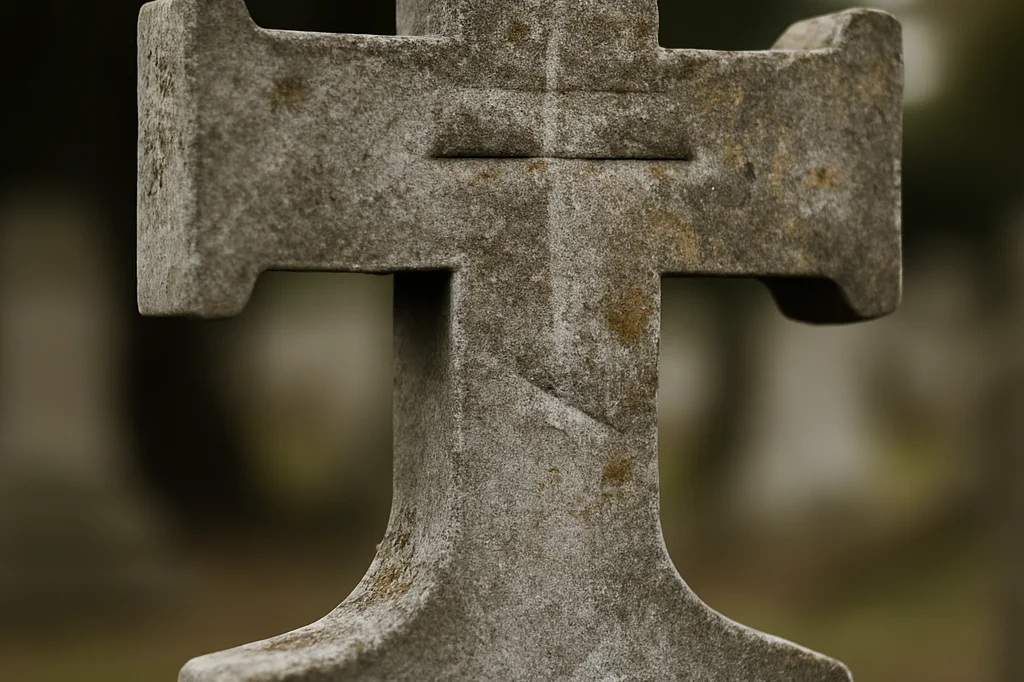
Orthodox and Greek Catholic headstones often use a distinct cross style, useful for identifying a Ukrainian grave at a glance.
On PEI, determine who is responsible for the cemetery before making assumptions about where records are held. The custodian may be a municipality, parish, cemetery association, religious body, funeral home, or a volunteer group maintaining historical material. A cemetery database is useful for reconnaissance, but it may not include every burial, every spelling, or every section of the grounds.
| Source or contact point | What it may reveal | Questions to ask |
|---|---|---|
| Provincial death registration | Date and place of death, informant, residence, sometimes burial or religious information | Does the entry name a cemetery, funeral director, clergy member, or spouse? |
| Cemetery office or association | Plot owner, burial date, lot location, opening and closing information, related burials | Who purchased the plot? Are there unmarked interments or later family burials in the same lot? |
| Parish burial register | Church rite, priest, date of burial, age, sacramental status, family details, sometimes birthplace | Was the person buried by this parish, or did clergy conduct a service at another cemetery? |
| Local newspaper and funeral notice | Funeral location, pallbearers, surviving relatives, community affiliations | Which relatives and organizations appear repeatedly in notices for the same family? |
| Grave marker and plot visit | Inscription, language, symbols, family grouping, military or fraternal references | Are nearby stones connected by surnames, maiden names, addresses, or shared monument style? |
When contacting a cemetery office, be specific and courteous. Give the deceased person’s known name variants, approximate year of death, spouse’s name, and possible relatives. Ask whether the office can check plot ownership as well as interment records. Plot ownership is not the same as burial: a lot may be purchased by one relative and contain several people with different surnames, especially daughters, sons-in-law, infants, or later generations.
Some historic records are handwritten and not indexed. A request framed as “Please search every Ukrainian surname” is unlikely to be productive and may place an unreasonable burden on a volunteer custodian. A focused request has a better chance of uncovering useful detail.
Reading Ukrainian and Eastern Christian markers
Not every Ukrainian-Canadian grave is visibly Ukrainian, and not every grave with a Cyrillic inscription belongs to a person who identified in the same way as later descendants. Still, grave markers can reveal church tradition, language, and family memory when read carefully — the same reading skills covered more broadly in the Canadian guide to Ukrainian cemeteries.
Greek Catholic and Orthodox burial customs often use visual and textual conventions that differ from those familiar in many Western Christian cemeteries. A cross may have a slanted lower bar associated with Orthodox usage, though cross forms vary and should never be treated as proof by themselves. Markers may include icons, a patron saint’s name, a religious abbreviation, or phrases such as “Eternal Memory” in Ukrainian, Church Slavonic, English, or a mixed form. A Ukrainian surname may appear in Cyrillic on one line and in Latin letters on another.
Common features worth recording include:
- Cyrillic names, initials, or religious wording, photographed in full rather than copied from memory.
- Cross form, iconography, and any church-related emblems.
- Women’s names, especially whether a marker gives a maiden surname, a married surname, or both.
- Dates expressed numerically, in English, or in a language unfamiliar to the researcher.
- Adjacent graves that may identify parents, siblings, godparents, in-laws, or the owner of a family monument.
Transliteration deserves patience. The same surname can appear in several English forms because Ukrainian letters do not map neatly into a single historical Roman-letter system. Record exactly what is on the stone, then create a separate research list of variants. Do not silently “correct” a name to the spelling now used by descendants.
For example, a surname ending in -ський, -ський-like forms, or a feminine counterpart may have been rendered in several ways after immigration. Given names shift as well: one person may be recorded under a Ukrainian form in a church book, a Polish or German-influenced form in immigration material, and an English form in an obituary. Search broadly, but attach each variant to evidence. Guesswork becomes dangerous when two unrelated families share a common surname.
Dates require equal care. Families from territories that changed political rule may have encountered different calendars and record-keeping traditions before immigration. In Canada, a marker usually gives the civil date understood by the family at the time it was erected, but a discrepancy between an overseas church entry and a Canadian death record does not automatically mean one is wrong. It may reflect reporting error, delayed memorialization, or a calendar conversion issue. Preserve the original wording and compare sources before choosing a preferred date.
Church registers and the burial service
For many Ukrainian families, the burial service was tied to church life even when burial occurred in a cemetery not owned by their parish. A priest may have officiated at a funeral, recorded the burial in a parish register, or served a scattered congregation across a wider region. That makes parish records central to the search.
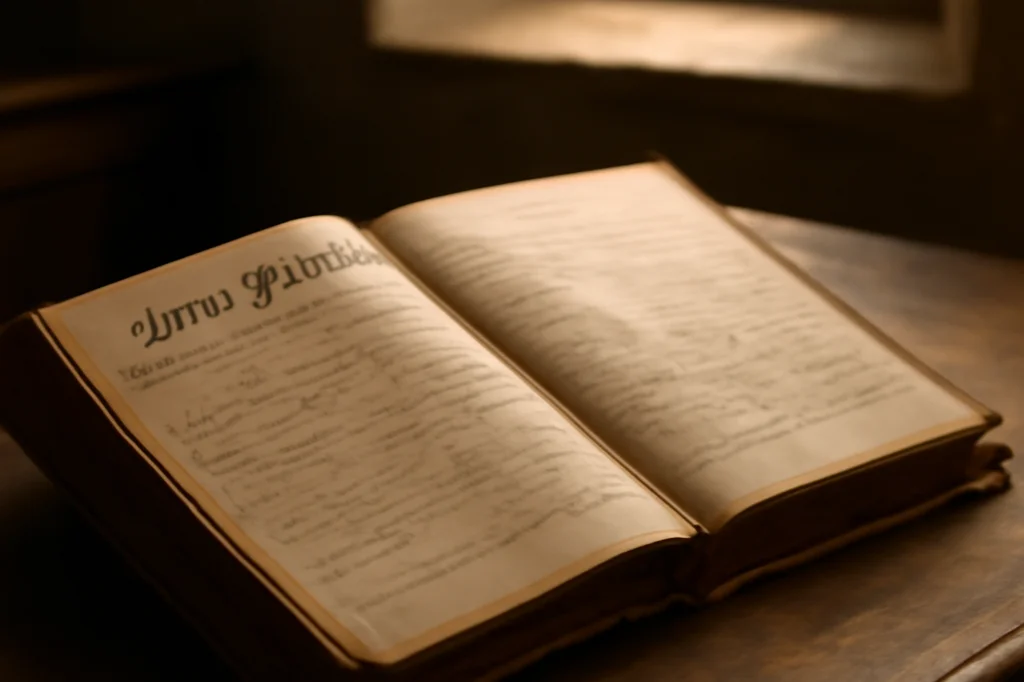
Parish burial registers often record details -- age, cause, officiating priest -- that a headstone alone cannot.
Greek Catholic and Orthodox records can contain details absent from civil registration, but they are not uniform. A burial entry may identify the deceased by baptismal name, list a parent or spouse, state the number of years lived, and name the place of burial. Another entry may consist of a short notation made after a demanding period of travel or pastoral service. The amount of information depends on the priest, period, language, and survival of the register.
Church affiliation should be researched rather than inferred solely from ethnicity. Ukrainian immigrants and their descendants may have attended Ukrainian Catholic, Ukrainian Orthodox, Roman Catholic, Anglican, United, Presbyterian, or other congregations, and some families shifted affiliations through marriage, location, or the availability of clergy. This can be emotionally charged in family recollection. Historical tensions between religious communities, along with the practical difficulty of maintaining Eastern Christian ministry in smaller or dispersed communities, mean that denominational labels may not have remained consistent across generations.
Use the church record as part of a wider evidence chain. The site’s guide to Ukrainian Orthodox church records in Canada explains record types and research considerations that can help when an Island family’s religious connections extend beyond PEI. Similarly, a family may have a baptism or marriage record in another province while the death and burial occurred on the Island.
When requesting access to a church register or archival copy, provide a concise research summary. State the person’s name variants, approximate death date, known residence, spouse or parents, and the reason you believe the parish may be relevant. If a register is in Ukrainian, Church Slavonic, or another language, request an image or exact transcription where possible. A summary alone can omit the spelling and marginal notes that later become decisive.
Build a case from clusters, not single graves
A cemetery is a family archive arranged by landscape rather than by surname. The grave you first locate may be only one part of the story. Search the lot, adjacent plots, and the cemetery’s burial sequence for people connected to the deceased through marriage, sponsorship, residence, or shared migration history.
Women are especially vulnerable to disappearing in cemetery research. A death registration may identify a married woman only by her husband’s surname; a marker may use a familiar English given name; an obituary may call her “Mrs.” followed by a husband’s initials. Recover her identity by comparing marriage records, children’s baptismal entries, census returns, probate papers, and the names of informants on family death records. Her birth surname may be the link that connects a PEI burial to a Ukrainian parish, another Canadian province, or an overseas locality.
Make a burial-cluster worksheet for each cemetery or plot. Include the exact inscription, birth and death dates, plot or section, relationship stated, source of each fact, and unresolved questions. A simple research log prevents a common mistake: merging two men of the same name because their dates are close or because both appear in the same community.
Look for these patterns, but do not overstate them:
- Several related burials in one plot, even where surnames differ through marriage.
- Repeated witnesses, pallbearers, clergy, or funeral-home names in notices.
- Families from the same former European district appearing in nearby records.
- Children buried near grandparents rather than parents, which may reflect plot ownership or an early family loss.
- A later English-only marker replacing an earlier memorial tradition, suggesting assimilation rather than a break in family connection.
Negative evidence can be useful as well. If a family’s church records indicate an Eastern Christian funeral but the expected cemetery has no matching grave, consider cremation, an unmarked grave, a burial under a spouse’s or parent’s surname, a cemetery in a neighbouring community, or a record indexed under a mistranscription. Absence from an online index is not proof of absence from the ground.
A practical workflow for PEI researchers
Research is more efficient when each step answers a defined question. The following sequence works well for a suspected Ukrainian-Canadian burial on Prince Edward Island.
- Identify the death event through civil registration, obituary, family papers, or a funeral notice.
- List every known name form, including maiden, married, anglicized, Cyrillic, and possible phonetic spellings.
- Determine the person’s last residence and the likely parish or congregation.
- Search cemetery indexes and local historical resources, then contact the appropriate cemetery custodian for plot and interment information.
- Obtain or inspect the parish burial entry if a church connection is known or plausible.
- Visit the cemetery, or request clear photographs of the marker, full monument, neighbouring stones, and section context.
- Research everyone in the plot and nearby related plots; do not stop after finding one ancestor.
- Compare the burial evidence with marriage, baptism, immigration, naturalization, probate, census, and newspaper records.
- Write a short proof summary that distinguishes documented facts from reasonable hypotheses.
If a search stalls, reconsider the geographic frame. A PEI resident may have been returned to another province for burial, buried near an earlier family home, or commemorated on a marker without being interred beneath it. Conversely, a person buried on PEI may have left no obvious Island paper trail because the decisive family records remain in a previous place of residence.
This kind of cross-checking is especially helpful when a PEI family's cemetery research leads outward to Ontario, Quebec, the Prairies, or a U.S. border-state community.
When the evidence calls for specialist help
Most cemetery searches begin with work a family historian can do independently. Specialist help becomes worthwhile when records are fragmented across jurisdictions, when Cyrillic handwriting or ecclesiastical terminology needs accurate interpretation, or when multiple people of the same name appear in the same period. A professional researcher can also help frame a request to an archive or church body when access is restricted or a register has not been indexed.
Before hiring anyone, prepare a packet containing your research question, copies or citations of records already found, name variants, relevant locations, and a clear statement of what remains unknown. Avoid asking a researcher simply to “find everything.” A bounded question—such as determining whether two burial entries refer to the same woman, or identifying the parish that conducted a funeral—produces a more useful research plan.
For advice on working effectively with a specialist and evaluating evidence-based conclusions, read the site’s interview with a professional PEI Ukrainian genealogy researcher. The strongest result is not a long list of records; it is a documented explanation of why those records belong to the same person or family.
Cemetery research can be unexpectedly personal. A stone may preserve a language that later generations no longer speak, or reveal that a family’s religious identity was more complicated than an oral history suggested. Let the evidence be complicated when it is complicated. The goal is not to make every record fit a tidy story, but to recover the most accurate account possible of a life, a death, and the community that remembered it.
Frequently Asked Questions
How can I find a Ukrainian ancestor’s grave on PEI if I do not know the cemetery?
Begin with the death date and last known residence, then search for a death registration, obituary, funeral notice, and church connection. These sources may name a cemetery directly or identify the clergy, parish, funeral director, or relatives who can lead to it. Search name variants rather than one exact spelling, and contact cemetery custodians with a focused request that includes the person’s spouse, approximate death year, and possible relatives. If no local burial appears, consider whether the person was buried outside PEI or in an unmarked family plot.
Does an Orthodox-style cross prove that the person was Ukrainian Orthodox?
No. A cross style can be a meaningful clue, particularly when it appears with Cyrillic wording, an icon, or a clearly Eastern Christian memorial phrase, but it is not conclusive evidence of denomination or ethnicity. Families sometimes used symbols inherited from an older tradition after attending another church in Canada, while monument makers could offer designs without a precise denominational distinction. Confirm the interpretation with parish records, funeral notices, civil registration, family papers, and the identities of people buried in the same plot.
Why might the surname on a gravestone differ from the spelling in a civil death record?
Different informants, languages, and writing systems often produced different spellings. A registrar may have written a name phonetically in English, while a family chose a traditional or Cyrillic form for the monument. Married women may appear under a husband’s surname in one source and a birth surname in another. Immigration and naturalization may also have encouraged an abbreviated or anglicized version. Record each spelling exactly, then compare dates, relatives, residence, religion, and plot information before deciding whether the records concern the same person.
Are parish burial registers more reliable than cemetery records?
Neither source is automatically superior. A parish register may be closest in time to the funeral and may identify religious details or family relationships, but it can contain brief entries, spelling variation, or retrospective notation. A cemetery record may provide the plot owner and precise interment location, yet omit birthplace, parents, or denomination. A headstone can preserve dates and family wording but may have been erected years later. Use all available records together, giving greatest weight to the evidence most directly connected to the event and the person providing the information.
What should I do if an online cemetery index has no result for my family?
Do not treat an unsuccessful online search as a final answer. Indexes may omit older sections, unmarked graves, alternate spellings, recently added information, or records held only in paper form. Search the surname with wildcards or phonetic alternatives where available, then contact the cemetery association, municipality, parish, or local archive. Ask about plot ledgers, interment registers, historic maps, and lot-owner records. Expand the search to relatives, especially spouses, parents, adult children, and in-laws, because the ancestor may be listed under another family member’s plot or surname.