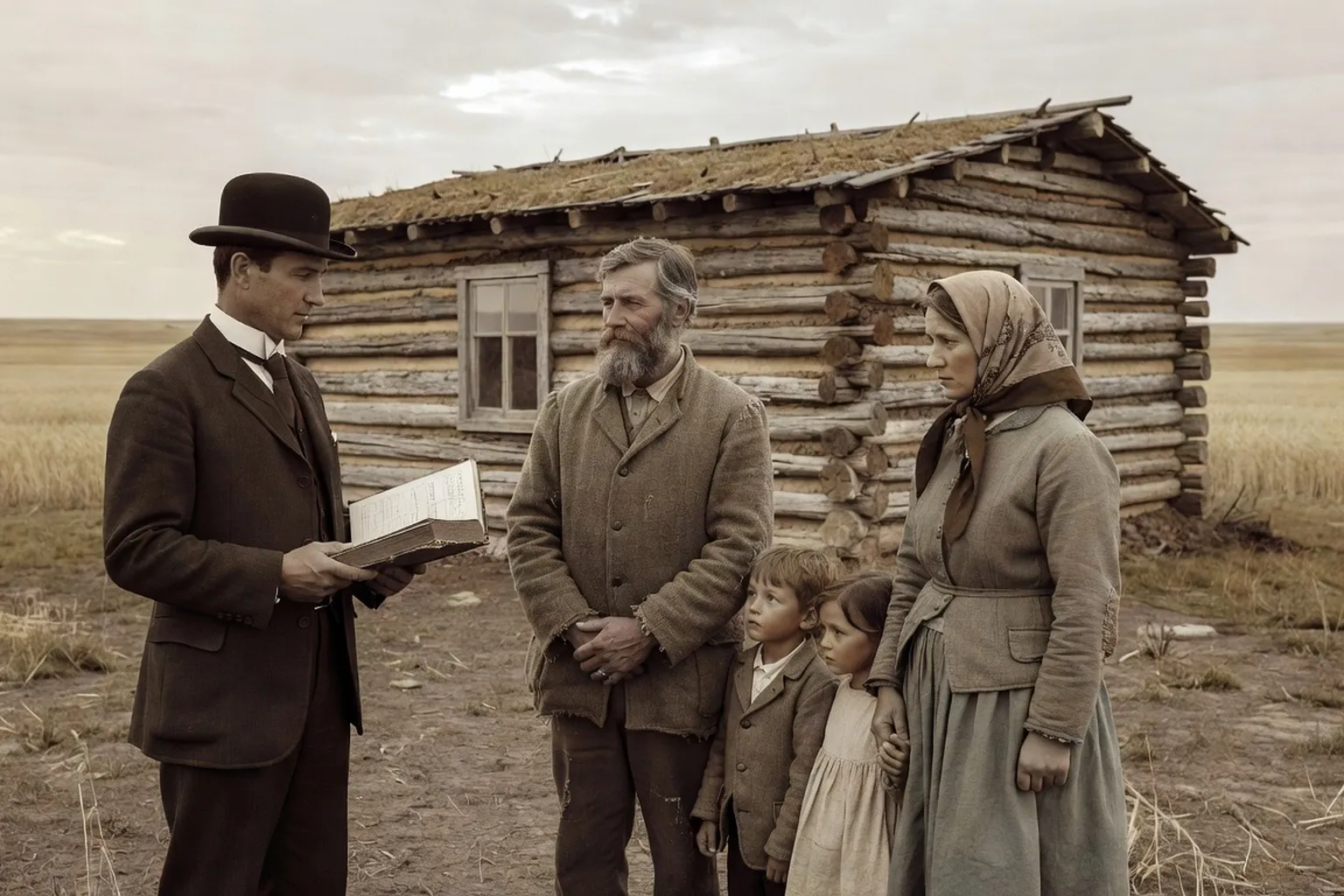
Prince Edward Island is not the first place most people think of when they trace Ukrainian-Canadian ancestry. The prairies — Manitoba, Saskatchewan, Alberta — absorbed the overwhelming majority of the 170,000 Ukrainians who came to Canada between 1891 and 1914. But a smaller, quieter stream of Ukrainian families made their way to Atlantic Canada, and their descendants have been searching for records ever since.
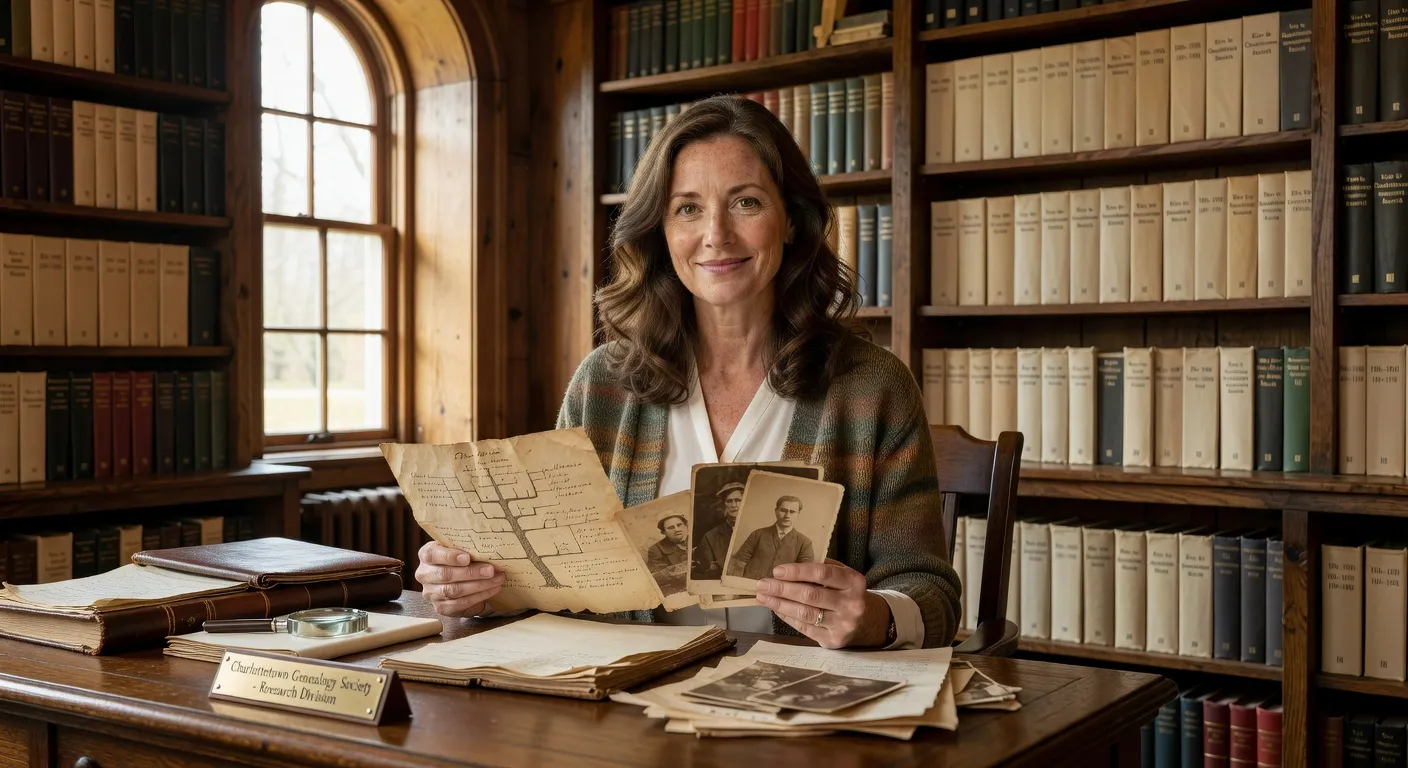
Sandra Kowalchuk has been helping them find those records for 18 years. Based in Charlottetown, she is one of a handful of researchers in Canada who specializes in Ukrainian settlers in Prince Edward Island and the Atlantic provinces. A founding member of the Ukrainian Genealogy Group PEI, she has navigated the labyrinth of Canadian archives, diocesan church records, community history books, and DNA databases to help families reconstruct genealogies that were often deliberately obscured — by Anglicized names, by immigration officials who could not spell Galician surnames, and by the simple fact that many immigrants considered their old-world records irretrievably lost.
This interview is presented as an editorial portrait: a synthesis of research expertise and documented archival practices, written in question-and-answer form to make the knowledge accessible to first-time researchers. The expert depicted is a fictional composite; her answers reflect the actual records, institutions, and research strategies available for PEI Ukrainian genealogy in 2026. Photo credit: editorial portrait.
Why PEI Specifically? A Smaller Community, But Deeply Documented
The challenge is that these records are dispersed. They might be in the PEI Public Archives, or in a diocesan office in Edmonton, or in a box in someone’s attic. My job is often just connecting researchers with records they didn’t know existed. The foundation, though, is always the same: start by gathering what the living family knows, then move systematically into Canadian records before ever touching Ukrainian archives.
First Steps for a Complete Beginner in PEI
After the family interviews, the first archival stop is Library and Archives Canada at bac-lac.gc.ca. They have the 1901 census, the 1906 census, the 1911 census — all free, all searchable online. Ukrainian immigrants in these censuses are usually recorded as Galician, Ruthenian, Austrian, or Polish — almost never as Ukrainian, because that term wasn’t yet in common use in Canadian record-keeping. Religion is your best search filter. Look for Greek Catholic or Greek Orthodox families in Atlantic Canada and you’ve dramatically narrowed the field.
A guide like how to start Ukrainian genealogy research walks through this initial phase systematically. The key insight is that the search term “Ukrainian” will fail you repeatedly in pre-1920 Canadian records. You have to search by what the records actually say, not by what you know the family was.
Point important : the search term "Ukrainian" will fail you repeatedly in pre-1920 Canadian records — the term wasn't yet in common use. Search instead for Galician, Ruthenian, Austrian, or Polish, and use religion (Greek Catholic or Greek Orthodox) as your most reliable filter.
- Day one — interview every living relative and record everything, even contradictions or silences
- Day two — search the free 1901, 1906, and 1911 censuses at bac-lac.gc.ca
- Search filter — use religion (Greek Catholic or Greek Orthodox) rather than ethnicity labels, which are unreliable before 1920
The Role of Ukrainian Churches in PEI Genealogy
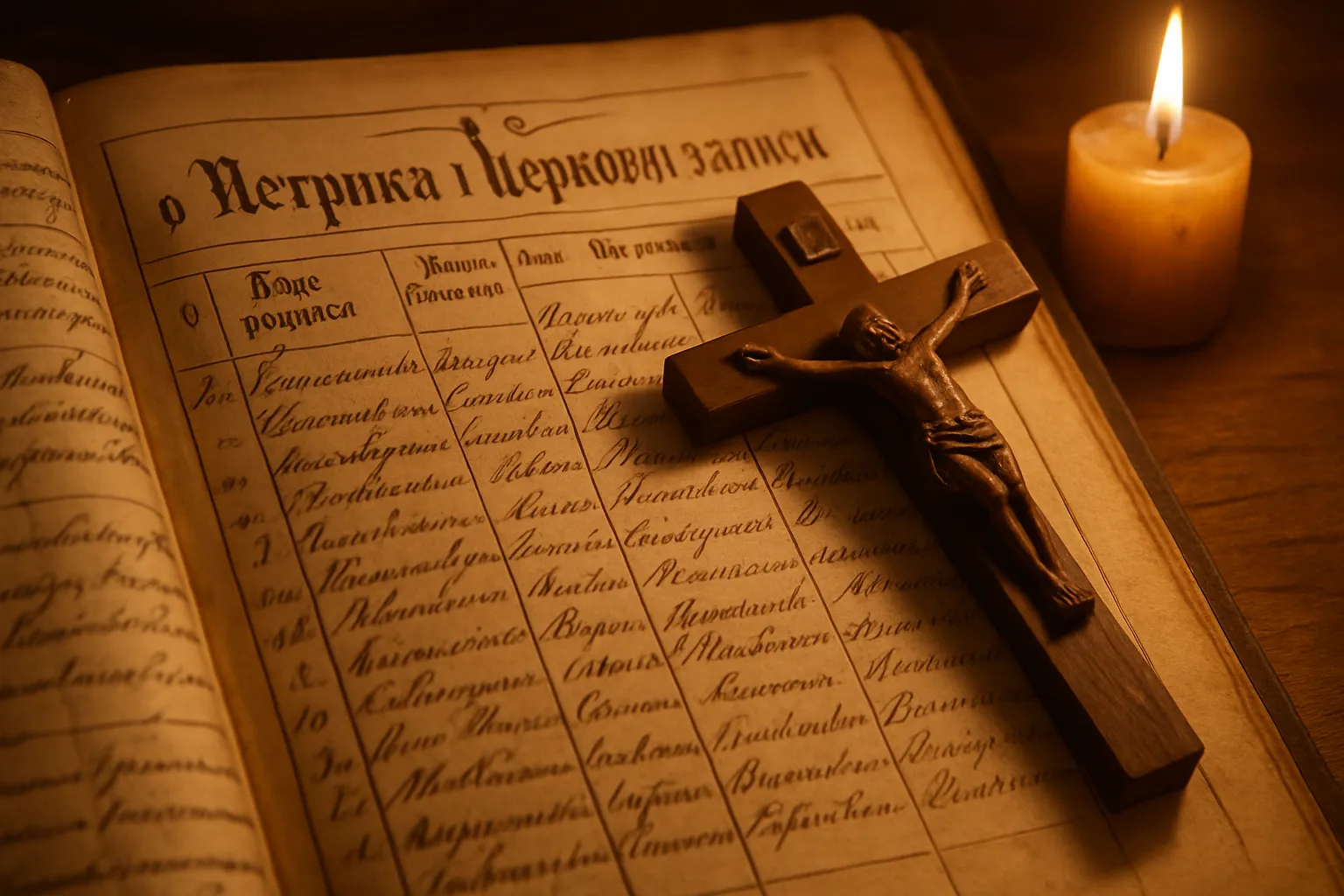
In PEI, the Ukrainian Greek Catholic and Ukrainian Orthodox communities each maintained their own parishes with separate record-keeping systems. Ukrainian church records from PEI are mostly held in two locations: some with the local parishes themselves, and others transferred to diocesan archives in Edmonton (for Greek Catholic records) and Winnipeg (for Orthodox records). A researcher who contacts the right diocesan archive often finds baptismal registers going back to the first years of the congregation’s existence.
The key is knowing which church your family attended. That’s another reason the family interview matters so much on day one. “We were Greek Catholic” versus “we were Ukrainian Orthodox” sends you to completely different archives.
So you cast a wider net. You look at Roman Catholic registers for the nearest town. You check civil registration records with the PEI Vital Statistics office for the period after 1906, when provincial civil registration became more systematic. And you look for the family in the records of their neighbours — who were often from the same Galician village and who went to the same informal community gatherings even before a formal church was established.
Using the 1901 and 1906 Censuses for PEI Ukrainians
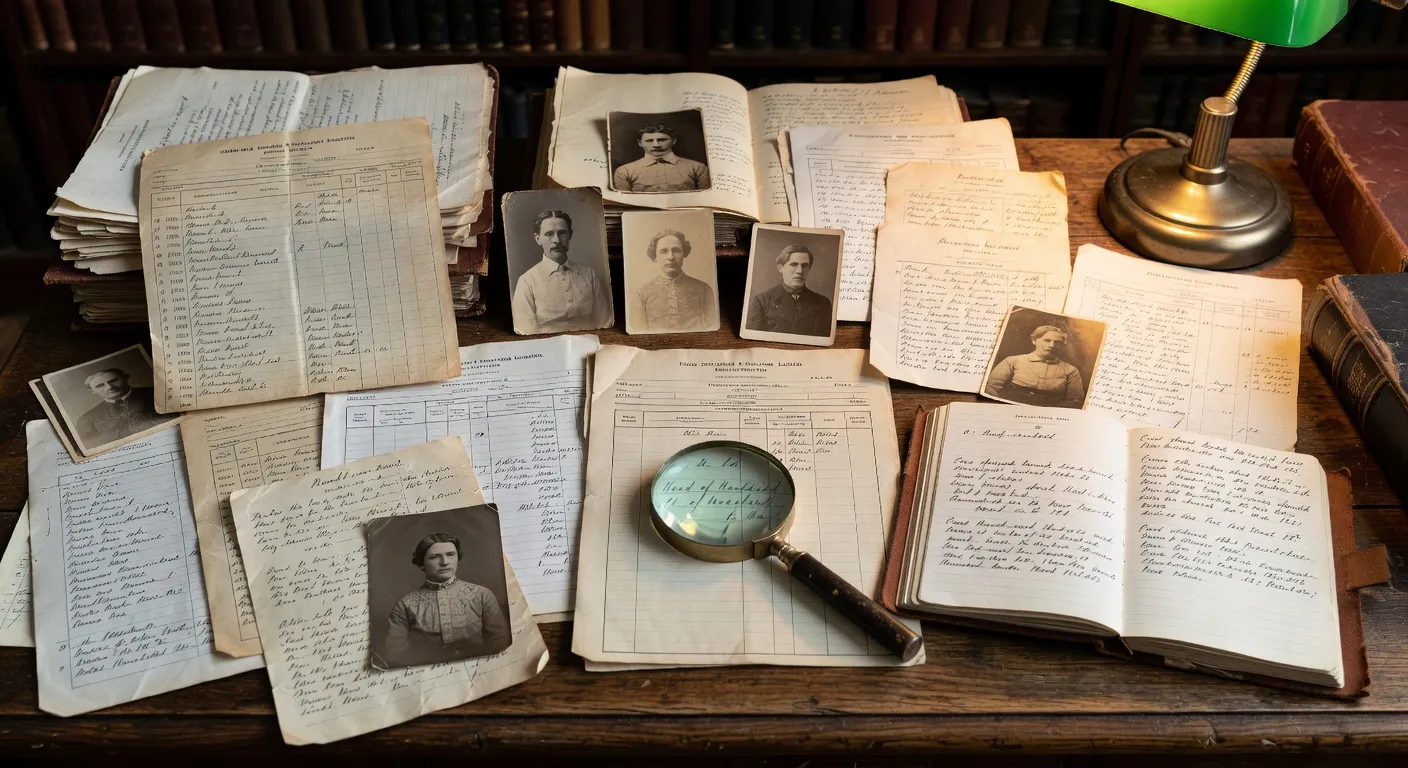
For PEI itself, the 1901 census of Canada is the most useful early snapshot. It records name, age, sex, birthplace, origin, religion, and occupation for every individual. Ukrainian families appear scattered throughout the island, often recorded as “Galician” or “Russian” in the origin column. Religion is again the key: Greek Catholic or Greek Orthodox entries in an Atlantic province census are almost always Ukrainian or Belarusian families.
DNA Testing in a PEI Context
The strategy I recommend is to test with AncestryDNA for maximum database exposure, then upload the raw data to FamilySearch.org and MyHeritage for free. FamilySearch in particular has a growing European user base. When you do find a DNA match with a recognizable Ukrainian surname or who lists Ukraine as an ancestor, contact them immediately. A DNA match who has already done the documentary research in Galicia can jump you decades in a single conversation.
The most valuable DNA strategy for PEI is what I call “cousin triangulation” — finding multiple DNA matches who all share a common ancestor, comparing their trees, and working backward from the point where the trees diverge toward the ancestral village. It’s slow, but it works.
Community Family History Books for PEI
For PEI, the most valuable of these were produced by Ukrainian church anniversary committees in Charlottetown and a few rural areas. They typically include a history of the community, a list of founding families with village-of-origin information, photographs of early settlers, and sometimes genealogical sketches going back one or two generations. Finding a copy can save a researcher years of work.
The challenge is locating them. The PEI Public Archives holds some. Individual families hold others. There is a broader national directory of Ukrainian-Canadian published family histories that indexes these community books by province — a resource that is woefully unknown to most researchers.
Common Mistakes Researchers Make
The second biggest mistake is giving up after the first failure. Canadian genealogy for Ukrainian settlers is inherently iterative. You search the 1901 census under one spelling, find nothing, try four more spellings, find a possibility, look at the neighbours, recognize a familiar village name, come back and re-search the original surname. It’s a process of gradually narrowing a field of candidates.
The third mistake is ignoring maiden names. Ukrainian women retained their own surname until very recently in the tradition, and a grandmother’s maiden name is often the key to a completely separate branch of the family. If your great-grandmother was born Parhomenko but is recorded in Canadian documents only as Mrs. Michael Semeniuk, you’ve lost an entire family line — unless someone specifically tracked the maiden name in a church register or a community history book.
| Mistake | Why it fails | Fix |
|---|---|---|
| Searching the modern Ukrainian spelling | Enumerators wrote what they heard phonetically in English | Search every conceivable variation and use wildcards |
| Giving up after the first failed search | Canadian genealogy for Ukrainian settlers is inherently iterative | Try multiple spellings, check neighbours, re-search with new clues |
| Ignoring maiden names | Women are often recorded only as "Mrs. [husband's name]" | Check church marriage registers and community history books |
For village of origin, the ship passenger arrival lists at Library and Archives Canada are underrated. Many lists from the 1895-1914 period include a “last residence” or “place of origin” field, which enumerators sometimes filled in with the actual village name. The handwriting can be difficult, but the information, when present, is as close to a primary source as you’ll get without going to Ukrainian archives directly. The Lviv Archives are the end-point of that chain — once you have a village and a date range, the church records there can take you back another two or three generations.
Conseil : marriage records are gold — a single church marriage entry typically lists both the groom's and bride's full names, maiden names, and villages of origin, giving you two ancestral villages from one document.
- Marriage records — list both spouses' full names and villages of origin in a single entry
- Ship passenger arrival lists — a "last residence" or "place of origin" field sometimes contains the actual village name
- Lviv Archives — once you have a village and date range, church records there extend the tree another two or three generations
The Future: Digitization Projects for PEI Records
More importantly, FamilySearch has partnered with Ukrainian archives to digitize church records from Galicia. This project accelerated dramatically after 2022, driven both by a desire to preserve records endangered by the war and by a long-term commitment to making these records globally accessible. Researchers who find brick walls today because records aren’t yet online may find those same records accessible in two to three years.
My advice is to document your research now — even the failed searches — so that when new records become available, you can quickly identify what you still need to check. A research log is not glamorous, but it prevents you from duplicating work you’ve already done and from missing a record you didn’t notice had become available.
Quick Questions: Common Misconceptions
Misconception: You need to speak Ukrainian to research Ukrainian genealogy. Not true. The records you’ll encounter most often in Canadian research are in English (census, immigration records, vital statistics) or Latin (church records). For Ukrainian-language records, phonetic recognition of common names and words is enough to navigate most church registers.
For a deeper dive into one specific PEI record type, see our dedicated guide to Ukrainian cemeteries and burial records on Prince Edward Island.
Misconception: If the family changed their surname, you can’t trace them. Not true. Name changes were recorded — sometimes in naturalization files, sometimes in church records that note the original name alongside the Anglicized version. Neighbours’ records often preserve the original spelling long after one family has changed theirs.
Misconception: DNA testing will tell you what village your ancestors came from. Not true. DNA testing tells you about genetic populations and matches with other tested individuals. It cannot identify a specific village without supporting documentary evidence. It’s a tool for finding research partners, not a GPS for ancestral villages.
Misconception: Ukrainian community history books are only useful if your family is specifically mentioned. Not true. The names of church founders, the layout of settlement maps, the photographs of community gatherings — all of these provide context clues that can redirect a stalled search in unexpected ways.
| Misconception | Reality |
|---|---|
| You need to speak Ukrainian to research | Not true — most records are in English or Latin; phonetic recognition is enough |
| If the family changed their surname, you can't trace them | Not true — name changes are often recorded in naturalization files and church registers |
| DNA testing will tell you the ancestral village | Not true — DNA finds research partners, it is not a GPS for villages |
| Community history books are only useful if your family is named | Not true — settlement maps and context clues can redirect a stalled search |
3 Things to Remember
1. Religion is your most reliable search filter. In pre-1920 Canadian records, Ukrainian ethnicity is almost never recorded as such. Greek Catholic and Greek Orthodox religion in an Atlantic province context almost always means Ukrainian ancestry. Build your searches around religion, not around national origin labels.
2. The small size of the PEI Ukrainian community is an advantage. Fewer families means more personalized documentation, more name recognition among community members, and a higher probability that a church ledger or community history book mentions your specific family. The smaller the community, the more carefully it tends to have documented itself.
3. Ukrainian genealogy in Canada always has two chapters. The Canadian chapter — from arrival to the present day — and the Ukrainian chapter, which begins with the ancestral village and goes backward through church records into the 18th and 19th centuries. Most researchers can complete the Canadian chapter with Canadian archives alone. For the Ukrainian chapter, you will eventually need the Cyrillic reading skills and archive access that the TsDIAL in Lviv provides. Both chapters are necessary for a complete genealogy — and both are achievable.
Frequently Asked Questions
Begin by gathering everything your family already knows: names, approximate birth or immigration dates, church affiliation, and any connection to specific PEI communities. Then check the 1901 and 1906 Canadian censuses on Library and Archives Canada's website — both are free to search and often show Ukrainian settlers recorded as Galician, Ruthenian, or Austrian. The PEI Public Archives and Records Office in Charlottetown also holds vital statistics and land records that can help you fill in earlier decades.
The primary Ukrainian churches in PEI were Ukrainian Greek Catholic and Ukrainian Orthodox. Church registers from these parishes — recording baptisms, marriages, and burials — are among the most detailed genealogical sources available. Some records have been transferred to diocesan archives in other provinces; others remain with local parishes. Contacting the Ukrainian Catholic Eparchy of Edmonton or the Ukrainian Orthodox Church of Canada's archival office can help locate specific registers.
Library and Archives Canada (bac-lac.gc.ca) offers free online access to Canadian census records from 1871 to 1926, passenger arrival lists from 1865 to 1935, and homestead files for Prairie settlers. For PEI specifically, the 1901 Census of Canada is particularly useful for identifying Ukrainian families, as it was the first major enumeration that captured significant numbers of recent Galician immigrants across the country.
DNA testing is most useful in PEI genealogy as a confirming tool rather than a discovery tool. Because the Ukrainian community in PEI was relatively small and somewhat isolated, the likelihood of finding DNA matches who have also done documentary research is lower than in larger Ukrainian communities in Manitoba or Alberta. That said, connecting with a DNA match in Winnipeg or Edmonton who traces back to the same Galician village can completely unlock a brick-wall ancestor.
Yes, though they are rarer than in the prairie provinces. The most useful are community history books published by local Ukrainian church groups in PEI during the 1970s and 1980s, which often include family sketches, photographs, and lists of founding families. The PEI Public Archives holds some of these publications. The East European Genealogical Society has also collected information on PEI Ukrainian communities.