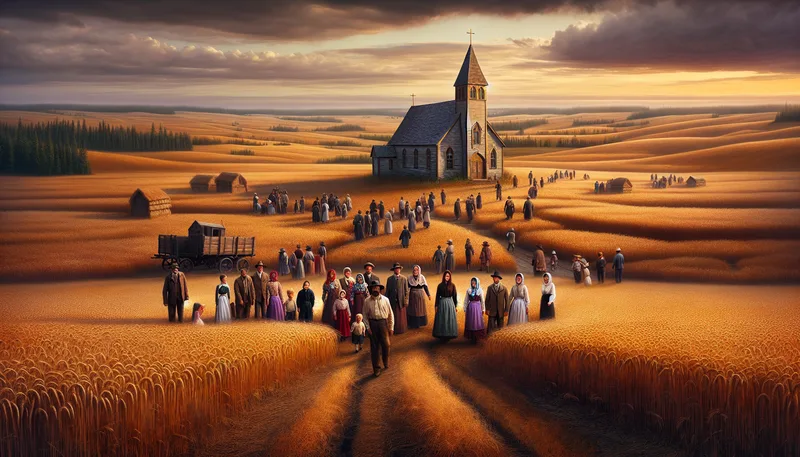
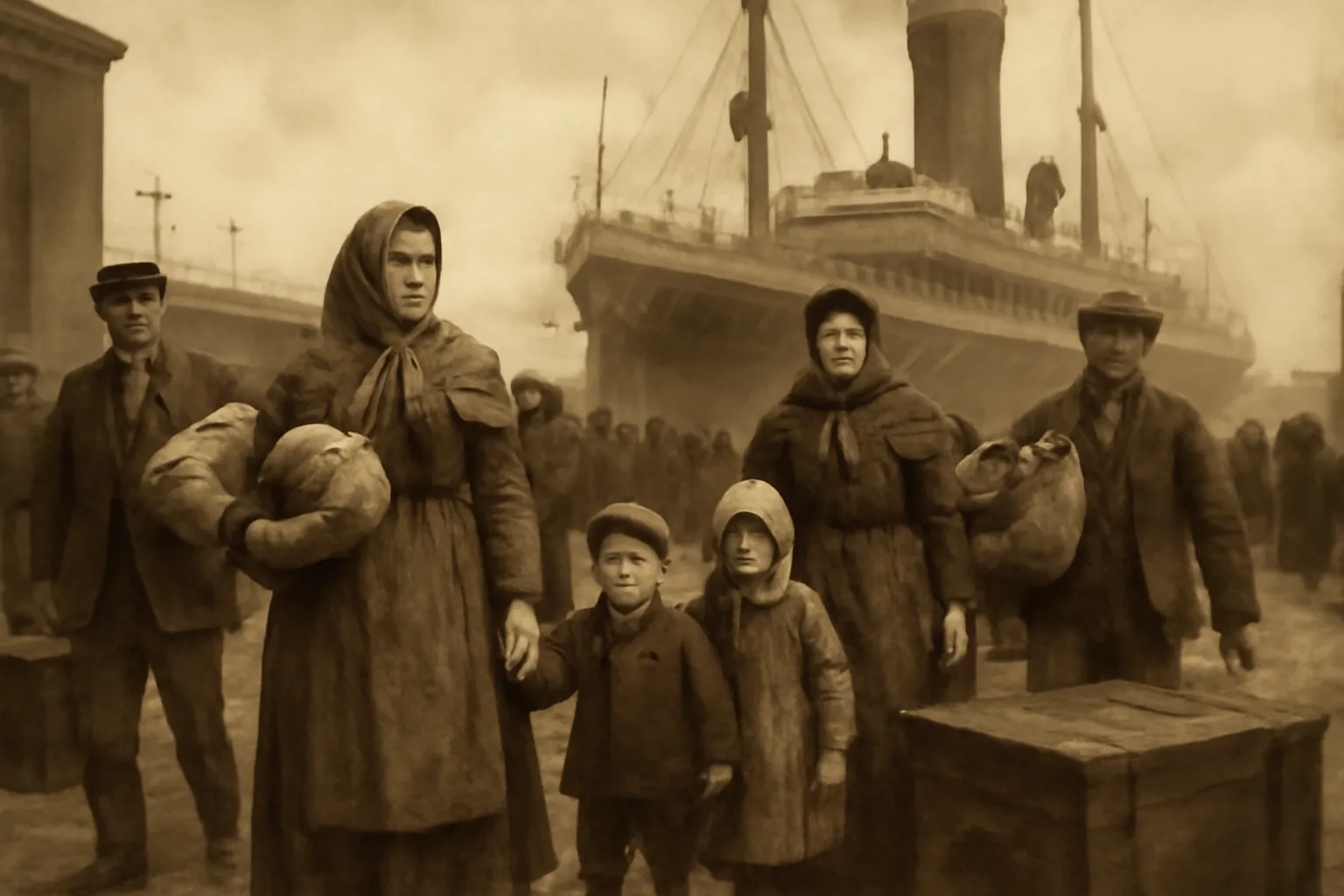
When 170,000 Ukrainians arrived in Canada between 1891 and 1914, they came as invited settlers. The Canadian government had actively recruited them, describing them — in the words of Interior Minister Clifford Sifton — as “stalwart peasants in sheepskin coats” whose agricultural skills would transform the western prairies. They took up their 160-acre homesteads, built their churches, established their schools, and planted the grain crops that fed Canadian cities and filled the railways.
Then the war came, and almost everything changed.
Within months of the August 1914 declaration of war between Britain (and its Dominion Canada) and Austria-Hungary, these same Ukrainian settlers — still holding Austro-Hungarian citizenship because they had immigrated before automatic British naturalization was possible — were reclassified as enemy aliens. What followed was one of the most unjust episodes in Canadian history: a systematic program of registration, surveillance, property seizure, forced labour, and internment that lasted until 1920 and left lasting economic and psychological scars on an entire community.
This is both a history and a genealogy guide. Understanding this chapter of Ukrainian immigration history is essential for any researcher tracing Ukrainian-Canadian families from the first-wave period — because internment records, registration files, and property seizure documents are primary genealogical sources that often contain information found nowhere else.
The First Wave: Why Ukrainians Came to Canada
The story of the internment cannot be separated from the story of the immigration that preceded it. The Ukrainians who came to Canada between 1891 and 1914 were overwhelmingly peasant farmers from the Austro-Hungarian provinces of Galicia and Bukovyna — territories that corresponded roughly to western Ukraine and northern Romania today. They came because they were poor, because land in Galicia was scarce and expensive, and because Canada was offering exactly what they needed: 160 acres of free homestead land, accessible under the Dominion Lands Act of 1872.
The Canadian government’s immigration campaign, directed by Clifford Sifton from 1896 onward, was explicitly designed to attract these settlers. Immigration agents were sent to Galicia with brochures promising prosperity. Steamship companies carried them across the Atlantic at discount rates. Border inspectors processed them as Galicians, Ruthenians, Bukovynians, or Austrians — rarely as Ukrainians, a national identity that Canadian record-keepers didn’t recognize.
By 1914, these settlers had transformed the Canadian prairies. Ukrainian bloc settlements in Manitoba, Saskatchewan, and Alberta had become functioning agricultural communities. Churches were built. Schools operated in Ukrainian. Families who had arrived with nothing now owned farms with horses, cattle, and wheat crops. The 1906 Canadian census captured this transformation in detail — tens of thousands of Ukrainian-origin families recorded across the Prairie provinces as successful settlers.
That same documentation — census records, homestead files, naturalization records — would later be used by the Canadian government to identify and locate these settlers as enemy aliens when the war began.
Enemy Aliens: WWI Internment of Ukrainian Canadians
The War Measures Act, passed on August 22, 1914, gave the federal government sweeping powers to deal with the “enemy alien” population — anyone who was a citizen or subject of a nation at war with Canada. For Ukrainian settlers who had come from Austro-Hungarian Galicia or Bukovyna and had not yet completed the naturalization process, this meant they were suddenly the legal equivalent of Austrian soldiers.
The Canadian government established the Internment Operations program under the direction of General William Otter. Between 1914 and 1920, this program registered over 80,000 people as enemy aliens, requiring them to report regularly to police stations. Of these, 8,579 were physically interned in 24 camps across Canada.
The decision about who was interned and who was merely registered often seemed arbitrary. Some Ukrainian settlers were interned for being unemployed during the economic downturn the war created. Others were interned for failing to report promptly to their registration station. Political activity — even mild expressions of Ukrainian cultural identity — could attract attention. In some cases, economic rivals or hostile neighbours used the enemy alien designation to remove Ukrainian settlers from competition for land or jobs.
The irony was stark. These were people who had been welcomed, recruited, and settled on Canadian land as part of a deliberate immigration policy. Many had applied for naturalization. Many had sons who were serving in the Canadian military as British subjects. That service did not protect their parents or siblings who remained classified as Austro-Hungarian subjects.
The 24 Internment Camps Across Canada
The internment camps ranged from crude outdoor enclosures to more structured facilities. They were concentrated in three types of locations: remote wilderness areas where internees could perform forced labour, urban centres where large numbers of unemployed enemy aliens had been arrested, and existing military facilities that could be quickly converted.
Major camps included:
- Castle Mountain (later renamed Banff internment camp), Alberta — the most notorious, where internees built roads in Banff National Park in brutal mountain conditions
- Jasper, Alberta — road and railway construction work
- Kapuskasing, Ontario — land clearing in the northern boreal forest, later became a permanent settlement
- Spirit Lake, Quebec — a particularly harsh camp where internees lived in drafty wooden buildings through Quebec winters
- Beauport, Quebec — near Quebec City
- Nanaimo, British Columbia — coal mine labour
- Morrissey, British Columbia
- Brandon, Manitoba
The labour performed by internees was economically significant. Estimates suggest that internees built or improved hundreds of kilometres of roads and railway lines, cleared thousands of acres of forest, and worked in mines — all at minimal or no wages. Much of this infrastructure, particularly in western national parks, remains in use today.
Major internment camps at a glance:
| Camp | Province | Type of forced labour |
|---|---|---|
| Castle Mountain / Banff | Alberta | Road building in Banff National Park |
| Jasper | Alberta | Road and railway construction |
| Kapuskasing | Ontario | Land clearing in the boreal forest |
| Spirit Lake | Quebec | Forestry, harsh winter conditions |
| Beauport | Quebec | General labour near Quebec City |
| Nanaimo | British Columbia | Coal mine labour |
| Morrissey | British Columbia | General labour |
| Brandon | Manitoba | General labour |
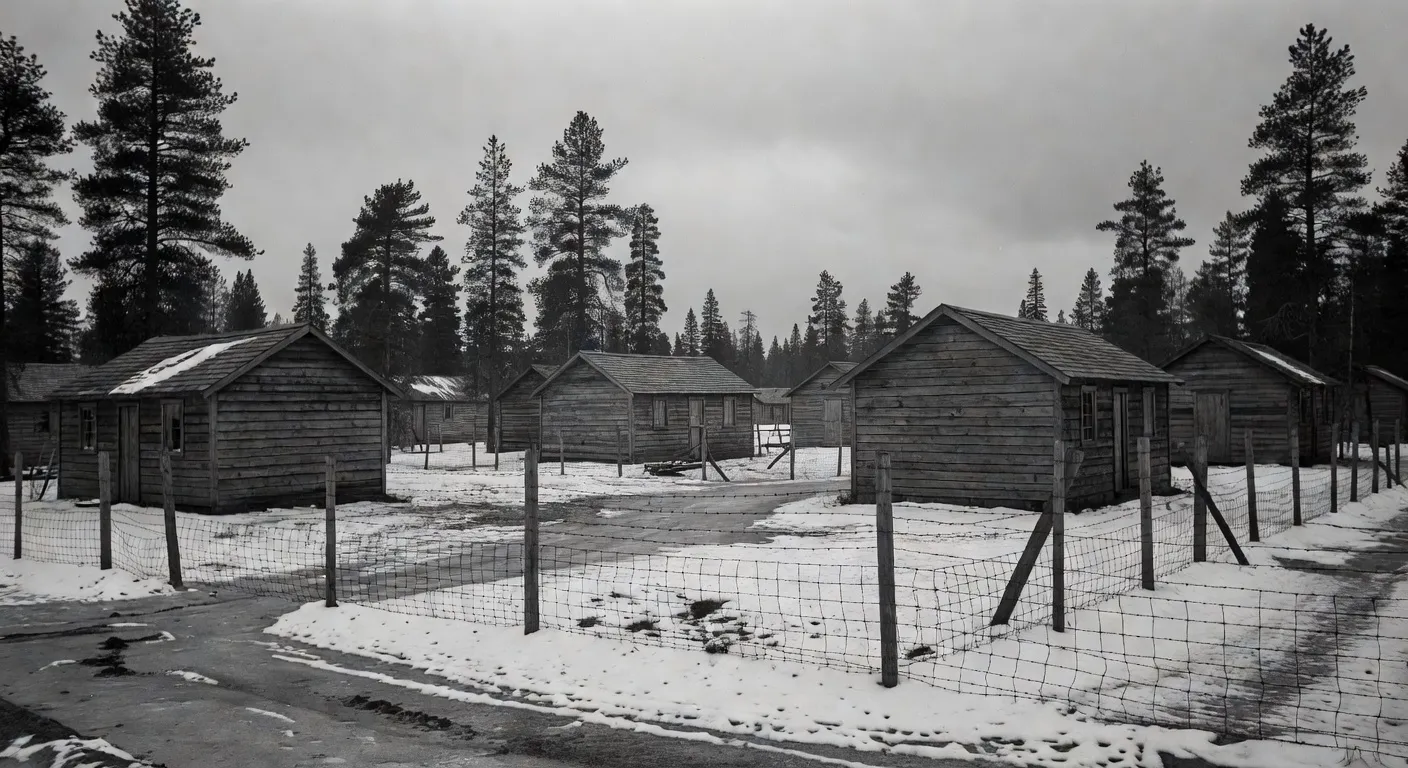
Conditions varied across camps but were generally harsh. Food was inadequate. Shelter was minimal. Work was compulsory and dangerous. Deaths from disease, accidents, and at least a few from guards’ actions are documented in the official records. Internees who attempted escape were shot. The Red Cross conducted inspections but found themselves constrained by the wartime political climate from making strong interventions.
Life Inside the Camps: What Records Survive
The Internment Operations created substantial paperwork, some of which has survived and is now accessible to genealogical researchers. The records held at Library and Archives Canada include:
Internee case files — individual files for each interned person, held under RG 24 (Department of National Defence records), Series C-1-a. These files typically contain the internee’s registration form, personal information (name, age, birthplace, occupation, physical description), a record of their internment, and sometimes correspondence or disciplinary notes. The files are not fully indexed online, but they are accessible through formal requests to LAC.
Alien registration records — separate from internee files, these cover the much larger population of registered (but not physically interned) enemy aliens. These records often include photographs and detailed personal information that appears in no other Canadian archival source.
Camp administrative records — payroll ledgers, work records, and general administrative documents that can confirm a person’s presence at a specific camp during a specific period.
Property seizure records — documents related to the administration of seized property, which sometimes include property descriptions, inventories, and correspondence that illuminate the economic status of the internee’s family before the arrest.
Finding an Interned Ancestor in the Archives
The research process for locating an interned ancestor requires patience and a multi-source approach, because no single database indexes all internees by name in a searchable online format.
Step 1 — Establish the family’s situation in 1914. Using census records, homestead files, and naturalization records available at Library and Archives Canada, determine where the family was living in 1914 and what their citizenship status was. If your ancestor had naturalized before 1914, they were British subjects and were not subject to internment. If they had not yet naturalized — or if the naturalization was still pending — they were vulnerable.
Step 2 — Check the Ukrainian Canadian Civil Liberties Association (UCCLA) lists. The UCCLA has compiled partial lists of documented internees based on archival research. These lists, while incomplete, are searchable and may provide a quick initial confirmation of whether a specific individual was interned.
Step 3 — Submit a formal archival request to LAC. Using the finding aid for RG 24, Series C-1-a, submit a request for any file related to your ancestor. You will need the full name (with alternate spellings) and an approximate location or date range. Response times for these requests vary from weeks to months.
Step 4 — Check provincial and local archives. The initial arrest and registration of enemy aliens was often handled by local RNWMP (Royal North-West Mounted Police) detachments, whose records are sometimes held in provincial archives or at LAC under different record group classifications.
Step 5 — Cross-reference with camp location. If you know from family oral history which camp an ancestor was held in, the camp-specific administrative records can sometimes confirm the presence of individuals even when individual case files are missing or incomplete.
Understanding how to start Ukrainian genealogy research broadly will help you build the documentary foundation before pursuing these specialized internment records — the census, naturalization, and homestead files create the context that makes internment records interpretable.
Post-War Discrimination and Land Policies
Even after the internment camps closed in 1920, Ukrainian Canadians faced sustained discrimination. The wartime “enemy alien” designation had damaged reputations, disrupted farms, and depleted savings. The post-war period brought additional pressures.
The Soldier Settlement Act (1919) prioritized returning veterans for agricultural land. In practice, this sometimes meant Ukrainian settlers who had not served (because they were classified as enemy aliens) found themselves competing with veterans for land that the government actively facilitated veterans to obtain. The economic disadvantage compounded.
Name changes and erasure became common survival strategies. Families with obviously Ukrainian surnames — Hrynchyshyn, Dmytruk, Kowalchuk — sometimes anglicized their names to avoid discrimination. These name changes create significant genealogical challenges: a family known as “Granger” in the 1930s might have been “Hnatiuk” in 1910, and the connection is not recorded anywhere in official documents.
Research tip: if your family surname sounds English or generic but your ancestors are known to have settled in a Ukrainian bloc community, check for a name change around the 1914-1930 period. Cross-reference homestead files, naturalization records, and church registers from the same district — the original Ukrainian surname often survives in at least one of these sources even after the family's public-facing name changed.
Linguistic suppression followed institutional channels. Some provincial governments restricted Ukrainian-language schooling that had been permitted before the war. Ukrainian-language newspapers were censored or shut down. The cultural infrastructure that first-wave settlers had built was treated as evidence of suspicious foreign allegiance rather than as normal immigrant community activity.
The connection between internment-era discrimination and the Holodomor research of later generations is worth noting: Ukrainian Canadians who had experienced Canadian state hostility during WWI were among the first to advocate loudly in Canada for recognition of the Soviet-engineered Holodomor famine — knowing, from direct experience, what state-directed persecution of Ukrainians looked like.
The Second and Third Waves: New Challenges
The second wave of Ukrainian immigration (1947–1954) brought approximately 34,000 displaced persons who had entirely different experiences of discrimination. As World War II survivors and anti-Soviet refugees, they were not treated as enemy aliens — Canada was now allied with other nations against the USSR. But they faced different challenges: anti-communist suspicion during the early Cold War years made Ukrainian political activity sensitive, and the DPs (displaced persons) were sometimes viewed with suspicion by both Canadian authorities and by earlier Ukrainian-Canadian settlers who had developed their own community norms.
The third wave (1991 onward) was largely spared overt discrimination but faced the invisible barriers of credential non-recognition, language, and the general experience of economic migration in a country that had changed considerably since the first settlers arrived.
Redress and Recognition: The 2008 Canadian Apology
The long campaign for redress began in the 1980s, driven primarily by the Ukrainian Canadian Civil Liberties Association and supported by academic historians who documented the internment in scholarly detail. The campaign took nearly three decades to succeed.
In 2008, the Ukrainian Canadian Restitution Act (Bill C-331) passed with all-party support in Parliament. The government:
- Officially acknowledged that the internment was unjust
- Expressed deep regret for the treatment of Ukrainian Canadians
- Established a $10 million fund (the Canadian First World War Internment Recognition Fund) to support commemorative, educational, and cultural activities
- Committed to ensuring that the history was taught in Canadian schools
The fund was administered through the Ukrainian Canadian Foundation of Taras Shevchenko, which distributed grants for memorial installations, educational curricula, documentary films, and community archive projects. Internment memorials now stand at the sites of several former camps, including Banff, Jasper, and Kapuskasing.
Important to remember: internment was not a footnote in Ukrainian-Canadian history. Of the 8,579 people physically interned under the War Measures Act, the majority were Ukrainian settlers who had been actively recruited by the Canadian government less than a decade earlier. The internee case files (RG 24, Series C-1-a) held at Library and Archives Canada remain one of the richest, if hardest to access, genealogical sources for this period.
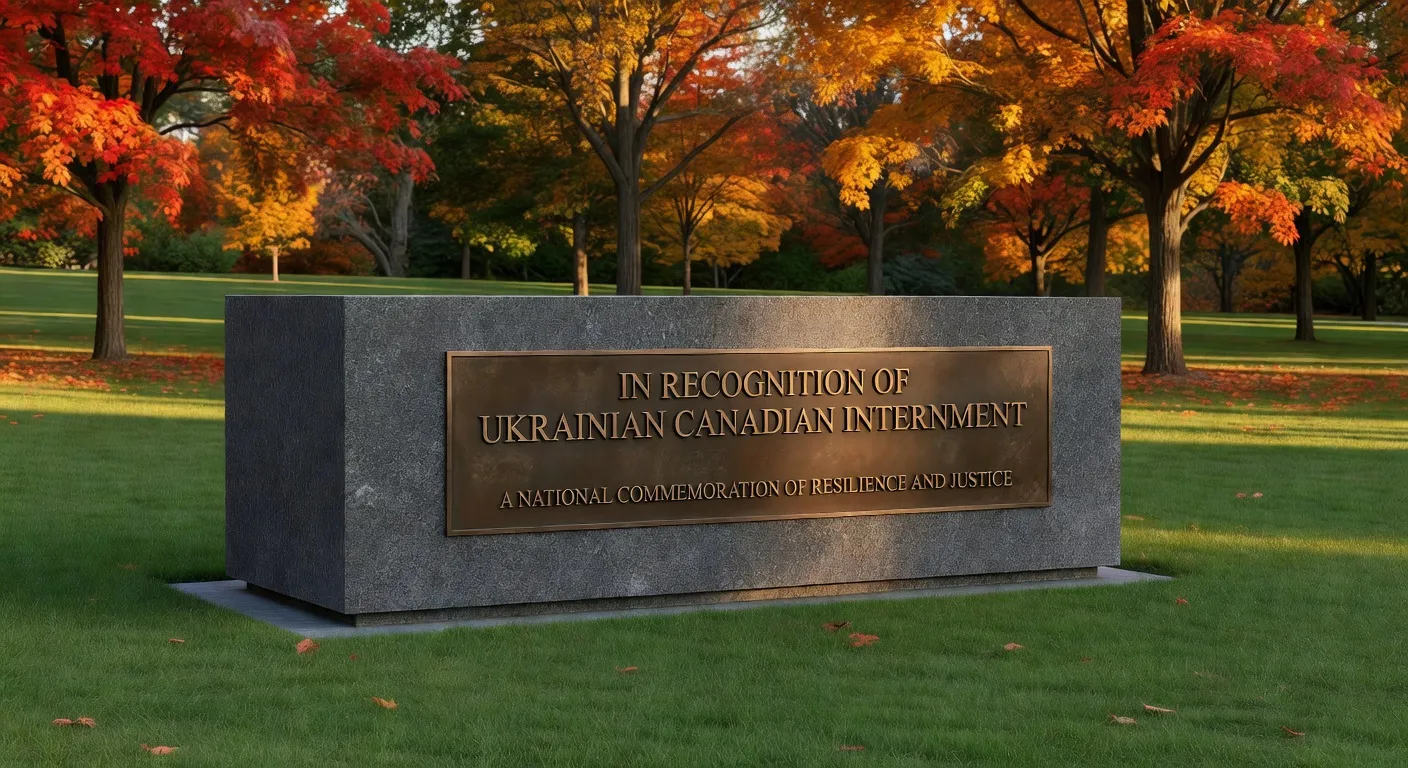
The 2008 acknowledgment was significant but incomplete in the view of many descendants. No direct financial compensation was paid to survivors or their families (by 2008, very few survivors remained alive). The $10 million fund was seen by some as too small relative to the economic damage done. And the fact that the internment had remained largely absent from mainstream Canadian history education for nearly a century was itself a form of institutional erasure that a single parliamentary act could not fully reverse.
Genealogy Resources for Internment Research
For researchers tracing family members through this period, several dedicated resources exist:
For families where military service is also part of the story -- often within the very same extended family -- see our guide to tracing CEF military service records for Ukrainian-Canadians who served.
Library and Archives Canada (bac-lac.gc.ca) — holds the primary internment records under RG 24, enemy alien registration records, and homestead files that document the pre-internment period. The online access portal has expanded significantly in recent years, though the most sensitive internment case files still require formal access requests.
Ukrainian Canadian Civil Liberties Association — maintains lists of documented internees compiled from archival research, and has published several scholarly works on the internment that provide valuable context.
The Bohdan Medwidsky Ukrainian Studies Archive at the University of Alberta — holds significant collections related to first-wave Ukrainian immigration, including community records that document the pre- and post-internment periods in specific bloc settlements.
Internment of Canada Project records — several Canadian universities and archives participated in a documentation project that gathered oral histories from survivors and descendants during the 1980s-2000s. These oral history recordings, where accessible, provide detail unavailable in official records.
FamilySearch.org — while not specialized for internment records, FamilySearch holds indexed copies of many Canadian census and civil registration records that help establish family situations around the critical 1914-1920 period.
Researchers should also consult provincial land title offices for records of property that was seized and later (sometimes) returned. The gap between seized and returned property values — often documented in probate records, correspondence, or civil suits — is itself a historical record of the economic damage done.
The First World War internment is not a footnote in Ukrainian-Canadian history. It is a foundational event that shaped the community’s relationship with Canadian institutions for generations, and it is encoded — through name changes, silences, family migrations, and economic patterns — in the genealogical record that researchers are trying to reconstruct today.
To remember: Being classified an "enemy alien" in 1914 had nothing to do with loyalty or behaviour — it depended entirely on whether an ancestor's naturalization paperwork had been completed before war broke out. For genealogists, this means internment case files, alien registration records, and property seizure documents are primary sources that can reveal details about a first-wave family found nowhere else.
Frequently Asked Questions
The exact number of ethnic Ukrainians is difficult to determine precisely because Canadian records classified most internees by their last country of citizenship rather than by ethnicity. Of the 8,579 people interned under the War Measures Act, the majority were from the Austro-Hungarian Empire — primarily from the provinces of Galicia and Bukovyna — and were thus mostly Ukrainian or Ruthenian. The Ukrainian Canadian Civil Liberties Association estimates that approximately 5,000 of the internees were ethnic Ukrainians.
Interned Ukrainians had their property seized by the Canadian government under the War Measures Act. They were required to register and surrender their valuables, including cash, at the time of arrest. Many internees returned from the camps to find their farms abandoned, their livestock sold or dead, and their savings depleted. In some cases, property had been sold by administrators. The financial losses were never fully compensated, and this economic devastation contributed to long-term poverty in the first-wave Ukrainian-Canadian community.
The 24 internment camps were distributed across Canada, concentrating in areas where Ukrainian settlers were numerous. Major camps included Banff (Alberta), Jasper (Alberta), Kapuskasing (Ontario), Spirit Lake (Quebec), Beauport (Quebec), and Nanaimo (British Columbia). Internees performed forced labour on road construction, railway building, land clearing, and in mines. Some of the infrastructure built with internee labour remains in use today, including work in what became Banff National Park.
Canada officially recognized and apologized for the internment of Ukrainian Canadians on May 9, 2008, when the federal government passed the Ukrainian Canadian Restitution Act (Bill C-331) and established a $10 million fund for commemorative and educational activities. The apology acknowledged the internment as an injustice and expressed regret for the treatment of Ukrainian Canadians during that period. The money went to community organizations for education, memorials, and cultural programs rather than as direct compensation to descendants.
The primary source is the Library and Archives Canada (LAC) Internment Operations Case Files, held under RG 24, Series C-1-a. These records include individual case files with personal information, registration forms, and sometimes photographs. The files are not fully indexed by name online, but you can submit a formal access request to LAC identifying the person's name and approximate location. The Ukrainian Canadian Civil Liberties Foundation has also compiled lists of documented internees that can serve as a preliminary check.