Introduction
The territory that historians call Bukovyna — the green, forested crownland at the foot of the Carpathians, today split between Ukraine’s Chernivtsi Oblast and the Suceava County of Romania — is one of the most genealogically fascinating and most frequently misunderstood regions for researchers tracing Ukrainian ancestry. Families who came from this region in the great emigrations of the late 19th and early 20th centuries left descendants across Canada, the United States, and Australia, many of whom know only that their great-grandmother “came from somewhere in Ukraine.”
Dr. Oksana Petrenko has been helping those descendants find that somewhere for a decade. A genealogy researcher at the Ukrainian Cultural Studies Institute in Chernivtsi, Dr. Petrenko specializes in the Greek Catholic and Orthodox church records of the former Austrian crownland of Bukovyna. She sat down with Andrew Kowalski, research editor at Ukrainian Genealogy Group PEI, to explain the essential facts every researcher needs to know before beginning work on Bukovyna ancestry.
Andrew Kowalski: Dr. Petrenko, let’s start with the most fundamental question. For someone whose ancestors came from Bukovyna, what is the single most important thing they should know before they begin their research?
Dr. Oksana Petrenko: That Bukovyna and Galicia are different places with different records in different archives. This sounds obvious, but you would be surprised how often researchers spend months looking in the wrong place. Galicia and Bukovyna were both part of the Austro-Hungarian Empire, but they were separate crownlands with separate administrative structures. Galician records are predominantly in the Lviv archives — TsDIAL. Bukovyna records are in the Chernivtsi State Archive, which we call DACH. If your ancestor was from Chernivtsi Oblast, you should not be looking at Lviv.
Point important : Galicia and Bukovyna are separate crownlands with separate archives — Galician records are held in Lviv (TsDIAL), Bukovynian records in the Chernivtsi State Archive (DACH). Confusing the two wastes months of research.
The second thing is to understand the religious diversity of the region. Unlike Galicia, where Greek Catholicism was the overwhelming majority, Bukovyna had a much more mixed population. We had Greek Catholics, yes, but also many Orthodox families — both Ukrainian and Romanian — as well as a substantial Jewish community, Swabians (Germans), Poles, and Armenians. Each of these communities had its own record-keeping system, and those records ended up in different places. Before you begin, you need to know not just the village but the religious affiliation of your ancestor.
Andrew Kowalski: Can you explain the geography of Bukovyna and how it relates to genealogy research today?
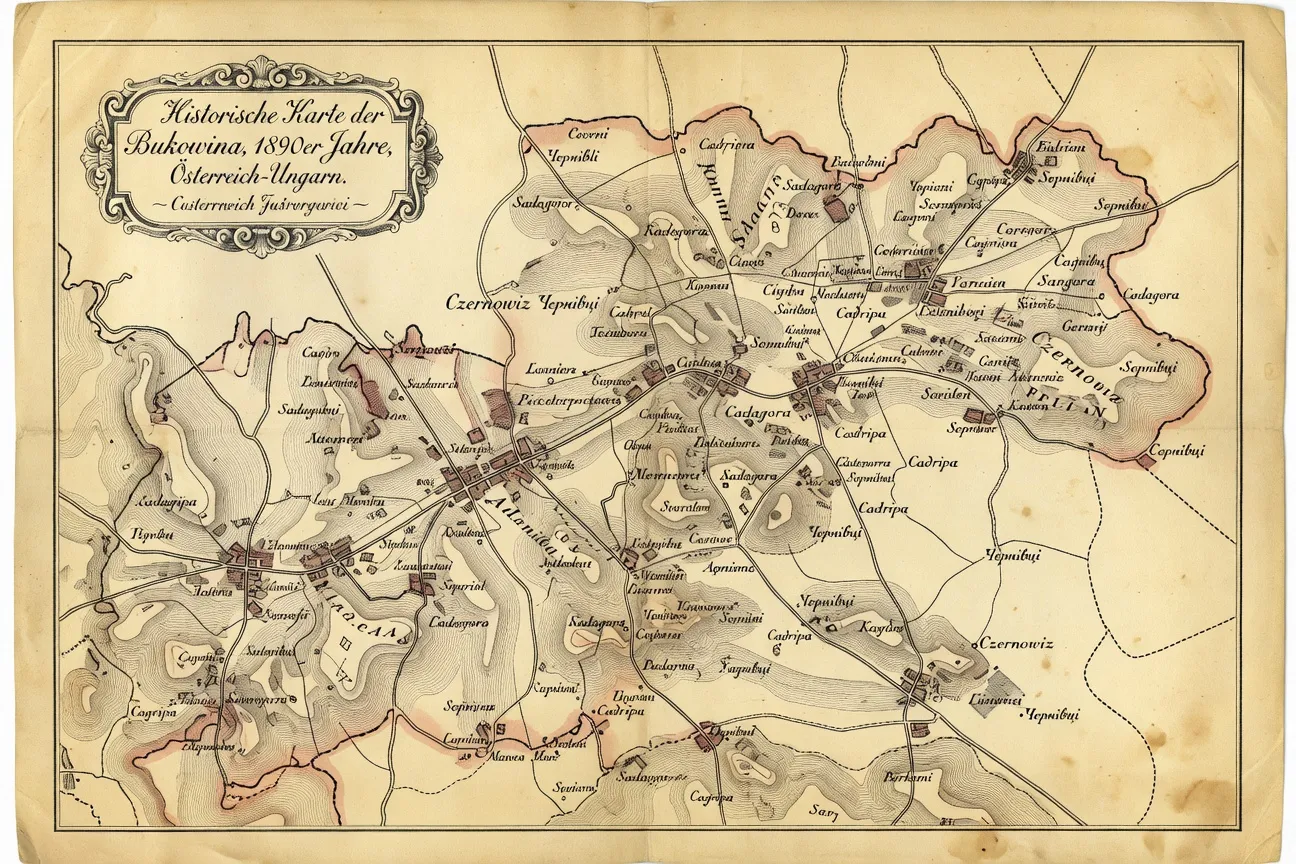
Dr. Oksana Petrenko: The historical Bukovyna is today divided between two countries. The northern part — which includes Chernivtsi city and the bulk of the historically Ukrainian-populated territory — is in Ukraine as Chernivtsi Oblast. The southern part — more Romanian in population historically — is in Romania as Suceava County.
For researchers with Ukrainian ancestry from Bukovyna, the Ukrainian part is almost certainly the relevant one. The key archive is the Derzhavnyi Arkhiv Chernivets’koi Oblasti, or DACH. This archive holds the original parish registers for the villages of northern Bukovyna, along with civil and administrative records from the Austrian and later periods.
However — and this is important — DACH does not hold everything. Some records were removed during the multiple changes of administration in the 20th century. Certain records from the Austrian period ended up in Vienna. Some duplicates made their way to Romanian archives. And FamilySearch has microfilmed portions of the DACH holdings, so some Bukovyna records are available online without ever visiting Chernivtsi.
Andrew Kowalski: What was the relationship between Bukovyna and Austria-Hungary? How does the administrative history affect the records?
Dr. Oksana Petrenko: Bukovyna was initially part of Galicia when Austria acquired it in 1774, but it became a separate crownland in 1849. This matters for genealogy because records before 1849 may be organized differently than those after. More importantly, the Austrian administration introduced standardized civil registration across Bukovyna in 1784 — the same year as Galicia — which is why records become much more consistent from that date onward.
During the Austrian period, the official languages of administration were German and Romanian (for administrative purposes), while Ukrainian and Polish were used in certain contexts. Church records were typically maintained in the language of the denomination — Ukrainian or Church Slavonic for Orthodox Ukrainian parishes, Latin for Greek Catholic parishes, German for Lutheran communities. This multilingual environment means that records from the same village family can appear in three or four different languages depending on the type of record.
After World War I, Bukovyna was incorporated into Romania. Romanian became the primary administrative language, and Romanian-era records follow Romanian conventions. If your ancestor was born in Austrian Bukovyna but married or died under Romanian administration (between 1918 and 1940), their marriage or death record will be in Romanian, in a different archive, and in a different format from their birth record.
Andrew Kowalski: For researchers just starting out, what does a typical Bukovyna parish register look like?
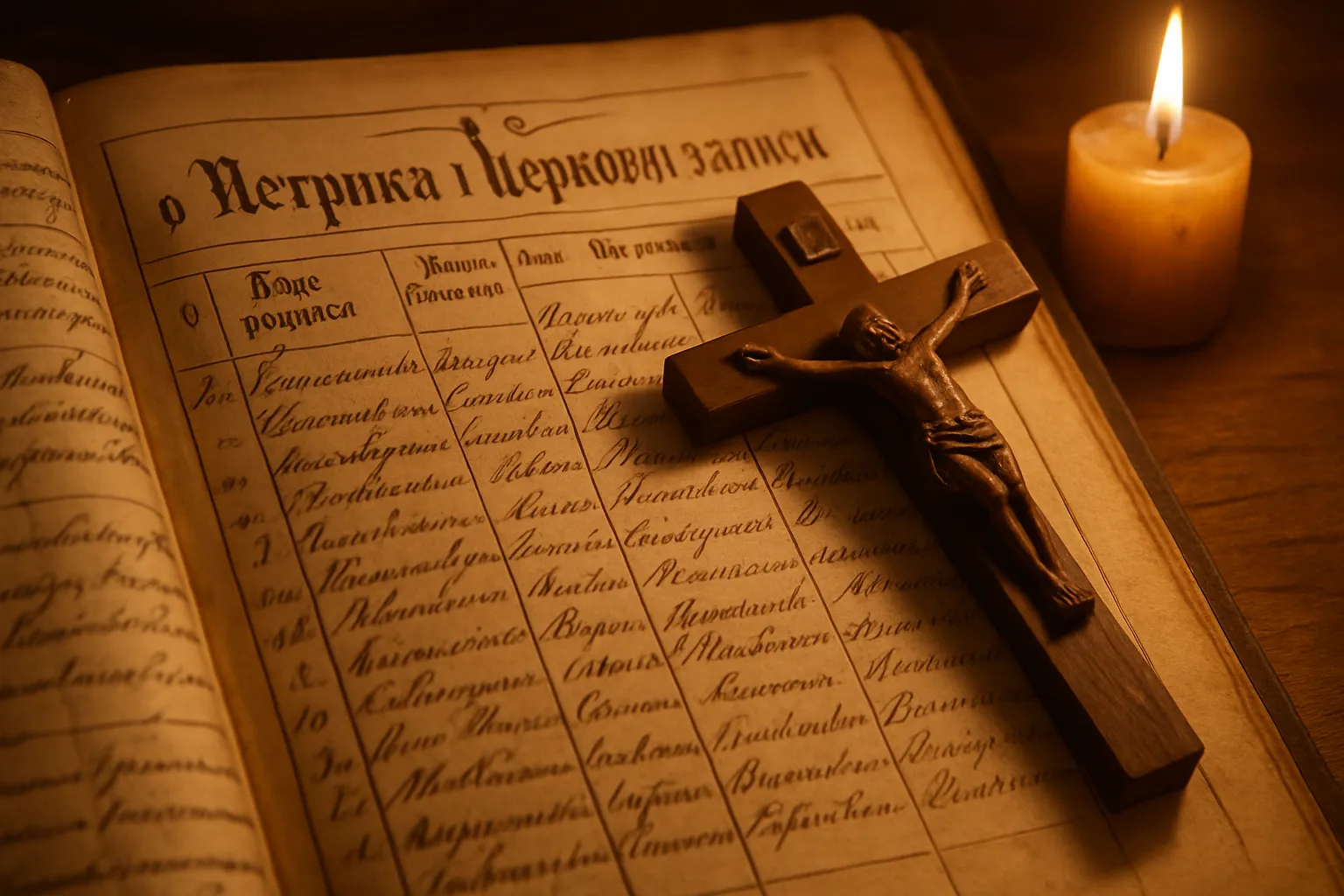
Dr. Oksana Petrenko: For Greek Catholic parishes — which follow the Austrian standardized format introduced in 1784 — the registers look similar to their Galician counterparts. A tabular format with Latin column headers records births and baptisms, marriages, and deaths in three separate sections. The column structure includes the entry number, date, name of the child or parties, parents’ names, godparents or witnesses, the officiating priest, and sometimes additional notes.
The differences from Galician records show up in the details. In Bukovyna, the multiethnic environment sometimes means that names appear in unusual forms — a Ukrainian name Romanianized, or a Romanian name Ukrainianized by a Ukrainian priest. The village names are similarly variable: an Austrian German place name, a Ukrainian name, and a Romanian name might all refer to the same village in records from different periods.
Orthodox records in Bukovyna — particularly from parishes that served both Ukrainian and Romanian families — are more complex. You may find records in Church Slavonic, Russian, Romanian, and Ukrainian all within a single register, depending on which priest served at what time. These are genuinely challenging documents that often require a specialist.

Andrew Kowalski: What distinguishes Bukovyna genealogy research from Galician research in practical terms?
Dr. Oksana Petrenko: Several things. First, the archive situation is more fragmented. Galician records are concentrated at TsDIAL in Lviv, with important duplicates at AGAD in Warsaw. For Bukovyna, you may need to look at DACH, the Vienna State Archives, Romanian archives, and FamilySearch collections — all for the same family across different generations.
| Feature | Galicia | Bukovyna |
|---|---|---|
| Main archive | TsDIAL, Lviv (with duplicates at AGAD, Warsaw) | DACH, Chernivtsi (plus Vienna and Romanian archives) |
| Dominant religion | Greek Catholic | Mixed: Greek Catholic, Orthodox Ukrainian and Romanian, Jewish, Lutheran |
| Administrative languages | German, Polish, Latin | German, Romanian, Ukrainian, Church Slavonic |
| 1918 transition | Became part of Poland | Became part of Romania — new archive, new language |
| WWI record damage | Significant in places | More severe — the 1916 Brusilov Offensive swept through |
Second, Bukovyna suffered more direct damage from World War I than much of Galicia. The Brusilov Offensive of 1916 swept through Bukovyna with enormous destruction, and many parish records were lost. Some villages have complete gaps in their registers from the war years. This is a real obstacle for research, and you should be prepared to encounter it.
Third, the transition from Austrian to Romanian administration in 1918 created a genuine discontinuity. Austrian-era records may be in Chernivtsi; Romanian-era records for the same village may be in Bucharest or in local Romanian archives. If your ancestor was alive during this period — and many immigrants’ parents were — you need to bridge this administrative transition.
Andrew Kowalski: What records survive from before 1784, before the Austrian standardized system was introduced?
Dr. Oksana Petrenko: Before 1784, records are rare and scattered. Some Orthodox monasteries and larger parishes maintained their own registers, and some of these survive — but they are the exception rather than the rule. For most villages, 1784 is effectively the beginning of the documentary record.
There are some alternative sources for the pre-1784 period. Land surveys (cadastres) from the Austrian and earlier Polish periods occasionally list heads of households, which can push the research back a generation or two. Land transfer documents in local and national archives sometimes contain family information. But for the kind of detailed vital records — birth dates, parents’ names, godparents — you are unlikely to find anything systematic before the late 18th century.
| Period | Record availability |
|---|---|
| Before 1784 | Rare and scattered — some Orthodox monasteries and larger parishes kept their own registers, the exception rather than the rule |
| 1784 onward | Standardized Austrian civil registration begins — the effective start of the documentary record for most villages |
| Alternative pre-1784 sources | Land surveys (cadastres) listing heads of households; land transfer documents with family information |
Andrew Kowalski: What should someone expect if they hire a researcher to work in the Chernivtsi archives?
Dr. Oksana Petrenko: A good local researcher will have direct access to the archive finding aids and personal experience with the collection. They can navigate the catalog, identify which funds contain records for your village, and physically examine registers that may not be digitized. This is genuinely different from what you can do remotely.
What you should provide the researcher is as much information as possible: the ancestor’s name, approximate birth year (within ten years is usually sufficient to begin), the village name, the religious denomination, and any Canadian records you have found. The more precise your starting information, the more efficiently the researcher can work.
- Ancestor's name and any known spelling variants
- Approximate birth year — within ten years is usually sufficient to begin
- Village name in its historical form
- Religious denomination — Greek Catholic, Orthodox, or other
- Any Canadian records already found (census, ship manifest, naturalization papers)
Expected turnaround times vary. A straightforward search in a well-preserved register might be completed in a week. A complex case involving multiple records, damaged documents, or uncertain village identification could take months. Discuss the scope and timeline before engaging the researcher, and make sure you understand exactly which records will be searched and what you will receive as output.
Andrew Kowalski: For researchers comparing Galicia and Bukovyna — if someone knows their family came from “western Ukraine” but isn’t sure which region — how can they tell which one it is?
Dr. Oksana Petrenko: The best clue is often in Canadian records. Immigration documents, ship manifests, and naturalization papers often list the country of origin as “Bukovyna,” “Bukovina,” or “Bukowina” (the German spelling) rather than simply “Ukraine” or “Galicia.” Census records sometimes have the same specificity. If you see “Bukowina” or “Bukovyna” anywhere in a Canadian record, your family almost certainly came from what is now Chernivtsi Oblast rather than from Galicia.
A second clue is the religious denomination. Bukovyna had a higher proportion of Orthodox families than Galicia, where Greek Catholicism was dominant. If the family was Orthodox and from western Ukraine, Bukovyna is the more likely origin. This is not a certainty — there were Orthodox communities in Galicia as well — but it raises the probability.
Finally, some surnames have regional distributions. Certain surname endings, name patterns, and phonological features are more common in Bukovynian dialects than in Galician ones. An experienced genealogist familiar with both regions can sometimes identify likely origin from surname alone — though this should always be treated as a hypothesis to be tested against archival evidence.
Quick Questions: Common Myths about Bukovyna Research
Andrew Kowalski: I’d like to ask a few rapid-fire questions about common misconceptions.
- "Bukovyna records are less complete than Galician records." — Partly true. WWI damage was more severe than in most of Galicia, but for many villages and periods the records are excellent under the same Austrian standardized system.
- "If the family was Orthodox, there are no records." — Completely false. Orthodox churches maintained metrychni knyhy just as Greek Catholic churches did, in different languages and formats, but surviving for most parishes.
- "The name change from Austrian to Romanian administration makes it impossible to trace." — An exaggeration. There is discontinuity, but with the right guidance about which archive holds which period's records, most researchers can bridge the transition.
“Bukovyna records are less complete than Galician records.”
Dr. Petrenko: Partly true. The World War I damage to Bukovyna archives was more severe than in most of Galicia. But for many villages and periods, Bukovyna records are excellent. The Austrian standardized system applied equally to both regions. The blanket statement that “Bukovyna records are worse” is an oversimplification that leads researchers to give up prematurely.
“If the family was Orthodox, there are no records.”
Dr. Petrenko: Completely false. Orthodox churches in Bukovyna maintained metrychni knyhy just as Greek Catholic churches did. The records are in different languages and follow different formats, but they exist and survive for most parishes throughout the Austrian period.
“The name change from the Austrian to the Romanian period makes it impossible to trace.”
Dr. Petrenko: An exaggeration. Yes, there is discontinuity in the records, and yes, the administrative change creates complications. But with patience and the right guidance — knowing which archive holds which period’s records — most researchers can bridge the transition. I do it regularly.
Three Key Takeaways for Bukovyna Researchers
After ten years of working in these archives, Dr. Petrenko summarized the approach she recommends to all researchers who contact her:
1. Establish the village before anything else. The village of origin is the key that unlocks the archive. Before approaching DACH or hiring a researcher, be as certain as you can about the specific village. Canadian immigration and census records are your best tools for this.
2. Know the denomination. Greek Catholic and Orthodox records are in different parts of the archive, in different languages, and sometimes in different physical locations. Establishing the religious affiliation early saves significant time and prevents expensive misdirection.
3. Consider the full timeline. An ancestor born in Austrian Bukovyna in 1890, married under Romanian administration in 1920, and who died in Soviet Bukovyna in 1950 has vital records in three different administrative systems. Build your research strategy across that full timeline from the start.
Conseil : the best clue to confirm Bukovynian origin (rather than Galician) is in Canadian records themselves — immigration documents and ship manifests that specify "Bukovyna," "Bukovina," or "Bukowina" rather than the generic "Ukraine" or "Galicia."
For further context on the record types and archive structures mentioned in this interview, see our complete guide to Ukrainian metrical books — which covers the standardized Austrian formats applicable to both Galicia and Bukovyna — our guide to Ukrainian church records for genealogy, and our overview of the Lviv archives for Galician research.
Frequently Asked Questions
No, and confusing the two is one of the most common mistakes researchers make. While both regions were part of the Austro-Hungarian Empire, Bukovyna was a separate crownland from Galicia with its own administrative structure, archives, and record-keeping system. Records from Bukovyna are held at the Chernivtsi State Archive (DACH), not at the Lviv archives that hold Galician records. The parish record formats are also different, reflecting Bukovyna's more religiously diverse population.
Austrian Bukovyna was one of the most ethnically diverse regions of the empire. Ukrainians (called Ruthenians in the Austrian period) were the largest group, followed by Romanians, Germans (Swabians), Jews, Poles, and Armenians, among others. The Orthodox Church was predominant for Ukrainians and Romanians, while a significant Greek Catholic population also existed. This religious diversity means that records from the same village may be in different archives depending on the family's denomination.
Mandatory civil registration under Austrian law began in Bukovyna in 1784, the same year as in Galicia, following Emperor Joseph II's decree. Parishes were required to keep standardized registers of births, marriages, and deaths. Before that date, some records exist from individual parishes, but coverage is incomplete and irregular.
The Chernivtsi State Archive (DACH) accepts written requests by email for genealogical research. You will need to provide the name, approximate birth year, religious denomination, and village of origin of the ancestor you are researching. Response times vary and fees apply for certified copies. Alternatively, FamilySearch has microfilmed a portion of the Chernivtsi Oblast records, and some are available online. Hiring a local genealogist in Chernivtsi who has regular archive access is often the most efficient approach.
Three factors make Bukovyna research particularly complex. First, the ethnic and religious mix means records are held in multiple archives and languages (German, Romanian, Ukrainian, Latin). Second, many records were damaged or destroyed during World War I, when Bukovyna was a major front. Third, the region changed hands multiple times — from Austria to Romania (1918) to the Soviet Union (1940) — with each transition bringing different record-keeping systems and language requirements. Researchers need to understand which administrative period applies to their ancestor's vital events.