The Contradiction: Serving While Being Interned
Between 1914 and 1920, roughly 8,579 people were interned in twenty-four camps across Canada under the War Measures Act, a majority of Ukrainian origin, classified collectively as enemy aliens because Galicia and Bukovyna were provinces of Austria-Hungary at the outbreak of war. That story is documented in detail in our guide to Ukrainian internment in Canada. What rarely gets told alongside it is that during the same four years, other Ukrainian-Canadians — often relatives of the interned, sometimes from the very same block settlement — put on a Canadian Expeditionary Force uniform and shipped out to France and Belgium.
This was not a contradiction anyone chose. It was a function of paperwork. A man born in Canada, or one who had already filed for naturalization before August 1914, was a British subject with every legal right to enlist. A man who arrived in 1912 and had not yet naturalized was, overnight, an enemy alien — required to register, report periodically to police, and in thousands of cases, interned outright. Two brothers from the same Galician village could end up on opposite sides of that line purely because one had filed paperwork a year earlier than the other.
The historical record is blunt about how quickly this shifted. In August 1914 recruiting offices across the Prairies were still filling quotas with whoever showed up fit and willing, Ukrainian surname or not. By the winter of 1914-15, as suspicion of "enemy nationalities" hardened into official policy, the same offices were turning away men they might have accepted six months earlier. A service file dated September 1914 and a registration card dated February 1915 can belong to men from the same township, same church, sometimes the same household — the difference being almost entirely a matter of timing rather than any real difference in circumstance.
If your family history includes both an internment story and a vague mention of military service, this is not a contradiction to resolve — it is two genuine threads that both deserve tracing, often through the very same archive, and sometimes through the very same family in the very same year.
Who Could Actually Enlist — Status, Not Loyalty
Eligibility to enlist in the CEF turned on legal status, not on how anyone felt about the war — the same distinction between naturalized subject and unnaturalized arrival that runs through the immigration and naturalization records covering this period. Three broad situations covered most Ukrainian-Canadian men of military age in 1914:
- Born in Canada or already a naturalized British subject — free to enlist like any other Canadian, subject to the same medical and age standards.
- Austro-Hungarian subject, not yet naturalized, arrived before the war — legally an enemy alien; recruiting offices were instructed to refuse enlistment, though enforcement in the chaotic first weeks of August and September 1914 was inconsistent, and a small number were accepted before the policy tightened.
- Registered enemy alien already reporting to police or interned — barred from enlistment outright; some were later released from internment specifically to work in war industries or agriculture under labour parole, a status distinct from military service but worth knowing if a relative's internment file shows an early release date.
The practical upshot for a researcher: before assuming a young male ancestor of military age simply "did not serve," check his naturalization date against August 1914. A naturalization certificate dated 1911 or 1912 usually means enlistment was legally open to him even if he chose not to go; a certificate dated 1920 or later, after an internment period, usually explains why he could not.
Age also mattered more strictly than status. The CEF's official enlistment age ran from 18 to 45, though under-age recruits routinely lied about their birth year and recruiting sergeants rarely checked closely in the early recruitment drives. If a service file shows a birth year that contradicts the same person's census entry by two or three years, treat that as ordinary wartime exaggeration rather than evidence of a different individual — cross-check the stated birthplace and next-of-kin name instead, both of which were harder to falsify convincingly on the spot.
Finding the CEF Service File at Library and Archives Canada

Library and Archives Canada digitized and indexed the surviving personnel files for essentially the entire CEF — roughly 600,000 individual soldiers — and made the collection freely searchable online without a subscription. This is the single most productive starting point, ahead of any commercial genealogy site, because the underlying documents are the same government-held originals.
Search by surname first, then narrow using approximate birth year and stated place of birth if the surname is common. Because clerks transcribed names phonetically at the recruiting table, search broadly: try the first four or five letters of the surname alone, and try the most common Anglicized substitutions (Kowal- for Koval-, -chuk endings sometimes dropped to -chuck or -chick, Greek Catholic given names swapped for their English equivalents such as Wasyl to William).
Once a likely match appears, the digitized file itself is the reward: the full attestation paper and every subsequent document generated during that soldier's service, in most cases scanned page by page and downloadable at no cost.
What a Service File Actually Contains
A complete CEF personnel file is unusually rich by genealogical standards, because the military bureaucracy tracked a soldier continuously rather than at a single point in time the way a census does.
| Document in the file | Genealogical value |
|---|---|
| Attestation paper | Full name, birthdate, birthplace, next of kin with address, trade, religion, and a physical description — often the earliest Canadian document naming a specific European birthplace |
| Medical history sheet | Height, complexion, distinguishing marks; useful for confirming identity when a name is ambiguous |
| Pay and conduct records | Confirms dates and units, and any allotments sent home to a named dependant — sometimes the only document naming a spouse or parent still in Canada |
| Casualty or hospital admission forms | Wound location, hospital, and dates — corroborates unit and campaign |
| Discharge or death documentation | Final disposition, and for those who died, often the earliest official notice sent to next of kin |
The next-of-kin address on the attestation paper is worth pausing on. Because a recruit was required to name a parent, spouse, or guardian and give a home address at the moment of enlistment, this single line frequently supplies a rural municipality, township, or homestead location that is difficult to pin down from other Canadian records of the period — often the same location documented in the 1906 Census a few years earlier.
When the Name in the File Does Not Match

Name transformation in military records tends to be more aggressive than in census or church records, for a simple reason: the recruiting sergeant filling out the attestation paper had no document to copy from and wrote down what he heard, once, under time pressure. Many Ukrainian recruits also anglicized their own names voluntarily at the recruiting table, calculating — not always wrongly — that a simpler name eased their reception in an English-speaking unit.
Three patterns come up repeatedly:
- A patronymic surname shortened at the first syllable (Kovalchuk becomes Koval, then sometimes Kovall or Kowal).
- A given name fully translated rather than transliterated (Ivan becomes John, Mykola becomes Nicholas or Mike, Petro becomes Peter).
- A double substitution where both given name and surname changed, making a cross-reference against the census or a church record the only reliable way to confirm the same individual.
When a likely CEF match surfaces with a name that does not cleanly match the family's known spelling, check the stated birthplace, birth year, and next-of-kin name before ruling it in or out — those three fields together are usually decisive even when the surname itself has drifted.
Casualty Records, Medal Cards, and Commonwealth War Graves
A soldier's core personnel file is the foundation, but three further record sets round out the picture, particularly for anyone who was wounded, decorated, or did not return.
- Medal index cards — catalogued separately from the personnel file, these confirm which campaign medals a soldier was entitled to and can corroborate unit and theatre of service.
- Circumstances of Death registers — for soldiers killed in action or who died of wounds, these give a fuller narrative than the brief casualty notation in the personnel file itself.
- Commonwealth War Graves Commission database — for those who died overseas, this gives the specific cemetery or memorial, which the CEF file alone frequently does not specify in full.
Together with the personnel file, these three sources can usually establish not just that an ancestor served, but where, in what unit, and — when the outcome was fatal — precisely where he is buried or commemorated.
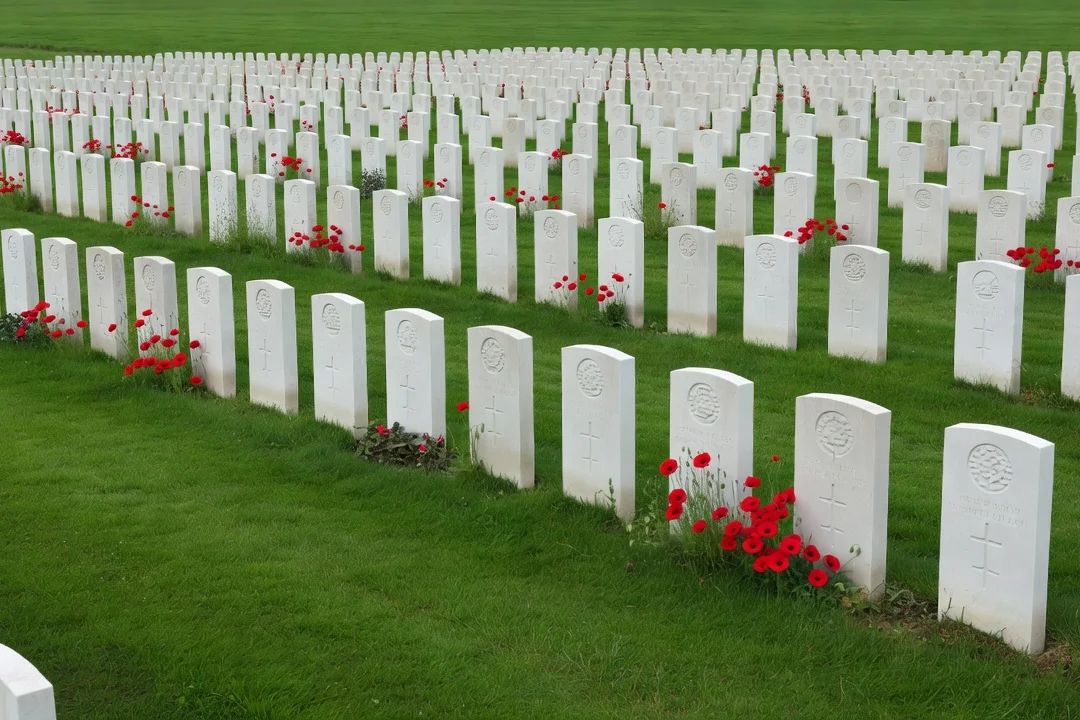
One detail worth flagging for Ukrainian-Canadian research specifically: religion recorded on the attestation paper or grave marker is frequently listed as "Greek Catholic" or "Greek Orthodox" — the same religious marker used in the 1906 and 1911 censuses to distinguish ethnic Ukrainian households from Polish or German neighbours in the same district. When a surname alone is ambiguous, this religious designation, carried consistently across military and civilian records of the period, is often the deciding clue.
Cross-Referencing a Service File With Internment Records
Because military service and internment intersected in real families, it is worth checking both record sets even when family memory only preserves one story clearly. Certificates of release from internment, held at Library and Archives Canada, sometimes show a release specifically to take up war-related labour — agricultural work or industrial contracts considered essential to the war effort. That release date, cross-referenced against a relative's CEF attestation date, can occasionally reveal that an interned man's own son or younger brother was serving overseas at the very same time, a detail family stories rarely preserve on their own.
A Practical Search Strategy
Start with what the family already believes to be true, then verify rather than assume:
- Search the LAC CEF personnel database by surname, trying at least three plausible spelling variants before concluding no file exists.
- If a likely match is found, download the full digitized file rather than relying on the index summary alone — the attestation paper's next-of-kin field is often the most valuable line in the entire document.
- Cross-check the stated birthplace and birth year against the 1911 or 1916 census entry for the same household to confirm identity.
- If internment is also part of the family story, check naturalization dates for both individuals before assuming who could or could not have enlisted.
- For anyone who did not return, follow up with the Commonwealth War Graves Commission database to locate the burial or memorial.
- Note the religious designation on any record you find (Greek Catholic, Greek Orthodox, Roman Catholic) — it travels consistently between military, census, and parish records and often resolves an otherwise ambiguous surname match.
None of these records will hand over a finished narrative on their own. A CEF file gives dates, a unit, and a next-of-kin address; an internment certificate gives a camp and a release date; a census entry gives a household snapshot years apart. The value comes from laying these fragments side by side for the same surname and township, and letting the timeline that emerges — enlistment, internment, release, naturalization — tell you which branch of the family took which path through those four years, and why.
A CEF service file rarely stands alone as a research source — its real value comes from what it confirms or contradicts when set beside the internment, census, and naturalization records covering the same period. For families who eventually settled on Prince Edward Island specifically, the PEI settlement history page provides useful context for how the two stories — service and internment — sometimes converged within a single extended family after the war.
Sources consulted: Library and Archives Canada, "First World War" and internment camp records collections; Library and Archives Canada, "Land Grants of Western Canada" (cross-reference context); Wikipedia, "Internment of Ukrainian Canadians" (figures on internee numbers and camps); Canada.ca Library and Archives, "Internment camps: First World War."