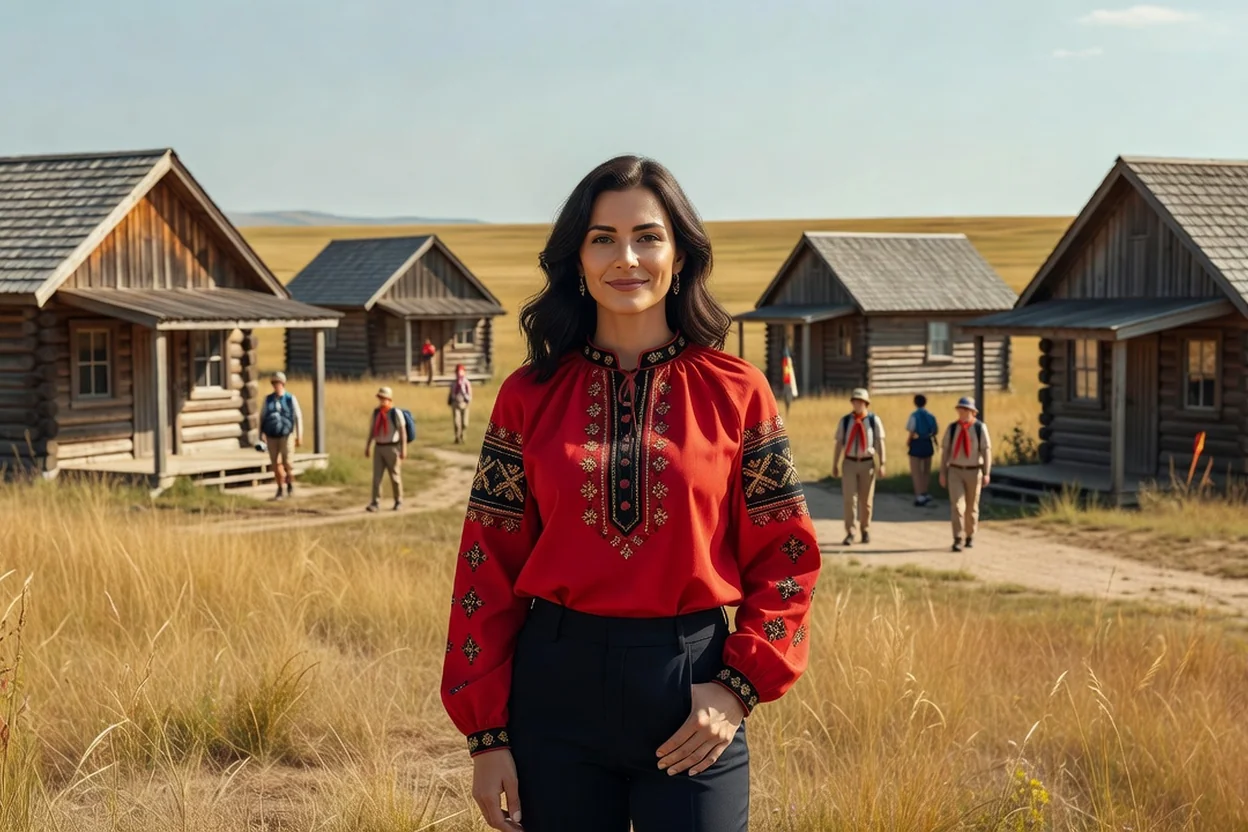
Three Ukrainian-Canadian youth organizations left archival footprints large enough to matter for family history: the Ukrainian National Youth Federation (founded 1934 in Saskatoon), SUMK — the Ukrainian Youth Association in Canada (organized 1948–49 in Winnipeg), and Plast, the Ukrainian scouting movement (established in Canada in 1948). Their camp registers, membership correspondence, photographs, and publications are held today mainly at Library and Archives Canada, the Archives of Manitoba, and the University of Toronto. This guide explains what each organization was, and how its records can help you document your ancestors' lives in Canada.
If your parents or grandparents grew up in a Ukrainian-Canadian family between the 1930s and the 1970s, there is a reasonable chance that at least one of them spent a summer at a Ukrainian camp, marched in a folk dance ensemble, or appeared in a youth group's anniversary booklet. Those activities generated records, and those records are now among the most personal sources available to descendants.
Why Youth Organization Records Matter
Census schedules record a household once every ten years. Church registers mark baptisms, marriages, and deaths. Youth organization records capture something neither institution can: a named individual, at a known place, doing something they chose to do, often with a photograph attached. For the postwar generation in particular — children of immigrants and displaced persons who arrived in Canada between 1946 and 1952 — these records can be the only Canadian sources that connect a teenager to their family's region of origin in Ukraine.
Youth group records solve several recurring genealogical problems:
- They date a family's arrival and location between censuses. A camp registration from July 1951 places a family in Winnipeg or Toronto three years before the 1951 census was even taken in prairie provinces.
- They preserve Ukrainian name forms. A camper listed as "Oksana" in a camp album may appear as "Anne" in her school records, and both refer to the same person.
- They record origin information. Membership and registration forms for displaced-person families sometimes named the district or village the family came from — details that Canadian civil records almost never captured.
- They document sibling groups together. Camps enrolled brothers and sisters from the same family in the same summer, creating a single source that reconstructs an entire set of siblings with ages.
Youth organizations also sat at the intersection of the other institutions your ancestors belonged to. Camp life involved the church (Sunday services, parish sponsors), the ethnic press (camp reports printed in community newspapers), and the schools (many camp weeks were scheduled around the Saturday Ridna Shkola and bilingual-school calendar). Reading the three sets of records together turns isolated names into a documented adolescence.
The 1930s: The Ukrainian National Youth Federation
The first mass Ukrainian-Canadian youth organization was the Ukrainian National Youth Federation (UNYF), founded on 27 July 1934 in Saskatoon as the youth wing of the Ukrainian National Federation. Paul Yuzyk — later a Canadian senator — was a founder and its first national president. The federation was deliberately inclusive: it presented itself as a cultural and educational body for Ukrainian youth "whether Catholic or Orthodox," in an era when denominational divisions ran deep.
The UNYF organized drama circles, choirs, sports clubs, and reading groups in towns and cities across the Prairies and Ontario. Its monthly magazine, Holos Molodi ("Voice of Youth"), printed articles, short fiction, branch news, and — crucially for genealogists — names: contest winners, conference delegates, camp attendees, and the authors themselves. Later publications included MUN Beams and New Perspectives. Library and Archives Canada holds the UNYF fonds, which spans the organization's administration, publications, and branch correspondence from the 1930s onward.
For researchers, UNYF material is especially valuable because it covers the interwar generation — the Canadian-born children of the first immigrants. A name found in a 1937 Holos Molodi contributor list is a name confirmed in Canada with a specific political-cultural affiliation, five years before that person appears in a military record or a marriage register.
SUM and SUMK: The Orthodox Youth Association
The Ukrainian Youth Association — SUM (Spilka ukrainskoi molodi in Ukrainian) — was founded in 1921 in Ukraine as a scouting-style organization combining outdoor life, national education, and physical training. In Canada, a Ukrainian youth association was active within Ukrainian Orthodox Church circles in the 1930s, and after the Second World War the movement was reorganized as SUMK in Winnipeg in 1948–49. Archival descriptions identify SUMK as the youth organization associated with the Ukrainian Orthodox Church of Canada, and its Winnipeg base put it at the centre of the country's largest Ukrainian urban community.
SUMK's surviving records are unusually rich. The fonds described by Canadian archives include administration files (1934–1969), correspondence (1929–1969), convention, conference, and jamboree records (1933–1959), special projects files (1934–1968), scrapbooks and newspaper clippings (1935–1956), photographs (1931–1965), and a full publications series (1933–1969), along with the records of its eastern executive (1942–1969). For a genealogist, that means a single fonds can contain a named individual in a photograph, a program, a committee list, and a correspondence file — four separate confirmations of the same person's activity and address.
SUMK camps and winter retreats taught Ukrainian history, folk dance, and craft skills, and the movement's anniversary publications are full of camper lists and group portraits. If your ancestor's family was part of the Ukrainian Orthodox community in Manitoba, Saskatchewan, or Ontario after the war, SUMK records deserve a dedicated search.
Plast: Ukrainian Scouting in Canada
Plast is the oldest Ukrainian scouting movement, founded in 1911 in Lviv. Plast in Canada began in 1948 — the first officially registered group appeared in Winnipeg, and the movement's first national conference met in Toronto on 3–5 September 1949. Its growth was driven by the postwar immigrant wave: displaced persons and political refugees who had been Plast members in Europe re-established the organization in their new country, with strong branches in Toronto, Hamilton, Edmonton, Winnipeg, Calgary, Montreal, and Ottawa.
Plast's first campsite, at Grafton, Ontario, has served the movement since 1948, and camp life followed the international scouting pattern adapted to a Ukrainian mission: tent units (called roï), hiking, campfires, and instruction in Ukrainian songs, dance, and history. The movement publishes age-tiered periodicals — Hotuys for younger scouts, Yunak for older scouts, and Plastovyi Shliakh for adult members — which for decades printed camper names, unit rosters, and camp reports.
Library and Archives Canada holds a major Plast collection donated by the Plast National Executive in Toronto in 1978–1979 and again in 1983–1984. Its contents read like a genealogist's checklist: camp reports for individual units, including Toronto and Saskatoon groups; general camp instructions from 1949; bulletins; temporary regulations; reports and correspondence. A unit camp report from the 1950s typically names the unit leader, the campers, their ages, and sometimes their hometowns.
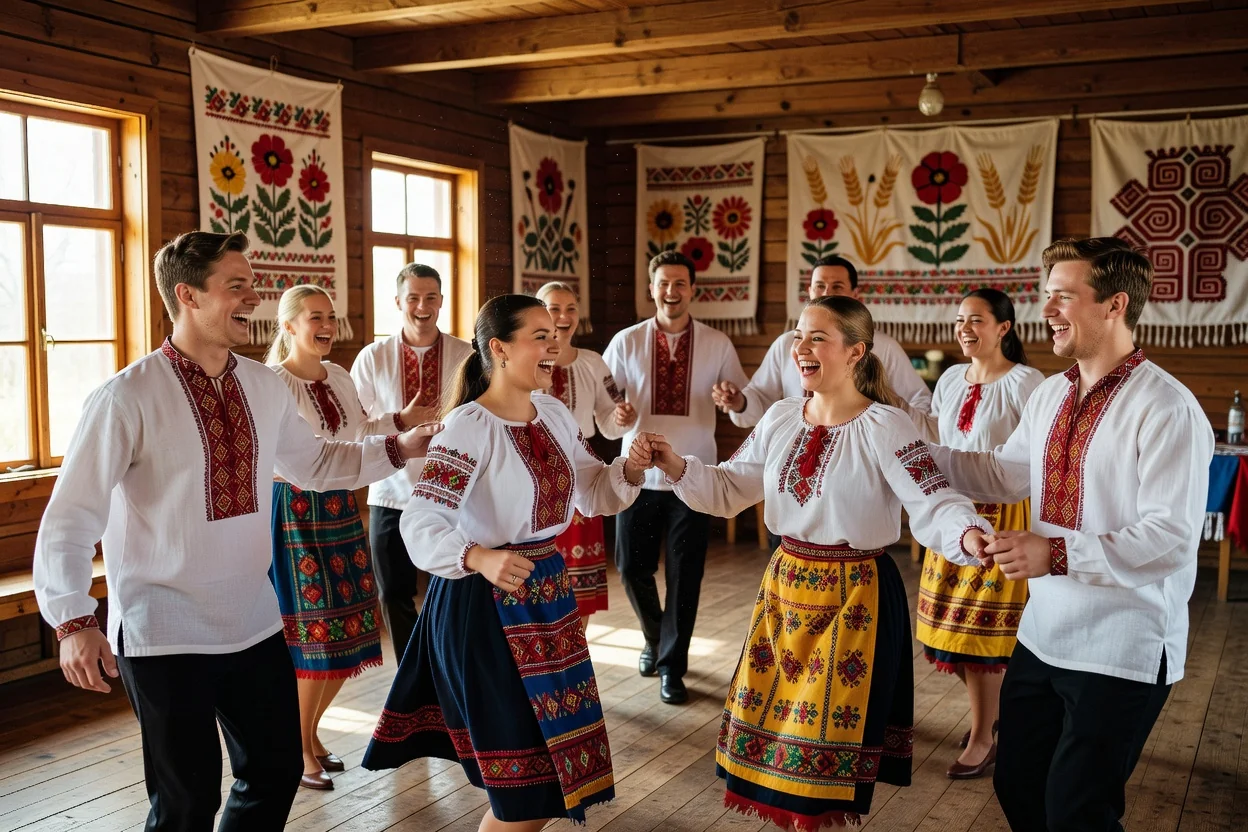
Camp culture also carried the visible traditions of the homeland. Campers wore embroidered shirts, learned vyshyvanka motifs and regional embroidery styles, and rehearsed the dances and songs of Ukraine's regions — the same repertoire that families today explore when reconnecting with their heritage through resources on Ukrainian folk dances and songs performed at heritage camps.
Camps, Conventions, and Publications
The three organizations differed in origin and emphasis, but their record-producing activities were remarkably similar. Understanding the pattern helps you predict where a relative's name might appear:
- Registration and membership records. Camp applications, unit enrollments, and branch membership books. These usually give name, age or birth date, address, parent or guardian, and sometimes parish or organization of affiliation.
- Publications. Magazines and bulletins such as Holos Molodi, Hotuys, Yunak, and Plastovyi Shliakh, plus anniversary almanacs. Names appear as authors, subscribers, contest winners, and branch correspondents.
- Photographs and albums. Group portraits by unit and year, campfire scenes, and convention photos, usually captioned with full names.
- Convention and jamboree records. Delegate lists, agendas, and resolutions naming the adults who ran the organizations — often the same community leaders visible in church committees and mutual-benefit societies.
These records did not stay only in organizational files. Branch news and camp reports flowed into the Ukrainian-Canadian community press, which printed camper lists, departure and arrival notices, and photographs. A child who attended a Plast camp in 1953 may have no file in the Plast fonds, yet appear by name in a camp report reprinted in a Winnipeg or Toronto newspaper of the same year.
The table below summarizes the three organizations side by side.
| Organization | Founded | Base and parent body | Key records for genealogists | Main archives |
|---|---|---|---|---|
| Ukrainian National Youth Federation (UNYF) | 27 July 1934, Saskatoon | National; youth wing of the Ukrainian National Federation | Holos Molodi magazine, branch correspondence, convention delegate lists, 1930s–1950s photographs | Library and Archives Canada (UNYF fonds); provincial archives |
| SUMK (Ukrainian Youth Association in Canada) | 1948–49, Winnipeg (SUM founded 1921 in Ukraine) | Winnipeg-centred; associated with the Ukrainian Orthodox Church of Canada | Administration files 1934–1969, jamboree records, scrapbooks 1935–1956, photographs 1931–1965, publications series 1933–1969 | Archives of Manitoba; Library and Archives Canada |
| Plast (Ukrainian scouting) | 1911, Lviv; Canada 1948 (Winnipeg first group; first national conference Toronto 1949) | Stanytsi in Toronto, Hamilton, Edmonton, Winnipeg, Calgary, Montreal, Ottawa; Grafton, Ont. campsite since 1948 | Unit camp reports, 1949 camp instructions, bulletins, regulations, publications (Hotuys, Yunak, Plastovyi Shliakh) | Library and Archives Canada (Plast collection); University of Toronto (Toronto Ukrainian community records) |
Where the Records Are Held Today
Because the organizations were national, their records are spread across the country's major repositories. Four institutions hold the bulk of what survives:
- Library and Archives Canada (Ottawa). The UNYF fonds and the Plast collection, the two largest single bodies of youth organization records, both catalogued online and consultable in the reading room on Wellington Street or by reproduction order.
- Archives of Manitoba (Winnipeg). The natural home for SUMK records and for Winnipeg branch material of the other organizations, within the richest provincial collection of Ukrainian-Canadian organizational records anywhere in Canada.
- University of Toronto — Fisher Library. The Ukrainian People's Home (Toronto) records include drama-group posters, cultural program material, and youth-association activity from 1949 onward, requestable through the library's reference services.
- University of Winnipeg and Oseredok (Winnipeg). Photograph collections, including digitized camp images, and the broader Ukrainian-Canadian museum and library holdings that contextualize organizational life.
Do not overlook the organizations themselves. Plast Canada remains active and maintains its own archives and publications; long-running branches often kept minute books and membership ledgers that never entered a public repository. A polite enquiry to a national office can locate records that no catalogue lists.
Remember the settlement context these records grew from. The postwar organizations were built by the displaced-person generation described in our overview of the Ukrainian-Canadian population and its communities, and their camps and halls were often the first Canadian institutions those newcomers built with their own hands.
A Research Plan for Youth Organization Records
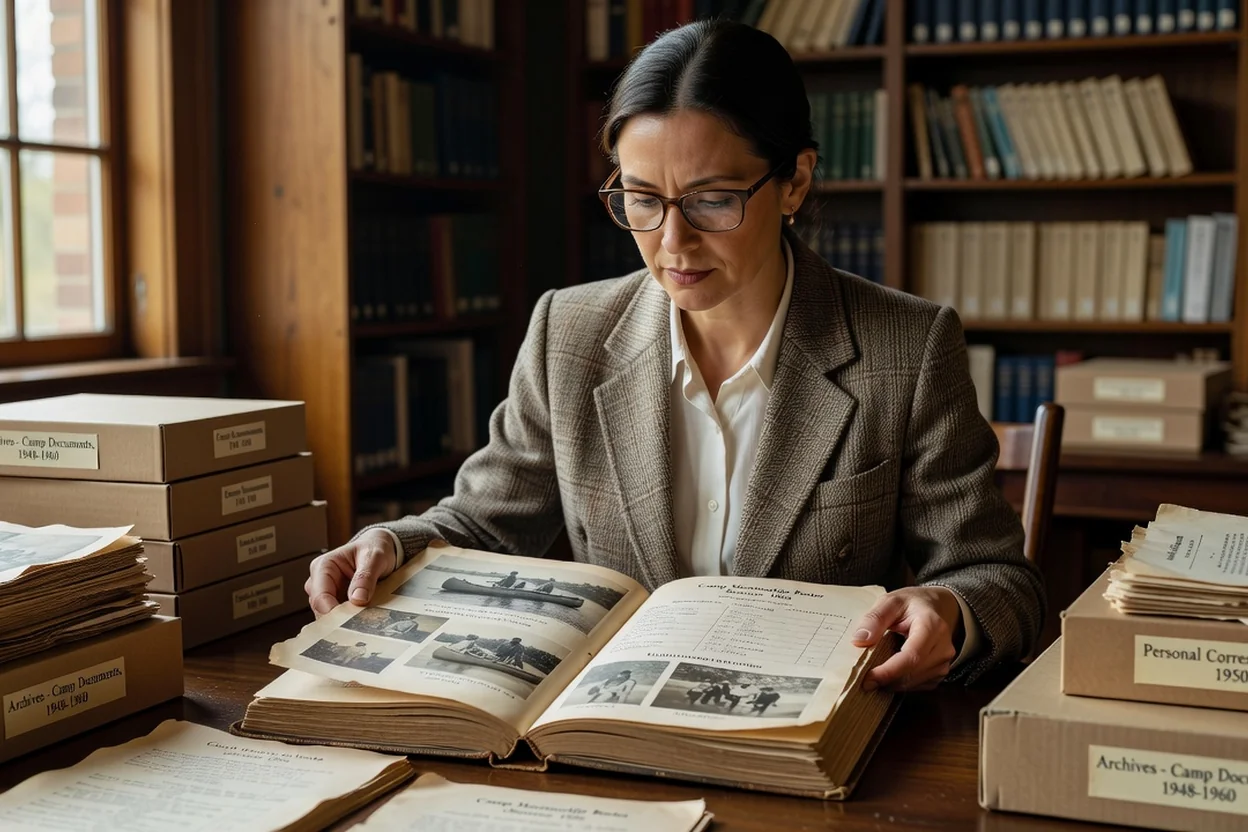
Approach these records methodically:
- Establish the family's denominational and community anchor. An Orthodox family in postwar Winnipeg points toward SUMK; a scouting family anywhere in Canada points toward Plast; a 1930s family connected to the Ukrainian National Federation points toward the UNYF.
- Search the archival catalogues by organization name. Use the LAC Collection Search and the Archives of Manitoba's Keystone database, and request file lists for the fonds that match your relative's era and city.
- Read the publications for the right years. Digitized runs of Holos Molodi and Plast periodicals, plus community newspapers, can be searched for a surname much faster than paper files.
- Try spelling variants. Print-era transliteration was inconsistent; search truncated and phonetic forms of the surname.
- Contact the organization directly. For records after 1960, the national office or the nearest branch is often the only path.
Finally, treat every find as a lead to be corroborated. A camper list confirms presence and approximate age; pair it with census entries, school registers, and church records to build the full picture. Youth organization records are at their strongest when they are woven into the rest of the family's documented life.
Sources consulted: Library and Archives Canada, Ukrainian organizational fonds and Ukrainian Canadians genealogy guide; Library and Archives Canada, Plast collection finding aid (PDF) and UNYF fonds description (PDF); Encyclopedia of Ukraine (University of Toronto), Canada and Winnipeg entries; University of Toronto, Ukrainian People's Home (Toronto) Records; University of Winnipeg, camp photograph collections; Archives of Manitoba, Ukrainian community fonds descriptions; Érudit, historical study of Ukrainian-Canadian schooling and youth; Oseredok Ukrainian Cultural and Educational Centre, collections overview.
Frequently Asked Questions
Most were not primarily political. Plast is a scouting movement modeled on international scouting principles, and the Ukrainian National Youth Federation described itself as a cultural and educational body open to Catholic and Orthodox youth alike. SUM in Canada grew within Ukrainian Orthodox church circles. That said, the interwar years were politically charged, and some organizations took positions on homeland politics; the camps, sports, dance, and craft programs themselves were community activities rather than party work.
Sometimes, yes. Camp registration forms, membership books, and anniversary publications often recorded a member's birthplace or the district the family came from. Because many members of the postwar organizations were displaced persons or children of immigrants from particular regions, these records can preserve the Galician or Bukovynian district name that Canadian civil records never captured.
The largest collections are at Library and Archives Canada in Ottawa, which holds the Ukrainian National Youth Federation fonds and a Plast collection donated by the national executive in Toronto. The Archives of Manitoba holds Winnipeg-centred fonds including SUMK administration, correspondence, photographs, and publications. The University of Toronto's Fisher Library holds the Ukrainian People's Home records with Toronto youth-group material, and the University of Winnipeg and Oseredok in Winnipeg hold camp photographs and community albums.
Start with the organization's own archives and publications: Plast and SUM published camp reports, anniversary albums, and newsletters that named campers and counselors. Then check the regional archives for the province where the camp operated — for example, the Archives of Manitoba for Winnipeg-area camps — and community museums near the campsite. University collections of Ukrainian-Canadian photographs, such as the University of Winnipeg's digital camp photo collection, are also worth searching.
Historical records are generally open. Library and Archives Canada and provincial archives describe their Ukrainian youth fonds in public online catalogues, and fonds from the 1930s to the 1960s can normally be consulted in a reading room or ordered as reproductions. More recent membership records may be restricted to protect personal information, so contact the reference archivist before visiting.