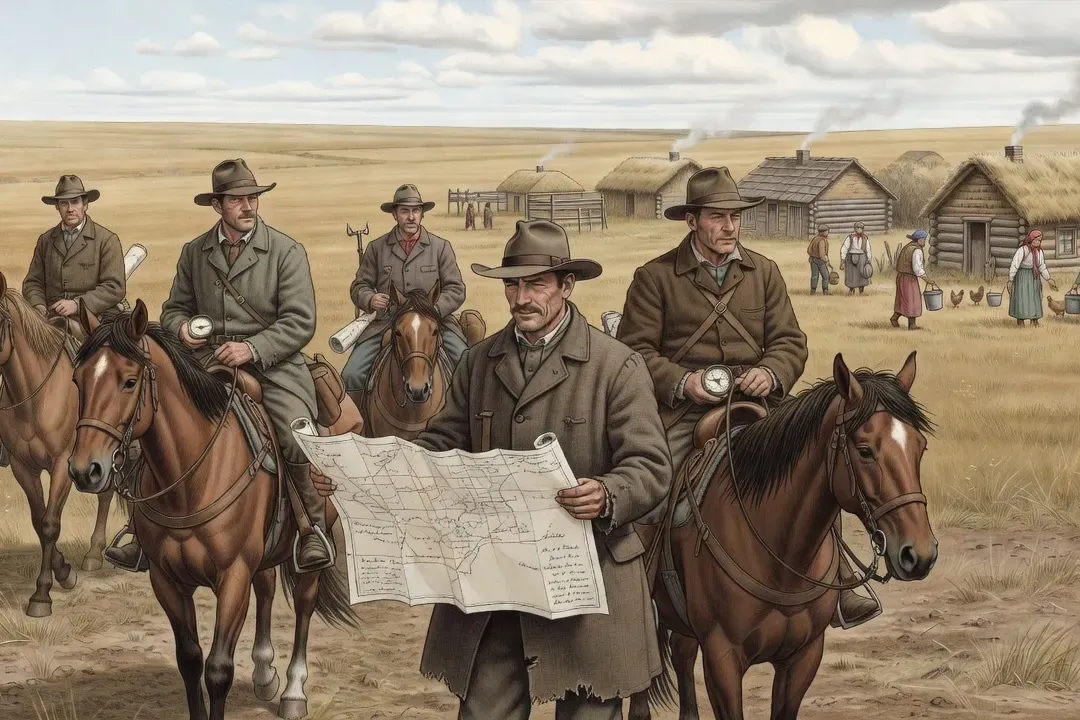
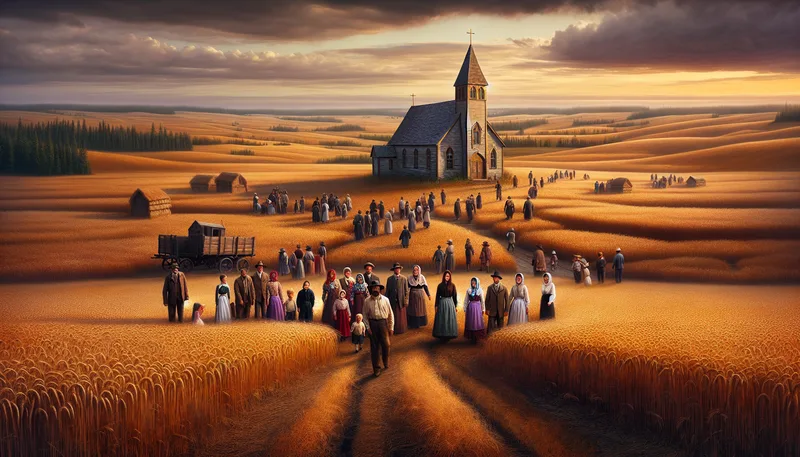
Between 1891 and 1930, over 170,000 Ukrainian settlers — mostly from the Austro-Hungarian provinces of Galicia and Bukovyna — transformed the Canadian prairies. They broke virgin sod in Saskatchewan, Manitoba, and Alberta, established parishes, reading halls, and mutual aid societies, and left behind a documentary record of extraordinary richness. For their descendants today, that paper trail is the primary highway back to the Old Country village.
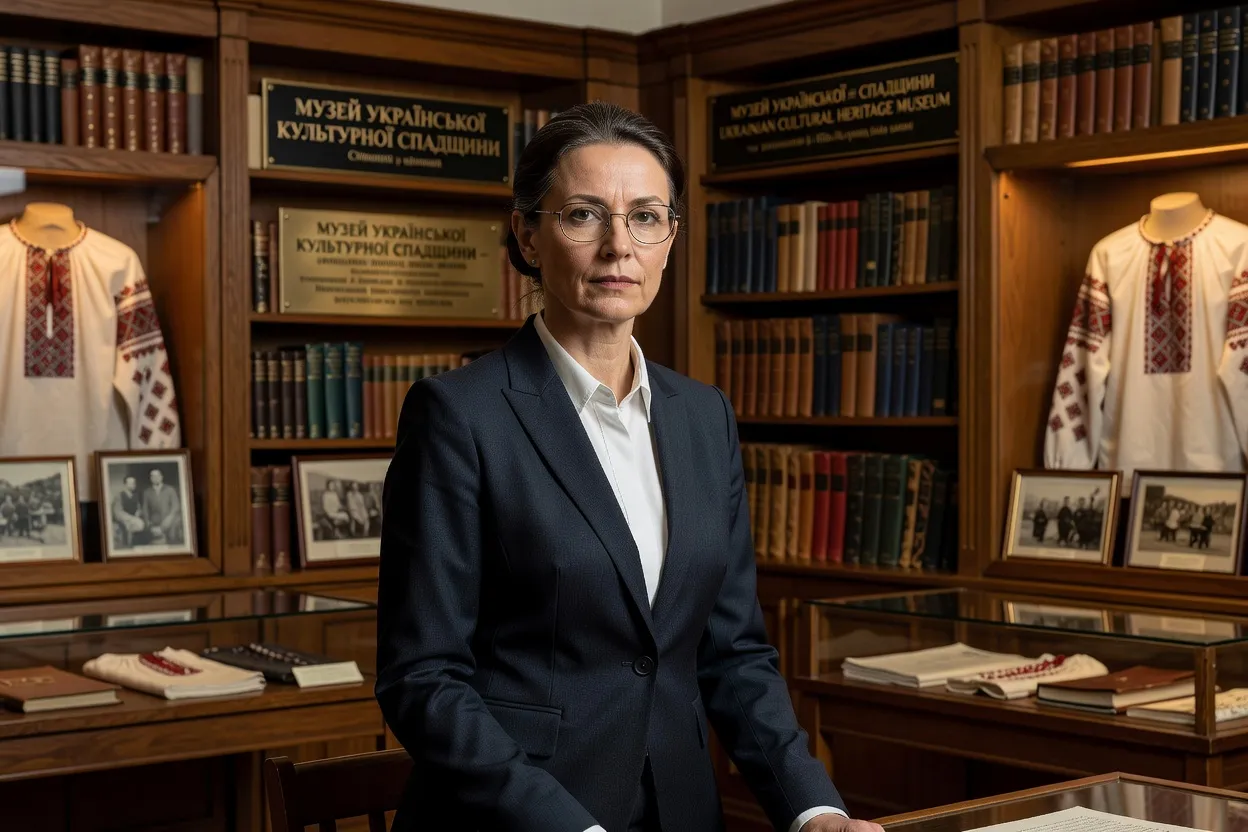
To help Canadian-Ukrainian genealogists navigate that highway, we spoke with Dr. Halyna Petrivska, a Ukrainian-Canadian Heritage Researcher and Senior Archivist at the Ukrainian Cultural Heritage Village in Saskatoon, Saskatchewan. With 22 years of experience researching Ukrainian prairie settlement records, Dr. Petrivska has helped hundreds of families trace their roots from homestead quarter-sections in Saskatchewan to specific villages in Galicia. Her answers reflect the documented practices and holdings of the major prairie archives and the research strategies she has refined over two decades of fieldwork.
This interview is presented as an editorial portrait synthesizing the methods and knowledge of experienced prairie heritage researchers, written in question-and-answer form to make institutional knowledge accessible to first-time researchers.
Q1: Why Prairie Settlement Records Are Invaluable for Genealogists
Interviewer: Dr. Petrivska, you have spent 22 years studying Ukrainian prairie settlement records. What makes these documents so valuable for genealogists today?
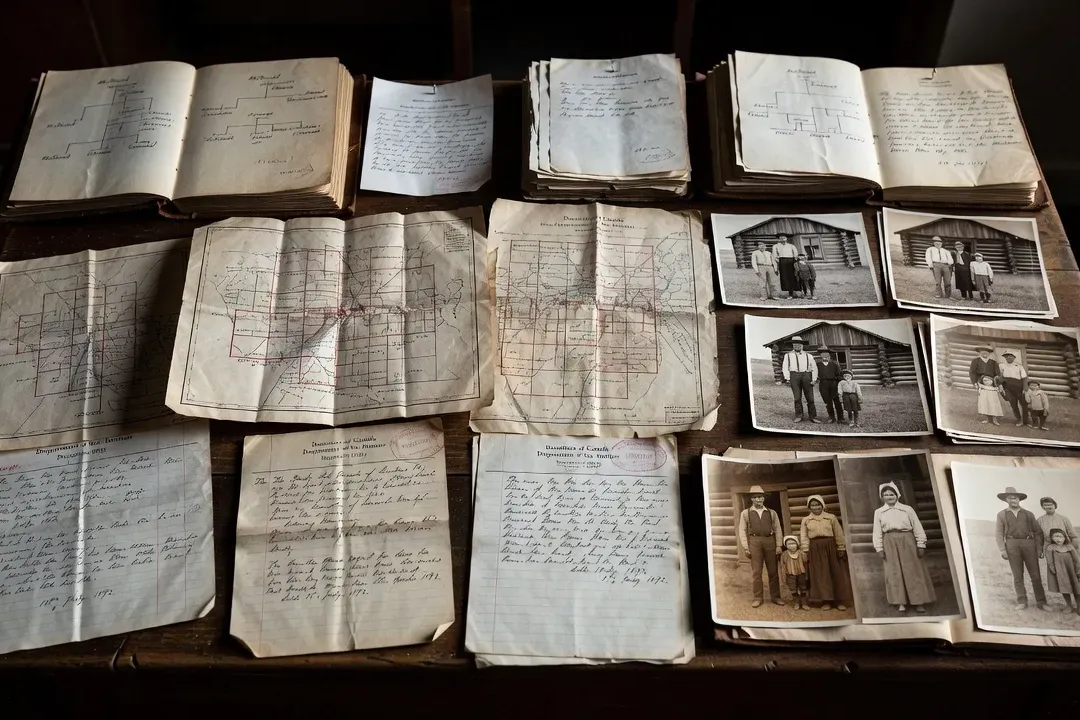
Dr. Petrivska:The prairie settlement era generated a dense web of interlocking documents that is almost unparalleled in Canadian genealogical history. When a Ukrainian family arrived and claimed a homestead quarter-section, they entered a bureaucratic universe: the original homestead application, the inspector's entry report, the proof of improvement filed three or five years later, the final certificate of title. Each document adds biographical details that do not appear elsewhere.
What makes them particularly valuable is the bridge function they serve between the Canadian record world and the European archival world. A homestead file routinely names the country and sometimes the specific province of origin. Combined with the 1906 Canadian census, which recorded birthplace in the column for country of birth, you can often pin down whether an ancestor was from Austrian Galicia or Russian-administered territories. That distinction determines which European archive holds the relevant church records.
Beyond their informational density, these records are remarkably well preserved. The Dominion Lands Branch, which administered prairie homesteads, was a federal bureaucracy with excellent record-keeping habits. The files were transferred to Library and Archives Canada and have survived intact. For researchers whose European records were lost to war, revolution, or administrative chaos, the Canadian homestead file is sometimes the only surviving document with precise biographical data on a first-generation immigrant.
Q2: The Dominion Land Survey of 1906 and Its Records
Interviewer: The Dominion Land Survey of 1906 is often mentioned in connection with Ukrainian settlers. Can you explain what records it generated?
Dr. Petrivska:The Dominion Land Survey was not a single event but an ongoing cadastral system that divided the prairie landscape into townships, ranges, sections, and quarter-sections. By 1906, the survey had already gridded most of Manitoba, Saskatchewan, and Alberta into the standard 160-acre quarter-sections that became the basic unit of homestead allocation.
The records generated by this system fall into two main categories. First, the field notebooks of the survey parties, which recorded topographic features, soil quality, water sources, and in some cases the names of settlers already occupying land. These notebooks are held at Library and Archives Canada and are available on microfilm. They are rarely consulted by genealogists, but they occasionally name Ukrainian families who had already settled before the formal survey was completed in their district.
Second — and far more useful for genealogists — are the township plan maps that resulted from the survey. These maps, available through the Government of Canada's online databases, show exactly which quarter-section in which township and range a homestead was located. Once you find a family in a homestead file, the township plan tells you precisely where they lived. That location then guides you to the nearest Ukrainian Orthodox or Greek Catholic parish, whose church records may document the family's subsequent generations.
For Ukrainian families who settled in blocks — as was common in Saskatchewan's "Bloc Settlement" areas around Vegreville, Dauphin, and the Interlake — the township maps reveal entire Ukrainian-speaking communities that can be researched as a unit. Knowing your ancestor's neighbours often reveals siblings, cousins, or co-villagers from the same Galician district who emigrated together.
| Record type | What it contains | Where held |
|---|---|---|
| Field notebooks (survey parties) | Topographic features, soil quality, water sources, names of settlers already occupying land | Library and Archives Canada, microfilm |
| Township plan maps | Exact quarter-section, township, and range of each homestead | Government of Canada online databases |
Q3: Where Saskatchewan and Manitoba Descendants Should Begin
Interviewer: Many of our readers are Canadian descendants looking for ancestors who settled in Saskatchewan or Manitoba. Where should they start their search?
Dr. Petrivska:The single most important starting point is the family oral tradition — but treated as a hypothesis rather than a fact. Write down everything you have been told: the name of the homestead district or nearest town, the name of the Ukrainian community organization the family belonged to, the church affiliation (Greek Catholic, Ukrainian Orthodox, or Ukrainian Catholic), and any mention of neighbours or travel companions from the boat crossing.
With that oral tradition in hand, your second step is the homestead file at Library and Archives Canada. The BAC-LAC online database allows you to search by surname under "Dominion Lands homestead files." The database is not fully indexed — many records are accessible only by browsing microfilm — but a substantial portion of Saskatchewan and Manitoba homestead files from 1896 to 1930 are searchable. When you find a match, request the microfilm or digital scan. The file will typically include the original homestead entry form, which names the applicant and often their country of origin.
Simultaneously, consult the Dominion Lands homestead records guide for Ukrainian-Canadian researchers, which explains the quarter-section numbering system, the difference between homestead entries and pre-emption claims, and how to cross-reference the homestead file with adjacent land records. Many Ukrainian families purchased additional land beyond their free homestead quarter, and those purchases are documented in separate land title registers at provincial archives.
Finally, do not overlook the local community histories published by Saskatchewan and Manitoba rural municipalities. These volumes — produced during the centennial celebrations of the 1970s and 1980s — frequently contain family histories submitted by descendants of the original settlers. Your public library's local history collection is an underused goldmine for Ukrainian-Canadian genealogists. Ukrainian diaspora initiatives across Canada have also digitized many of these community histories, making them searchable from anywhere in the world.
Q4: Homestead Files at Library and Archives Canada
Interviewer: What about the homestead files held by Library and Archives Canada — what kind of information do they contain?
Dr. Petrivska:A complete homestead file is a researcher's dream. At minimum, it will contain the homestead entry form, which names the applicant, gives their age, and records their country of origin. Many files also include the proof of improvement affidavit, signed by the settler and two witnesses after three to five years of occupation. This affidavit lists the number of acres broken, the buildings erected, and the livestock owned — a snapshot of economic progress that is valuable both genealogically and historically.
More useful still are the inspector's reports, which were filed when a government land inspector visited the homestead to assess compliance with the settlement conditions. These reports sometimes include the settler's first language, whether they could read or write in English, whether they had family members still in Europe, and in some cases the name of the European village or county of origin. I have found inspector's reports that gave the exact Galician village name — information that the European-side researcher would need to identify the correct church records.
Files for homesteads that were later cancelled — because the settler abandoned the claim or failed to meet the improvement requirements — can be even richer in biographical detail, because the cancellation process required sworn testimony and often generated multiple documents over several years. Do not discard a cancelled homestead file as a dead end; it may contain more information than a straightforward successful claim.
Point important : a complete homestead file typically includes the entry form, the proof of improvement affidavit, and the inspector's report — and it is the inspector's report that most often names the exact European village of origin, information the entry form alone rarely provides.
- Homestead entry form — applicant's name, age, and country of origin
- Proof of improvement affidavit — acres broken, buildings erected, livestock owned, signed by two witnesses
- Inspector's report — first language, literacy, family still in Europe, and sometimes the exact village or county of origin
Q5: Handling Name Spelling Variations Across Documents
Interviewer: How do you handle situations where the settler's name was spelled differently across multiple documents?
Dr. Petrivska:Spelling variation is perhaps the most consistent challenge in Ukrainian-Canadian genealogy, and it requires both systematic methodology and a degree of creative interpretation. Ukrainian surnames were rendered into English by enumerators, immigration officers, and land agents who had never encountered the sounds of the Ukrainian language. The result is that a single surname might appear in a dozen spellings across a decade of documents.
My first rule is to build a phonetic map of the surname before starting any search. Write out every plausible English phonetic rendering of the Ukrainian sounds. The Ukrainian letter "h" is routinely rendered as "g," "kh," or simply dropped. The letter "y" at the beginning of a name is often rendered as "j" or "i." Double consonants may be simplified. Feminine surnames — which end in "-a" in Ukrainian — are sometimes given the masculine "-o" or "-enko" suffix by confused Canadian officials.
Once you have your phonetic map, search using wildcard searches wherever the database allows. BAC-LAC's homestead database supports truncated searching; so does Ancestry.ca. For databases that do not support wildcards, search for each variant systematically. Keep a log of every combination you try — it prevents repetition and reveals patterns in how a specific surname was anglicized in a specific district.
When you find a match you cannot be certain about, look for corroborating details: the approximate age, the homestead district, the names of witnesses on the proof affidavit. If the witnesses have Ukrainian surnames consistent with the same Galician county, that is strong circumstantial evidence of a correct match even when the spelling of the primary surname is unfamiliar.
- Build a phonetic map of the surname before starting any search — "h" is often rendered "g" or "kh," "y" as "j" or "i," feminine "-a" endings sometimes given a masculine "-o" or "-enko" suffix
- Search with wildcards wherever the database allows (BAC-LAC, Ancestry.ca both support truncated searching)
- Keep a log of every spelling variant tried, to avoid repetition and reveal district-specific anglicization patterns
- Cross-check corroborating details — age, district, witness names — when the surname match is uncertain
Conseil : if the witnesses on a proof-of-improvement affidavit have Ukrainian surnames consistent with the same Galician county, that is strong circumstantial evidence of a correct match even when the spelling of the primary surname is unfamiliar.
Q6: Prairie Homestead Records Now Fully Searchable Online
Interviewer: You mentioned digitization earlier. Which prairie homestead records are now fully searchable online?
Dr. Petrivska:The digitization landscape has improved considerably in the past five years, though it remains incomplete. Library and Archives Canada has digitized the original homestead entry forms for the majority of prairie files and made them available through the BAC-LAC website under "Dominion Lands homestead files." These images are free to access. However, the remaining documents within each file — the proof affidavits, inspector's reports, and correspondence — are often available only on microfilm and must be ordered through the Interlibrary Loan system or examined at a LAC facility in person or through a hired researcher.
FamilySearch.org has digitized a substantial number of provincial land records and published them in its "Canada, Land Records" collection. For Saskatchewan specifically, the provincial Land Titles Office has an online search portal that allows you to trace land ownership forward and backward from a legal description — invaluable once you have identified the quarter-section from a homestead file.
The 1906 Prairie Census guide on this site walks through the complementary census records in detail, but from a digitization standpoint, the census images are freely available on FamilySearch and Ancestry.ca. The homestead files and the census together cover the critical first decade of settlement for most Ukrainian families, and between the two you can typically reconstruct an entire household's composition, origin, and land situation in 1906.
For Manitoba, the provincial archives in Winnipeg have made excellent progress in digitizing their Ukrainian community records — including many mutual aid society rolls from the early 1900s — and these are searchable through the Archives of Manitoba online database. These membership rolls complement the homestead files by showing which Ukrainian settlers were affiliated with which cultural organizations, sometimes naming officers whose homestead files have not survived.
Q7: Ukrainian Community Organization Records
Interviewer: Are there records specific to Ukrainian community organizations — mutual aid societies, reading rooms — that complement homestead files?
Dr. Petrivska:Absolutely, and these are among the most underutilized sources in Ukrainian-Canadian genealogy. The Ukrainian settlement era coincided with a flowering of civil society institutions: mutual benefit societies (which provided illness and death benefits), prosvita reading rooms (cultural and educational societies), bursa student support organizations, and eventually credit unions and cooperative grain companies. All of these institutions kept membership records.
The Ukrainian National Federation, the Ukrainian Self-Reliance League, and the Ukrainian Catholic Brotherhood all deposited archival materials at university libraries and provincial archives across the prairies. The University of Saskatchewan's Special Collections holds particularly rich holdings from the Saskatoon and Prince Albert Ukrainian communities. The Ukrainian Cultural and Educational Centre (Oseredok) in Winnipeg is the largest single repository of Ukrainian-Canadian organizational records in the country.
What makes these records genealogically valuable is their biographical completeness. A mutual benefit society membership application typically asks for name, age, marital status, number of dependents, occupation, health status, and village of birth in the Old Country. Some of the pre-1914 applications are among the only surviving documents that name the exact Galician village for individuals whose homestead files and census records give only "Austria" as country of origin. Consult our detailed guide on the migration from Galicia to Canada for context on the waves of settlement and the community organizations that formed in each region.
Q8: Remote Research Options for Those Who Cannot Travel
Interviewer: For someone who cannot travel to a Canadian archive, what remote research options exist?
Dr. Petrivska:The situation has improved dramatically since 2020. The BAC-LAC digitization program has made the homestead entry forms accessible from any internet connection, and FamilySearch's ongoing digitization continues to expand what is available remotely. For records that are not yet online, LAC's Interlibrary Loan program allows you to order microfilm reels through your local public library — this is free in most Canadian provinces.
For records at provincial archives, most institutions now offer a remote research service where staff will examine a specific record and provide a scan for a modest fee. Saskatchewan Archives, Manitoba Archives, and the Glenbow Archives in Alberta all have well-established remote service programs. Turnaround times vary from two weeks to six months depending on demand, but the service is reliable.
If you need intensive research — examining dozens of files, cross-referencing community records, visiting parish archives that do not have remote services — hiring a certified genealogical researcher based in Winnipeg, Saskatoon, or Edmonton is the most efficient approach. The Association of Professional Genealogists maintains a directory with regional specialists who have Ukrainian-Canadian expertise. Expect to pay $50-100 per hour for professional research, but a skilled researcher familiar with Ukrainian prairie records can often accomplish in one day what a remote first-time researcher might spend months attempting.
Q9: New Resources and Digitization Projects to Watch
Interviewer: Looking ahead, what new resources or digitization projects should Ukrainian-Canadian genealogists watch for?
Dr. Petrivska:Several projects are in active progress. Library and Archives Canada has committed to completing the digitization of the full homestead file contents — not just the entry forms but all accompanying documents — by 2028. When this is complete, it will transform prairie homestead research from a hybrid online-microfilm activity into a fully remote discipline. Subscribe to the BAC-LAC newsletter to receive updates as new collections come online.
FamilySearch's ongoing Global Indexing project is working through the provincial church records for Saskatchewan and Manitoba, and Ukrainian Catholic and Greek Catholic registers from the 1900-1940 period are being indexed by volunteers as I speak. These indexed records allow surname searching rather than browsing image by image — a profound efficiency gain for first-time researchers.
The Ukrainian Institute of Modern Art in Chicago and the Shevchenko Scientific Society in New York are both engaged in digitizing their pre-war Ukrainian-language press holdings. Ukrainian-language prairie newspapers from the 1900s-1920s — such as the Ukrainskyi holos published in Winnipeg — are genealogically rich because they published birth, marriage, and death notices for prairie settlers. Several of these newspapers are now being indexed for personal names, which will create a new searchable biographical database.
Closer to home, a collaborative project between the University of Alberta, the University of Manitoba, and the Ukrainian Cultural Heritage Village is building a geographic information system that will overlay historical homestead data, census information, and parish records onto a modern map of the prairies. When complete, researchers will be able to enter a surname and see every documented location where a family of that name lived, farmed, or worshipped — a true gateway to the documentary record.
Quick Takes: Common Myths About Prairie Genealogy
Often wrong. The entry form says "Austria" — but the inspector's report within the same file frequently gives the specific province, district, or even village. Request the complete file, not just the entry form.
Largely a myth. Most name changes resulted from anglicization by Canadian officials or voluntary adoption of English names within a generation. The original spelling almost always appears somewhere in the documentary record — search phonetic variants systematically.
False. Ancestry.ca indexes are incomplete for prairie homestead records. BAC-LAC's own database, FamilySearch, and provincial archives online portals each hold distinct record sets. A name missing from Ancestry may be easily found through other portals.
Partly true. Pre-1920 records are typically in Ukrainian Cyrillic, but the format is highly formulaic. A genealogist with basic Cyrillic literacy can extract the key biographical fields — name, age, birthplace — without reading fluent Ukrainian.
Almost never true. The Dominion Lands Branch records were held federally and transferred intact to LAC. Provincial land title records were also well preserved. Losses are genuinely rare; "lost records" usually means "not yet searched in the right place."
| Common belief | Reality |
|---|---|
| "The homestead file only says 'Austria' for birthplace" | Often wrong — the inspector's report within the same file frequently gives the specific province, district, or village |
| "Ukrainian settlers changed their names at the border" | Largely a myth — most changes were anglicization by officials or later voluntary adoption |
| "If not on Ancestry.ca, they aren't in the records" | False — BAC-LAC, FamilySearch, and provincial archives each hold distinct record sets |
| "My ancestor's homestead records were destroyed in a fire" | Almost never true — Dominion Lands Branch records were held federally and transferred intact to LAC |
Three Key Takeaways
If you take three things from this conversation, make them these. First, the homestead file at Library and Archives Canada is your single most important document — request the complete file, not just the entry form, because the inspector's reports often name the European village of origin. Second, community organization records at archives in Winnipeg, Saskatoon, and Edmonton are an underused complement to government records; mutual benefit society applications frequently give biographical detail unavailable elsewhere. Third, spelling variants are inevitable and not a sign that your ancestor is untraceable — build a phonetic map of the surname and search systematically across all databases.
For researchers ready to take the next step, our companion article on the 1906 Prairie Census and Ukrainian land records provides a detailed guide to the census columns, how to connect census entries to homestead files, and how to work with microfilm at your local library. Together, the homestead file and the 1906 census provide the documentary foundation for tracing virtually any Ukrainian prairie family back to their Galician or Bukovynian village of origin.
Frequently Asked Questions
A homestead file is the administrative record created when a settler applied for a free 160-acre prairie quarter-section under the Dominion Lands Act. Files are held at Library and Archives Canada (BAC-LAC) and contain the original entry form, proof of improvement affidavits, inspector's reports, and correspondence. The BAC-LAC website allows you to search by surname under "Dominion Lands homestead files." Many files are partially digitized; others require microfilm ordering through the Interlibrary Loan program.
Most name changes were the result of anglicization by Canadian officials — immigration officers, census enumerators, and land agents who spelled Ukrainian names phonetically in English. Voluntary name changes did occur, particularly from the second generation onward, but they were less common at the moment of immigration than family legend suggests. The original Ukrainian spelling almost always appears in at least one early document, so searching phonetic variants systematically is essential rather than assuming the name was changed.
Manitoba homestead records are primarily held at Library and Archives Canada (BAC-LAC) in Ottawa, which administered all Dominion Lands homestead files federally. Complementary land title records are held at Manitoba's Winnipeg Land Titles Office. Community records — mutual aid society rolls, church registers, organizational archives — are concentrated at the Ukrainian Cultural and Educational Centre (Oseredok) in Winnipeg, the Archives of Manitoba, and the University of Manitoba's special collections.
Photographs of individual homesteads are rare but not impossible to find. Check the provincial archives for agricultural extension photographs from the 1910s-1930s, which sometimes show named homesteads. Local history books for rural municipalities often include family photographs donated by descendants. The Glenbow Archives in Calgary has extensive photographic holdings from the prairie settlement era, as does the Archives of Manitoba. If the homestead area became a heritage site or local museum, contact them — curators sometimes hold photographs not yet catalogued in online databases.
The Dominion Land Survey divided the prairies into a grid of townships (numbered north from the 49th parallel), ranges (numbered east or west from principal meridians), and sections (numbered 1-36 within each township). Each section is further divided into four quarter-sections (NE, NW, SE, SW). Once you know the legal land description from a homestead file — for example, "NW 1/4 of Section 14, Township 22, Range 8, West of the 2nd Meridian" — you can plot it on a historical township plan map available free from Natural Resources Canada's online Surveyor General Branch database.