Editorial Interview
To trace a Ukrainian-Canadian woman whose maiden name seems to have disappeared, search every identity she may have used: her birth surname, her husband’s surname, feminine surname forms, patronymic-based variants, and anglicized or clerk-simplified spellings. Then connect those names across marriage, church, census, land, and naturalization records. Before 1932, Canadian law often placed a married woman under her husband’s legal identity, so the decisive document may be filed under him. Widows are a crucial exception: a widow could obtain a Dominion Lands homestead in her own right.
Women’s names are among genealogy’s most persistent brick walls. Ukrainian-Canadian research adds patronymics, changing transliterations, and English-language recording practices to the usual maiden-name problem. After more than 55 genealogy articles on this site, this editorial interview addresses that research wall directly.
Q: Why does a Ukrainian-Canadian woman seem to disappear after marriage?
Answer: Usually, she did not disappear; the record system changed how it identified her. A woman might be recorded under her birth surname before marriage, her husband’s surname afterward, a feminine form of a Ukrainian surname in a church entry, and an anglicized spelling in a Canadian civil record. One clerk might preserve a patronymic, while another could treat it as a middle name or omit it entirely.
Marriage also changed where researchers must look. Before 1932, married women in Canada generally operated under the common-law doctrine of coverture. Their legal identity was largely merged with that of the husband, and they did not have independent legal standing in the same way as unmarried women or widows. That history, described in Canadian maiden-name guidance based on the common-law tradition and consulted on August 5, 2026, helps explain why a husband may dominate property, citizenship, and other official files.
Coverture was not an eraser applied uniformly to every document. Provincial law, record type, widowhood, and local practice all mattered. A church register could identify a woman more precisely than a legal instrument created at approximately the same time.
Q: What should a researcher do before searching for the marriage?
Answer: Build an identity map rather than committing to one “correct” name. Begin with the woman’s latest confirmed record and move backward, recording exactly what each source says. Do not silently standardize the spelling in your notes.
- List her birth or maiden surname in every known spelling.
- Add her husband’s surname and its variants.
- Record possible feminine surname forms and patronymics.
- Note English, French, Polish, German, or other clerk-rendered spellings found in Canadian and European records.
- Track dates, places, religion, relatives, witnesses, sponsors, and neighbours associated with each form.
This creates a testable group of identities. It also prevents a common mistake: rejecting a promising record merely because its spelling does not match the form used by later descendants. Our guide to Ukrainian surnames, meanings, and genealogy research provides useful background, but surname meaning alone cannot prove that two records concern the same woman.
Q: How do Ukrainian patronymics and gendered names affect the search?
Answer: Traditional Ukrainian naming practice uses a personal name, a patronymic, and a surname. The patronymic derives from the father’s personal name, and its form changes by gender; feminine patronymics frequently end in -ivna or -yivna in English transliteration. This convention is documented in genealogy naming guidance consulted on August 5, 2026.
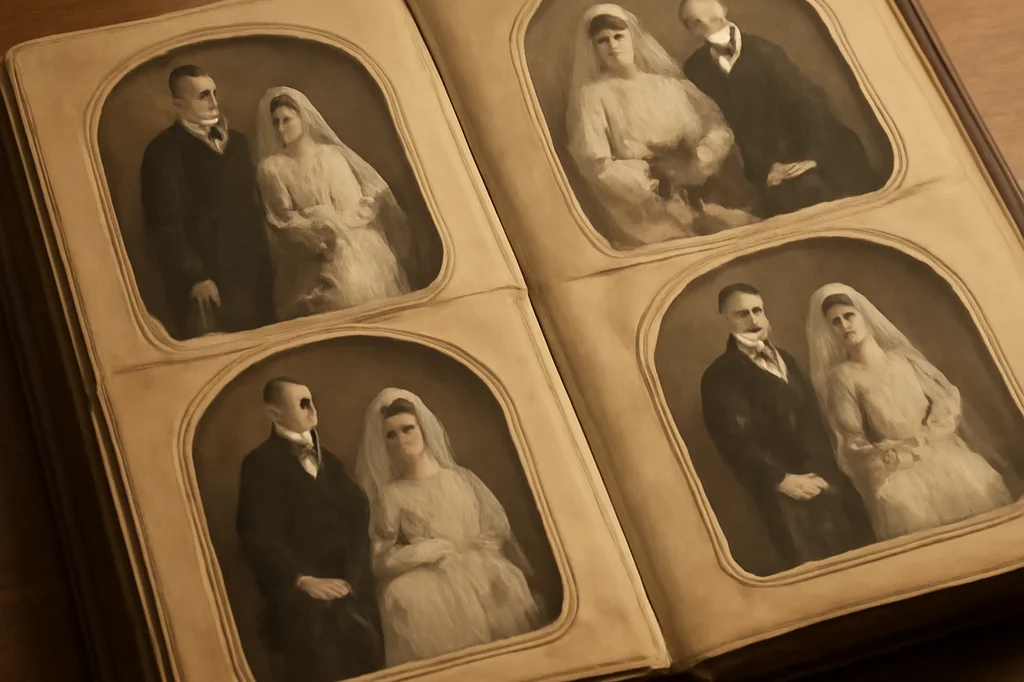
A bride may appear under her maiden name, her married name, or a feminized patronymic form across different family records.
A patronymic is not automatically a maiden surname. Yet in Canadian records, an unfamiliar clerk might place it in a middle-name field, abbreviate it, reshape it, or mistake it for part of a surname. Researchers should therefore test patronymic-based searches without assuming that every matching form represents a hereditary family name.
Gendered surname forms pose another problem. Depending on the family’s region, language environment, and the person recording the event, a woman’s surname could differ in form from her father’s or husband’s. Canadian documents did not apply these distinctions consistently. Search the masculine-looking family form, any known feminine form, and simplified versions without gendered endings.
Q: Which names belong in a marriage-record search?
Answer: Search the bride’s maiden surname, the groom’s surname, patronymic-based possibilities, and anglicized or clerk-simplified spellings. Canadian civil and church clerks often followed English-language conventions even when the family used Ukrainian naming practices at home.
| Search element | What to try | Why it matters |
|---|---|---|
| Bride’s birth surname | Original, transliterated, shortened, and phonetic forms | The marriage entry may be the only Canadian record stating it directly. |
| Groom’s surname | All spellings associated with the husband and his relatives | The bride may be indexed only under her married identity. |
| Patronymic | Full form, abbreviated form, or a possible middle-name rendering | A clerk may have misunderstood its function. |
| Feminine surname form | Gendered and ungendered versions | Church and civil records may follow different naming conventions. |
| Anglicized spelling | Sound-alike forms and simplified consonant combinations | Indexes usually reproduce what a clerk wrote, not what the family intended. |
Use wildcards where a database permits them, but vary the beginning of the surname as well as the ending. Transliteration changes can alter consonants and vowels throughout a name. The site’s guide to Ukrainian surname spelling variants in Canadian records explains how to build a broader search set without treating every similar-looking surname as a match.
Q: If the marriage record cannot be found, which records are most useful?
Answer: Children’s birth and baptismal records are often the best substitutes because they may identify the mother by her maiden surname. Do not stop after checking the eldest child. Clerks changed, parish priests changed, and later entries may contain details omitted from earlier ones.
- Compare civil registrations with parish baptisms and marriage registers.
- Check the records of every known child, including children who died young.
- Study marriage witnesses, baptismal sponsors, and nearby households for possible siblings.
- Review obituaries, cemetery files, funeral records, wills, and probate material.
- Search border crossings, passenger lists, local histories, and records from the family’s previous settlement.
Death records deserve caution. The informant may have known the deceased woman only by her married name or may have supplied an uncertain maiden surname. A late record is still evidence, but it should be weighed against documents created when the woman or her parents were present.
Negative searches also have limits. A missing index result does not establish that no record exists. The event may have been registered under a spelling you have not tested, preserved only by a church, recorded in another district, or never formally registered.
Q: Why are widow homesteaders especially important?
Answer: Under the Dominion Lands Act, a widow could qualify for and hold a homestead entry in her own right if she met the applicable residence and cultivation conditions. Her claim was not automatically a continuation of her late husband’s claim, and homestead rights were not restricted to men.
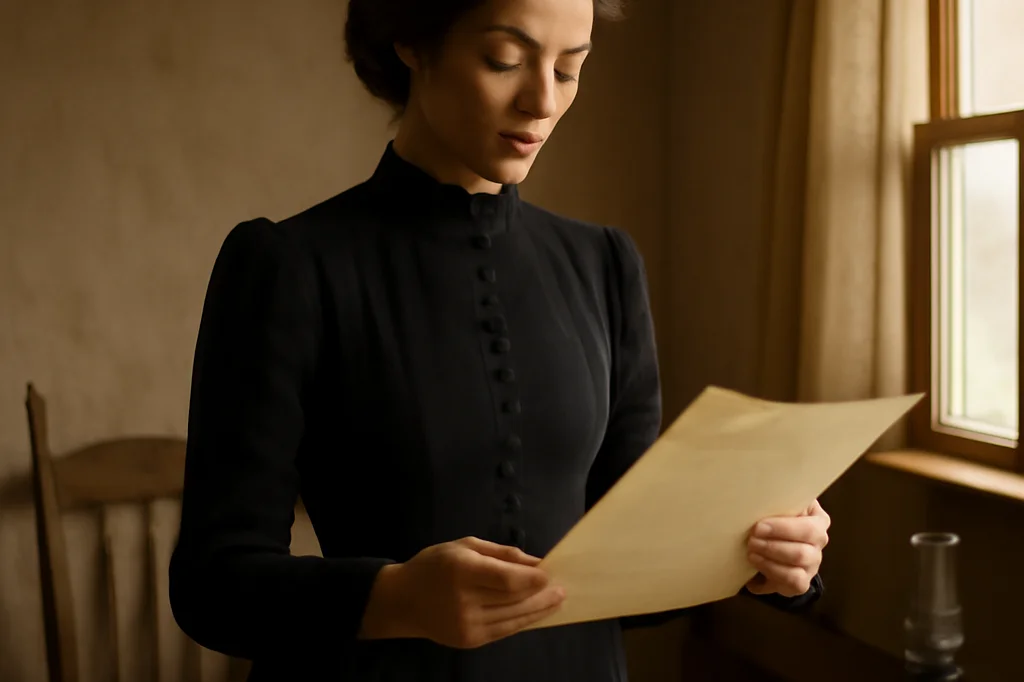
Widow homesteaders could hold a Dominion Lands entry in their own name, distinct from their late husband's records.
That legal capacity makes land records unusually valuable. A widow who appeared in most community records under her married identity could emerge as the named applicant, claimant, or patentee in township and patent documentation. Her file may also establish a timeline for widowhood, residence, cultivation, and family circumstances.
Search her own name as well as her husband’s, including spelling variants for both. Then use the land description to investigate neighbours, relatives, and witnesses. The practical steps are covered in our article on Ukrainian homestead records and Dominion Lands research. A land file may not state a maiden surname, but it can anchor the right woman in the right place and separate her from namesakes.
Q: Where should researchers look for a married woman’s early citizenship status?
Answer: Search the husband’s naturalization record first. Before 1932, a married woman was generally included automatically in her husband’s naturalization rather than receiving the kind of independent file a modern researcher might expect. Library and Archives Canada naturalization guidance, consulted on August 5, 2026, supports this search approach.
This is one of the clearest examples of law shaping the archive. The absence of a separate file under the wife’s name does not show that she was excluded from her husband’s status, nor does it prove that records were destroyed. The expected paperwork may simply have been created under his identity.
Search his full variant set, confirm the marriage timeline, and compare addresses and family details. Our interview on Ukrainian-Canadian naturalization and citizenship records explains the changing legal context and the evidence that may survive.
Q: How can a researcher prove that several names refer to the same woman?
Answer: Proof comes from correlation, not resemblance. A familiar given name and a similar surname are not enough, especially in communities where several families came from the same district and reused personal names.
Create a chronological table for the candidate woman. Enter each record’s exact name, date, place, spouse, relatives, religion, and witnesses. Then identify agreements and conflicts. A maiden surname reported at a child’s baptism gains strength when a sibling appears as sponsor, the same family lives nearby in a census, and a later obituary identifies the relationship independently.
Resolve contradictions openly. If two records give different maiden surnames, ask who supplied each answer, how close the record was to the event, whether one term could be a patronymic, and whether either spelling reflects another language. Do not choose the tidier version merely because it became the family’s preferred spelling.
The final conclusion should explain why the combined evidence identifies one woman and why plausible alternatives were rejected. Sometimes the honest result remains “probable” rather than “proved.” That is not failure. It is a more accurate account of an archive shaped by migration, language, and women’s historically unequal legal visibility.
Frequently Asked Questions
1. Did Ukrainian women always adopt their husband’s surname in Canada?
No single practice appears consistently across all records. A woman could be identified by her birth surname, her husband’s surname, or a feminine surname variant, depending on the period, community, document, and clerk. Family usage and official usage might differ. Search every demonstrated form rather than assuming that one naming custom governed her entire life.
2. Can a patronymic reveal a woman’s maiden name?
A patronymic can identify her father’s personal name, but it is not normally the same thing as a hereditary maiden surname. It can still be a powerful clue when combined with a birthplace, sibling, witness, or parish entry. Treat it as evidence about parentage and identity, not as automatic proof of the family surname.
3. Why is the mother’s maiden name different on two children’s records?
The difference may reflect transliteration, phonetic spelling, a feminine surname form, a misunderstood patronymic, or a clerk’s attempt to fit a Ukrainian name into an English-language form. One entry may also be wrong. Compare the original images, identify the informants, and check records for all siblings before deciding which version carries greater weight.
4. Should I search a widow under her maiden name or married name?
Search both, but begin with the name she used after marriage and add every known variant. A widow eligible for a Dominion Lands homestead could appear as the legal claimant in her own right, usually under the identity current at that time. Her maiden name may surface elsewhere through children’s records, probate documents, relatives, or church entries.
5. What if no Canadian record states the maiden surname directly?
Build an indirect case. Trace siblings, sponsors, witnesses, neighbours, and families from the same European locality; compare every child’s civil and church record; and search the husband’s land and naturalization files. If the evidence narrows the possibilities but does not eliminate competing identities, report the maiden name as tentative and document exactly why.