Editorial Interview
To locate a Ukrainian-Canadian ancestor’s naturalization record, first establish when and where naturalization occurred. Before 1915, provincial courts handled the process, so begin with provincial court records rather than the federal database. For 1915–1951, search Library and Archives Canada’s online index, then pursue the underlying file through Immigration, Refugees and Citizenship Canada. For married women, search the husband first: until 1932, a wife shared his legal status and was automatically included when he naturalized.
What does the naturalization column in the 1906 Census actually tell us?
Researcher: It is a clue to legal status, not a naturalization certificate. Our guide to the 1906 Canadian Census discusses the naturalization column, but researchers still need to connect that entry to the court system that produced the underlying record.
If an immigrant was recorded as naturalized in 1906, the relevant proceeding necessarily predates the federal 1915–1951 index. That sends the search toward a provincial court, usually in the province where the person lived when naturalized. The census may help narrow the period, especially when read beside the reported immigration year, residence, occupation and other household details. It does not, by itself, establish the exact court or date.
The most useful census reading is comparative rather than isolated. Check the same household in later censuses, and compare the entry with nearby relatives or neighbours who may have come from the same village, travelled together, or settled in the same district. A person marked as an alien in one enumeration and naturalized in a later one can provide a rough interval for the court search. Conversely, repeated naturalized entries may strengthen the case that the family understood the event as having taken place, even if the exact date remains unknown.
Researchers should also distinguish between the individual’s actual residence and the place where a record may have been created. An immigrant might have arrived through one port, spent a short period working in one province, and naturalized after moving to a different county or judicial district. Land records, city directories, parish registers, tax rolls, voter lists and children’s birth registrations can help establish the sequence of residences between arrival and the census year. That sequence is often more useful for choosing a court than the reported birthplace alone.
Treat discrepancies cautiously. Census information could reflect what a household member reported, what an enumerator understood, or the family’s informal description of its position. A census notation is evidence worth following, but court and naturalization records are the stronger source for the legal event.
Why is 1915 the crucial dividing line?
Researcher: Before 1915, naturalization was administered through provincial courts rather than one unified federal record system. Library and Archives Canada’s citizenship and naturalization guidance, consulted August 5, 2026, makes that jurisdictional distinction clear. A search strategy must therefore begin with the date, not with a surname typed into a single database. That date also matters for a different reason: naturalization status before and during the First World War directly determined whether a Ukrainian-Canadian was classified as a British subject or as an enemy alien, a distinction with real consequences documented in our history of Ukrainian internment in Canada.
| Period or collection | Best starting point | What the researcher should expect |
|---|---|---|
| Before 1915 | Provincial court indexes, registers and archival catalogues | Locally created records whose survival, arrangement and access vary by province and court |
| 1915–1951 | Library and Archives Canada’s naturalized-persons database | An index referencing Canada Gazette publications, not the complete case file |
| Montreal, 1868–1916 | Separately catalogued Montreal Circuit Court naturalization records | A distinct LAC collection relevant to immigrants naturalized in Quebec | Underlying federal case files | Immigration, Refugees and Citizenship Canada | The actual naturalization documentation, subject to current access rules |
The dates are guides to record systems, not permission to ignore local catalogues. The Montreal collection, for example, extends through 1916 and crosses the general 1915 dividing line.
In practical terms, the dividing line prevents a common research error: treating a negative result in the 1915–1951 index as the end of the investigation. If family evidence places an immigrant in Canada by the early twentieth century, and especially if a census gives a naturalized status before 1915, the federal online index is not the primary source. The researcher should instead identify the local court system that served the community at that time. County boundaries, district names and court jurisdictions may have changed, so historical place names should be recorded as they appear in contemporary sources.
The form of the surviving record may also differ substantially between jurisdictions. One court series may preserve a register with brief entries, another may have an alphabetical index pointing to a volume and page, and another may be described only through a broader court-record series. Some archives provide digitized images or microfilm, while others require a reference request, an onsite visit, or consultation of an archival finding aid. A good research note should record not only whether an ancestor was found, but the record creator, series title, volume, page, date range and access method used.
What can the 1915–1951 federal database provide?
Researcher: LAC’s online naturalized-persons database can be searched by surname, given name and country of origin. Its entries point to notices published in the Canada Gazette. The database is valuable, but LAC’s introduction to the collection states that LAC does not hold the actual naturalization documents or case files. Those remain with Immigration, Refugees and Citizenship Canada.
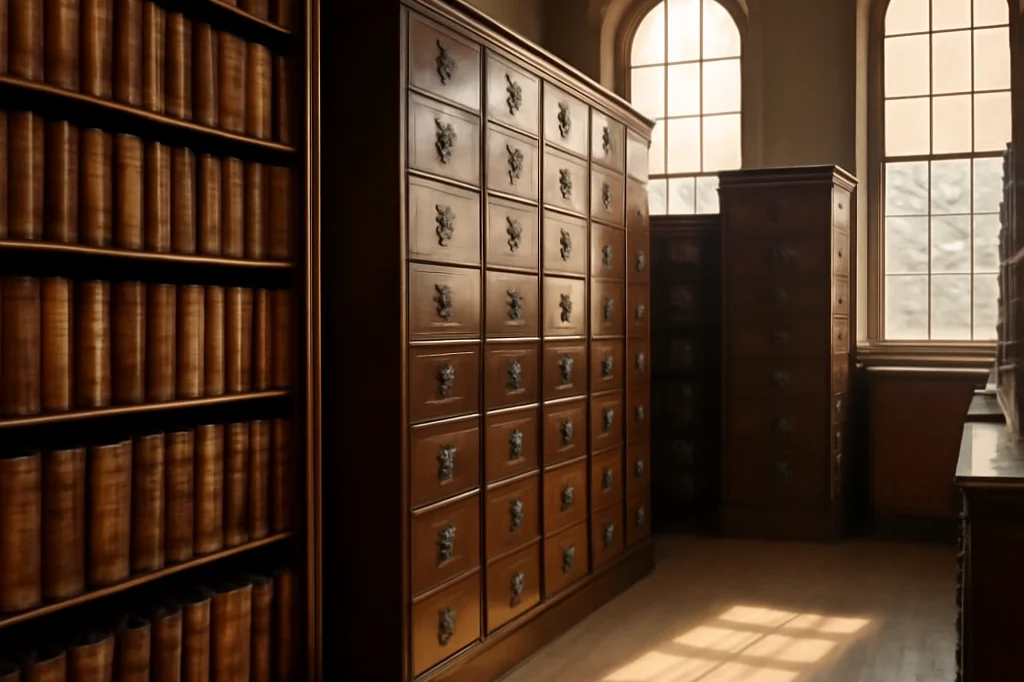
Provincial court archives are the starting point for any naturalization dated before 1915.
A sensible index search allows for the instability common in immigrant records:
- Try surname spellings based on sound, transliteration and shortened Canadian forms.
- Search with fewer fields when an exact combination produces no result.
- Consider that “country of origin” may reflect historical political geography rather than the word “Ukraine.”
- Record the complete Gazette reference and every identifying detail before pursuing the file.
Country-of-origin terminology requires particular care for Ukrainian families. An ancestor may have identified with a Ukrainian village, language or community while records used the state or empire that governed the place of birth at the time. Search results should therefore be evaluated alongside a known birthplace, immigration period and Canadian residence rather than accepted or rejected solely because the country label differs from modern usage.
When a likely index entry appears, transcribe it exactly before moving on. Preserve the spelling used in the index, the stated origin, the publication or reference information, and any date associated with the notice. Then compare the entry against independent records. A match is stronger when several details align: a known address or province, a compatible occupation, an arrival period consistent with immigration records, and family evidence placing the person in Canada at the relevant time. A common surname with only a broadly similar origin is not enough to establish identity.
The Gazette reference is an important bridge between the searchable index and the wider documentary trail. It can help distinguish candidates with similar names and provides a precise citation for a later IRCC request. Keep a copy or transcription of the index result even after receiving other documents, because it shows how the person was identified in the published naturalization notice.
A failed database search does not prove that the ancestor never naturalized. The event may have occurred before 1915, the name may be indexed unexpectedly, or the person may have acquired status through a spouse rather than through an individual application.
Why can a married woman disappear from the naturalization record?
Researcher: Until 1932, a married woman had the same legal status as her husband: either British subject or alien. When her husband naturalized, she was automatically included and did not need to submit a separate application. This is one of the most consequential points in LAC’s naturalization guidance.
For a Ukrainian-born woman married before 1932, the absence of an individual entry may therefore reflect the law rather than a missing record. Search for her husband under every plausible spelling, then compare his residence, occupation, birthplace and entry date with the family’s census and immigration evidence. Records created after 1917 can be especially useful because they are generally more detailed and may name a spouse and children.
The timing of the marriage matters. Establish whether the woman was married when the husband naturalized, and whether a later marriage, death, separation or remarriage could affect how she appears in records. Civil marriage registrations, church marriage entries, census household composition and the birth registrations of children can help reconstruct that context. The goal is not simply to locate a man with the right surname, but to show that the candidate husband was the same person connected to the woman and family under investigation.
Search her own name as well as his, particularly in records created after the relevant legal period or where she may have been identified independently in another administrative context. Maiden names, married names, shortened names and alternate transliterations should all be noted. Even where no separate naturalization file exists, records naming her in association with her husband’s application may help document the family’s legal and residential history.
This legal dependency also exposes a historical tension. Archival silence about a wife does not mean that her migration experience was secondary. It means the state often documented her status through her husband.
What information might a naturalization record contain?
Researcher: According to LAC’s record-content guidance, a naturalization record or card index typically identifies the person’s surname and given name, date and place of birth, entry date into Canada, occupation, residence, and the name and location of the court granting naturalization. Later records may add family information; records created after 1917 are more detailed than many earlier examples and sometimes include a spouse and children.
Each field can solve a different problem. A court location may reveal an overlooked residence. An occupation can separate two people with similar names. A stated arrival date can be compared with passenger, border or other sources described in our guide to Canadian immigration records for Ukrainian ancestors.
Names should be read as recorded, not silently modernized. Clerks may have used an English spelling, a phonetic approximation, a shortened form, or a version supplied by the applicant. Preserve both the archival spelling and the normalized form used in your research notes. This makes it easier to find the same person in census returns, church registers, military files and later civil records without losing the wording of the original source.
A record’s date of entry into Canada may be approximate rather than exact, especially when compared with later recollections or census answers. Use it as a research lead: test whether it fits the earliest known appearance in Canadian records, the ages of children, border crossings, employment history and passenger evidence. Likewise, an occupation may change over time, but it can still be highly useful when a candidate appears in the right town performing the same trade recorded elsewhere.
Do not force agreement when sources conflict. Arrival years, birthplaces and spellings often changed between records. Build an argument from the combination of details rather than treating one matching surname as proof of identity.
How should researchers approach Quebec and Ontario court records?
Researcher: For an ancestor in Quebec, consult LAC’s finding aid for the Montreal Circuit Court naturalization records, 1868–1916. It is a separately catalogued collection and is particularly relevant when census, directory or family evidence places the immigrant in or near Montreal.
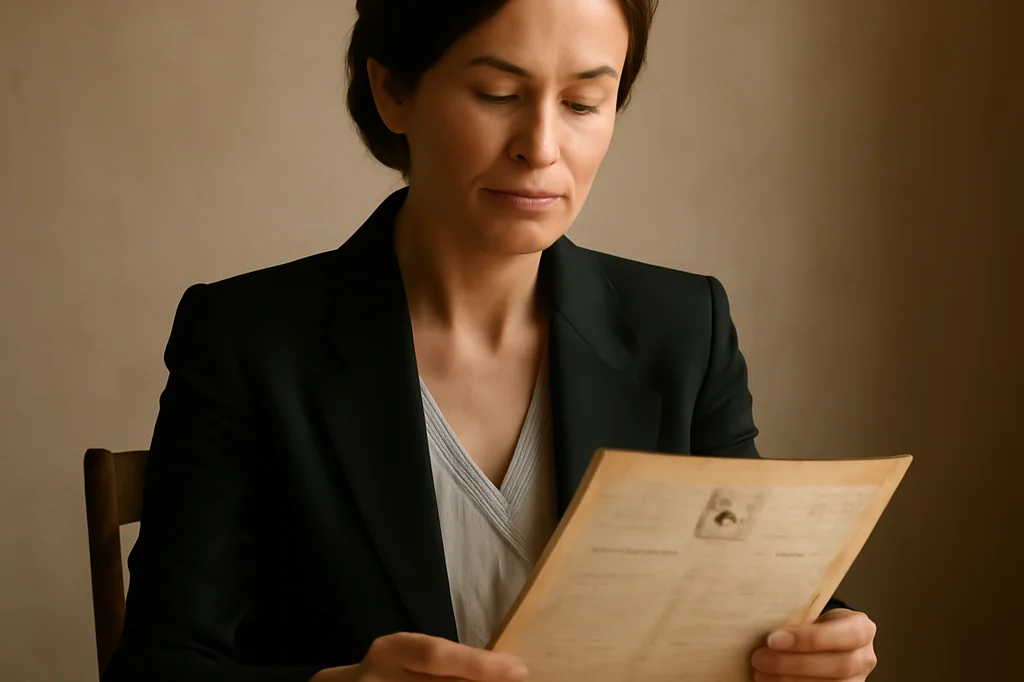
A naturalization certificate rarely stands alone -- cross-check it against census and land records for the same household.
In Ontario, the Archives of Ontario holds microfilm copies of federal naturalization registers on reels C-15692 and C-15693. Its naturalization guidance also recommends searching archival descriptions with terms such as “citizenship,” “sessions,” “peace” and “court,” combined with the county or district name. That advice matters because a catalogue entry may be arranged under the creating court rather than under “naturalization.”
- Identify the ancestor’s county, district or judicial centre at the probable naturalization date.
- Search court indexes as well as general citizenship headings.
- Check whether a register is chronological, alphabetical or indexed separately.
- Preserve negative results, including the court, date span and spelling searched.
When using a chronological register, start with the estimated naturalization window created from census and residence evidence, then widen the search if necessary. If an index points to a volume and page, inspect the original register entry rather than relying only on the index transcription. Original entries may contain additional details, and image quality, handwriting or abbreviations can affect how a name was later indexed.
For Quebec research, do not assume that a Montreal-based collection automatically covers every person living elsewhere in the province. First establish whether the immigrant’s work, residence, family events or community connections place the person within the court’s likely reach. For Ontario research, identify the historical county or district as it existed at the time rather than using only a modern municipality. Contemporary directories, maps and local histories can assist with that jurisdictional question.
Coverage is not uniform. Some records survive only in registers or indexes, and a courthouse series may be incomplete. Provincial archives and local repositories should be approached with a precise place and time period whenever possible.
How do naturalization records fit into a larger family history?
Researcher: Naturalization should be correlated with immigration, census, military and community evidence. Begin with the earliest secure Canadian residence, estimate whether naturalization occurred before or after 1915, identify the responsible jurisdiction, and only then select the database or archive.
A useful working file separates evidence from conclusions. Record each source’s date, the name exactly as written, the location, the stated birthplace or origin, household members, occupation and any naturalization status. This makes it possible to see whether one apparent discrepancy is truly contradictory or merely a different version of the same fact. It also prevents an attractive database result from being mistaken for proof before it is compared with the family’s full documentary trail.
For men of military age during the First World War, compare naturalization details with Canadian Expeditionary Force service records. Birthplaces, occupations, next of kin and addresses may confirm identity even when names differ. At the same time, legal status should not be read as a complete measure of belonging.
A practical sequence is:
- Extract the census naturalization notation and reported immigration year.
- Locate immigration evidence and establish residences over time.
- For a pre-1915 event, search provincial courts; for 1915–1951, search LAC’s index.
- Search a husband when investigating a married woman before 1932.
- Request or investigate the underlying file only after confirming the strongest candidate.
- Compare every result with relatives, addresses, occupations and later records.
Frequently Asked Questions
Why can’t I find an ancestor in the 1915–1951 LAC database?
The most likely explanations are that the ancestor naturalized before 1915, appears under another spelling, was indexed under an unexpected country of origin, or acquired status through a spouse. Establish the person’s residence and approximate naturalization date first. If the 1906 Census already describes the person as naturalized, move directly to provincial court sources because the event predates the federal database.
Does a naturalization entry in the census prove citizenship?
No. It reports what was recorded during enumeration and is best treated as a directional clue. Use it to estimate timing and choose the relevant court jurisdiction. Confirmation should come from a naturalization register, index, court record, Gazette reference or underlying case file that can be tied to the ancestor through residence, occupation, birthplace and family details.
Where are the actual files for people listed in LAC’s federal index?
The LAC database is an index to naturalized persons and references notices in the Canada Gazette; LAC does not hold the complete naturalization case files. The underlying files are held by Immigration, Refugees and Citizenship Canada. Researchers should retain the full index result and consult IRCC’s current access procedures before requesting further documentation.
Should I search separately for a Ukrainian-born married woman?
Search her name, but also search her husband as a priority if the relevant event occurred before 1932. Under the law then in force, a married woman shared her husband’s status and was automatically included when he naturalized. Her lack of an individual application is therefore not evidence that she remained an alien or never acquired his status.
What is the best first step for a pre-1915 naturalization?
Determine the province, county or judicial district where the ancestor lived at the probable date. Then search provincial court indexes and archival descriptions using both naturalization terms and court-related terms. Quebec researchers should check the Montreal Circuit Court collection for 1868–1916; Ontario researchers can also investigate the Archives of Ontario guidance and federal register microfilms C-15692 and C-15693.