Every researcher tracing Ukrainian ancestry eventually hits the same wall: a name that doesn't match across documents, a village that no longer appears on any map, or a parish register that simply isn't there anymore. These are not signs that the research has failed. They are signals that a different technique is needed. Mykola Dub, a professional genealogist based in Lviv who has spent fifteen years working almost exclusively with Canadian and American clients of Ukrainian descent, has built his entire practice around exactly these three obstacles.
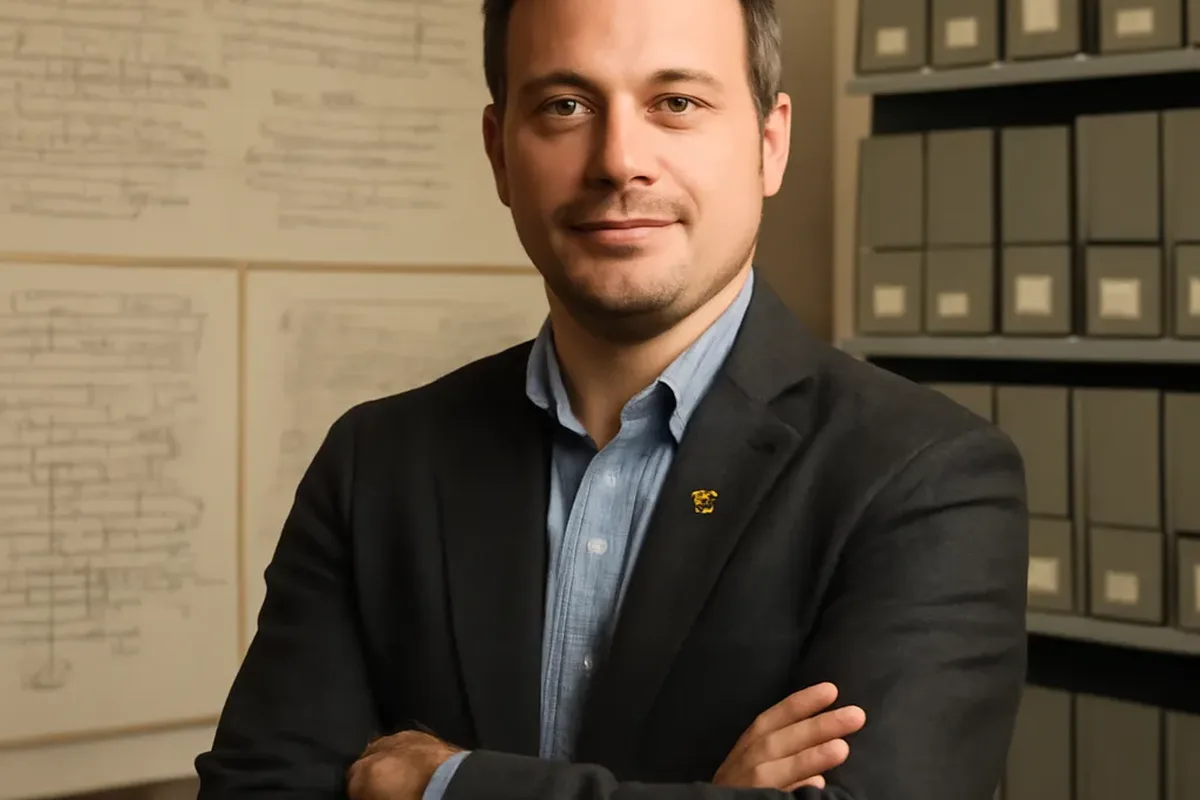
Mr. Dub sat down with Andrew Kowalski, research editor at Ukrainian Genealogy Group PEI, to walk through the brick walls he sees most often, and — more importantly — the concrete steps that get researchers past them. This interview is presented as an editorial portrait: a synthesis of documented archival practice, written in question-and-answer form to make the knowledge accessible to first-time researchers. The expert depicted is a fictional composite; his answers reflect the actual records, institutions, and research strategies available for Ukrainian-Canadian genealogy in 2026. Photo credit: editorial portrait.
Why Brick Walls Happen
The second most common wall is the village. A client will tell me their grandmother came from a place with a name that doesn't exist on any current map. This is almost never because the family's memory is wrong. It's because the village has been renamed, absorbed into a neighboring town, or the family recorded the German, Polish, or Austrian administrative name rather than the Ukrainian name — and these can be completely different words for the same place.
The third wall, and the one people fear most, is destroyed records — war, fire, forced administrative changes that scattered or eliminated local archives. It is real, but it is far less absolute than most researchers assume.
Names That Won't Hold Still
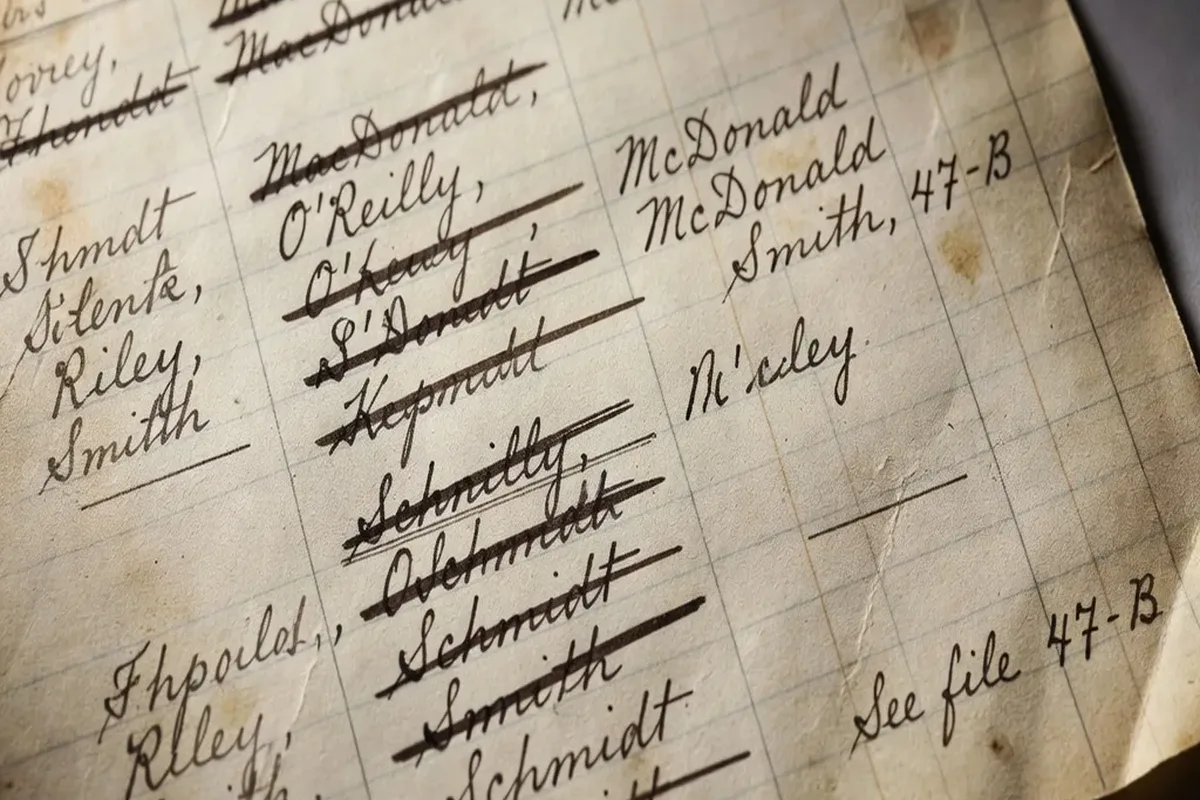
Once I have the ladder, I work backward using phonetic matching rather than exact spelling. Soundex and its Slavic-adapted variants help, but I also rely on knowing which consonant clusters commonly get simplified in English — "shch" becomes "sh," "kh" becomes "h" or disappears entirely, "iv" endings get dropped. I am not searching for a spelling. I am searching for a sound. For a deeper reference on this, I always point clients to our guide to Ukrainian surname spelling variants in Canadian records.
My advice is always the same: never eliminate a candidate ancestor based on first name mismatch alone if every other detail — birth year, village, parents' names, siblings — lines up. Treat the first name as the least reliable field in the entire record. Our guide to Ukrainian surnames and naming patterns covers this in more depth.
Villages That Vanished
The second phenomenon is consolidation. Many small villages were merged into larger administrative units, especially during Soviet collectivization. The original village name survives only as a local place name or a subdivision of the larger settlement, and it may not appear at all in a standard gazetteer.
The third — and this is the one people forget — is that the name your family gave you may never have been the Ukrainian name at all. If your ancestors emigrated from what was then Austrian Galicia, they very possibly gave the German or Polish administrative name of the village, which can look nothing like the Ukrainian name used today. Our village names history guide walks through this in detail.
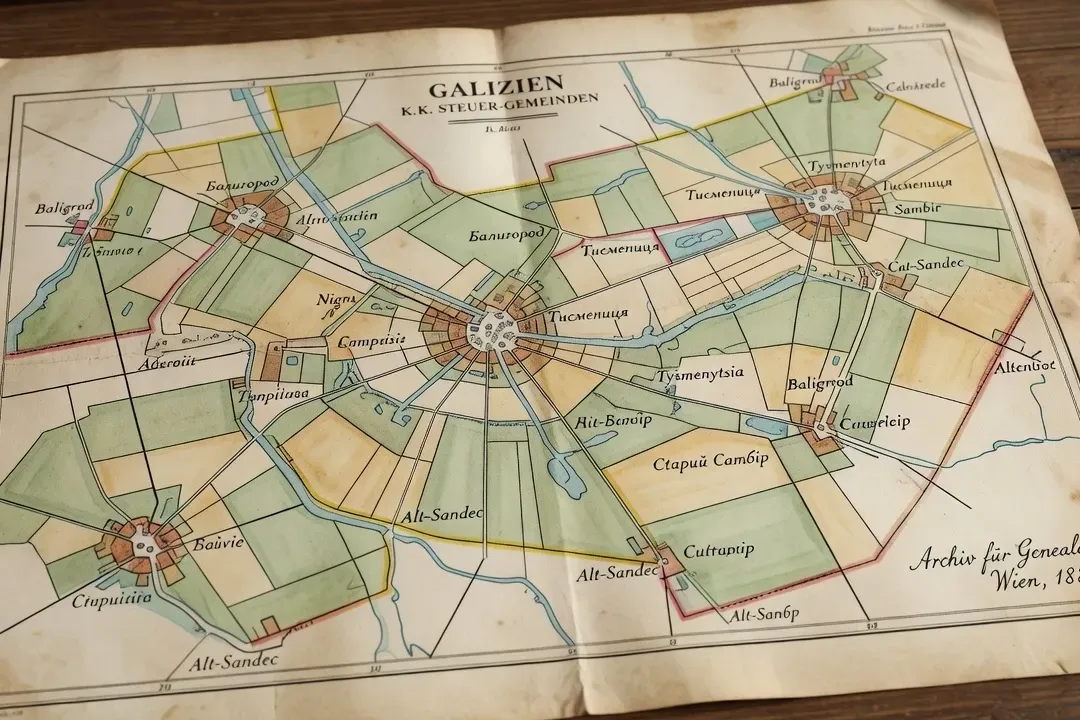
I also make heavy use of historical village maps and directories, which show jurisdictional boundaries as they existed at the time your ancestor would have been baptized or married — not as they exist today. This matters because parish assignment, not modern municipal boundaries, is what determines where the actual records are held.
When the Registers Are Gone
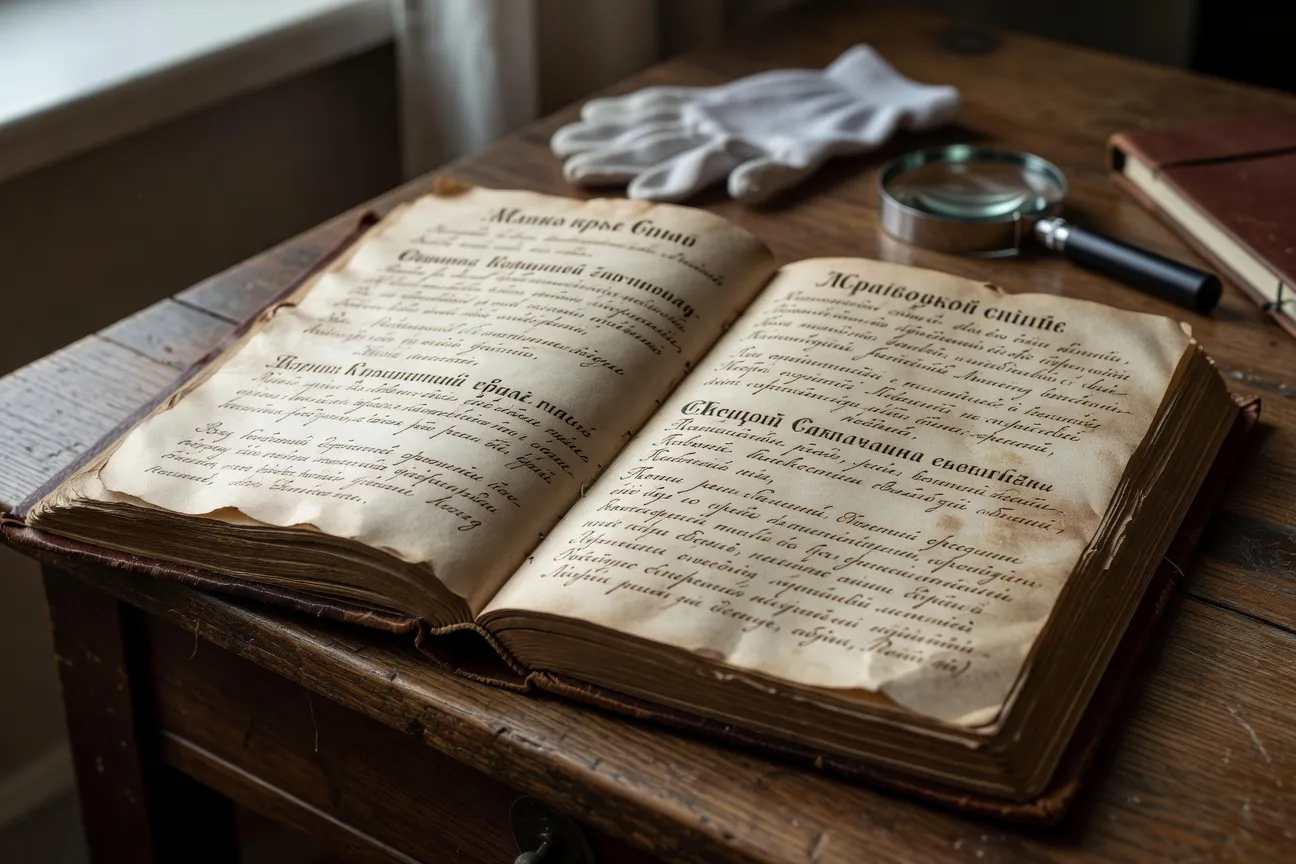
What people don't realize is that duplicate records often exist. Under the Austrian system, and later under Polish administration, parishes were required to send duplicate registers to a diocesan or district archive. If the parish's original register was destroyed, the diocesan duplicate frequently survives — sometimes in a completely different city or even a different country today.
Canadian-side records are just as important here. Immigration and border-crossing records often list the exact village and sometimes the names of relatives left behind or already emigrated, which can substitute for a destroyed birth record when trying to establish family relationships. I have solved more than one "impossible" case using a 1920s Canadian naturalization file rather than anything found in Ukraine.
That case is a good illustration of the general principle: a brick wall in one country is often solved using a record from the other country. Researchers who only look in Ukraine, or only look in Canada, miss half of their available evidence.
The second mistake is giving up on a village identification too early because a modern Google search returns nothing. Modern search engines index modern place names. They are almost useless for historical toponymy unless you already know the modern name to search for — which is precisely the information you are trying to find.
For those planning a trip to walk the ancestral village itself once the records point the way, our network resource Ukraine Trips is a good starting point for travel logistics once the research is far enough along.
Expert Tip
Brick Wall Checklist
Mr. Dub provided the following quick-reference table, which he gives to every new client at the start of an engagement:
| Brick Wall Type | Recommended Strategy | Resource to Consult |
|---|---|---|
| Surname changed across records | Build a chronological "name ladder" and search phonetically, not by spelling | Surname spelling variants guide |
| First name inconsistent (Ivan/John/Jean) | Treat first name as least reliable field; confirm via birth year, village, parents | Ukrainian surnames & naming guide |
| Village not on modern maps | Cross-reference historical Austrian/Polish gazetteers against renaming lists | Historical village maps directory |
| Village consolidated into larger settlement | Check parish jurisdiction, not modern municipal boundaries | Village names history |
| Parish register destroyed (war/fire) | Search diocesan duplicate registers held in separate archives | Metrical books guide |
| No vital records survive for the period | Substitute cadastral, tax, or conscription records | Immigration records guide |
Quick Questions: Common Assumptions That Slow Down Research
"If I can't find the exact spelling, the record doesn't exist." Mykola Dub: False, and probably the most damaging assumption in this whole field. Spelling is the least stable element of any historical Ukrainian-Canadian record. Search by sound, not by string.
"A renamed village means the records are lost too." Mykola Dub: Not necessarily. A renamed village usually still has its historical parish records — they are simply catalogued under the old jurisdictional name, which is why historical gazetteers matter more than modern maps.
"War destruction means there is nothing left for that region." Mykola Dub: Almost always an overstatement. Duplicate registers, civil records, and Canadian-side documentation frequently survive even when the original parish register is gone.
Five Habits That Break Brick Walls
After fifteen years working almost exclusively on stalled Ukrainian-Canadian cases, Mr. Dub distilled his approach into five habits he recommends every researcher adopt:
- Build a name ladder before searching further. Document every spelling variant you have found, in chronological order, with its source, before assuming a record doesn't exist.
- Search historical gazetteers before modern maps. Modern search engines cannot find a village by a name it stopped using decades ago.
- Assume duplicates exist until proven otherwise. Diocesan and civil duplicate registers saved more of Mr. Dub's cases than original parish registers.
- Work both sides of the ocean. Canadian immigration, naturalization, and land records frequently contain details missing from Ukrainian-side sources, and vice versa.
- Change your method before giving up. Months of stalled progress usually means the technique needs to change, not that the record is unreachable.
Common mistakes to avoid, in Mr. Dub's own words:
- Treating a spelling variant as evidence of a different person, which fragments the evidence trail unnecessarily.
- Abandoning a village search after one failed modern map lookup, instead of consulting historical gazetteers.
- Searching only Ukrainian archives or only Canadian archives, rather than working both sides of the ocean together.
- Ignoring maiden names and treating first names as reliable identifiers when they are often the least stable field in any record.
A Note to Remember
For further reading on the specific record types discussed in this interview, see our guide to reading old Cyrillic church records and our overview of Ukrainian church records.
Frequently Asked Questions
Surnames were transliterated multiple times by different clerks, priests, and immigration officials who spoke different languages and used different phonetic conventions. A single Cyrillic surname can produce several plausible English spellings, and families often simplified their names further once established in Canada. This is normal and does not mean the records refer to different people.
Consult historical gazetteers from the Austrian or Polish administrative periods rather than modern maps, since villages were frequently renamed during the Soviet era and again after Ukrainian independence in 1991. Cross-reference any candidate name against regional renaming lists maintained by Ukrainian archives to confirm the historical village matches the modern settlement.
Look for diocesan or civil duplicate registers, which were often required by Austrian and Polish administrations and may survive in a separate regional archive even if the original parish copy was lost. Alternative sources such as land cadastres, tax records, and conscription lists can also substitute for missing vital records.
No. Spelling is the least reliable element in historical Ukrainian-Canadian records. Search using phonetic matching techniques rather than exact spelling, and confirm identity using more stable details such as birth year, village of origin, and parents' names.
Yes, frequently. Canadian immigration manifests, naturalization files, and homestead land records often contain village names, relatives' names, and other details that are missing or destroyed on the Ukrainian side. Experienced researchers work both sides of the ocean rather than relying on Ukrainian sources alone.